

- Updated: March 4, 2026
- 6 min read
Sam Altman Defends OpenAI’s Pentagon Collaboration Amid Backlash
Sam Altman publicly defended OpenAI’s partnership with the U.S. Department of Defense, arguing that the collaboration is essential for responsible AI development, national security, and establishing transparent governance frameworks.
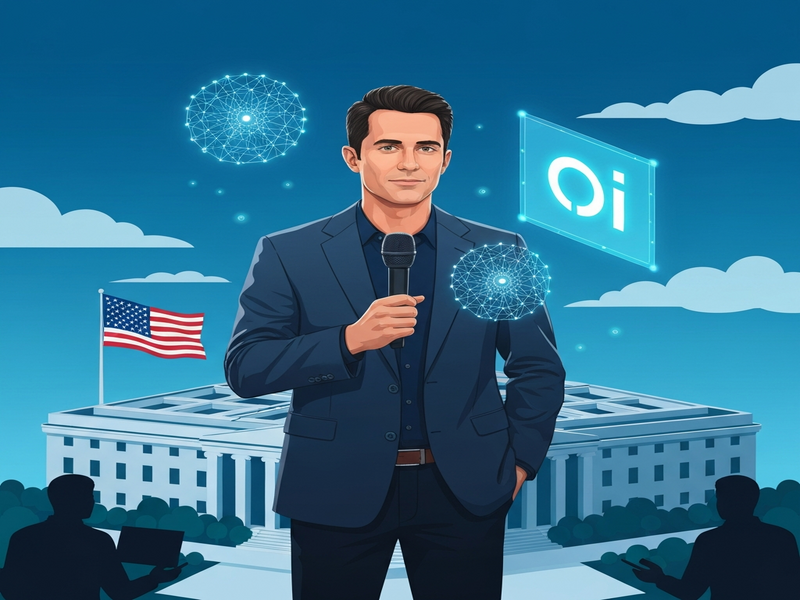
Why the Pentagon‑OpenAI Deal Is Making Headlines
In early March 2026, the Wall Street Journal article revealed that OpenAI had secured a multi‑year contract with the U.S. Department of Defense (DoD) to provide advanced language‑model capabilities for mission‑critical applications. The news sparked a heated debate across tech circles, policy forums, and mainstream media. Critics warned of “militarizing AI,” while supporters highlighted the potential for safer, more accountable AI systems.
Altman’s response was swift and unequivocal: the partnership is not about weaponizing AI but about embedding rigorous safety standards, fostering transparency, and ensuring that the United States remains a leader in ethical AI innovation.
Strategic Importance of the Pentagon Collaboration
The DoD’s interest in generative AI stems from three core needs:
- Rapid information synthesis: Battlefield commanders require real‑time analysis of massive data streams.
- Decision‑support tools: AI can generate scenario‑based briefings, risk assessments, and after‑action reports.
- Cyber‑defense augmentation: Advanced language models help identify threats hidden in code, logs, and communications.
By partnering with OpenAI, the Pentagon gains access to cutting‑edge models that have already proven their utility in civilian sectors such as healthcare, finance, and education.
Altman’s Core Defense Arguments
1. National‑Security Imperative
Altman emphasized that “AI is a dual‑use technology; denying its use to legitimate defense agencies would only push adversaries to develop unchecked, potentially more dangerous systems.” He argued that a collaborative framework allows the U.S. to set safety benchmarks that other nations may follow.
2. Embedding Responsible‑AI Guardrails
OpenAI has pledged to integrate its OpenAI ChatGPT integration safety stack into every DoD deployment. This includes:
- Real‑time content filtering to prevent disallowed outputs.
- Explainability layers that surface model reasoning for human auditors.
- Continuous monitoring for bias, hallucination, and misuse.
3. Transparency Through Auditable APIs
Altman announced that the Pentagon will receive “audit‑ready” API endpoints, enabling independent third parties to verify compliance. This mirrors the transparency model used in OpenAI’s public APIs, where usage logs and model versioning are openly documented.
4. Economic and Innovation Benefits
Beyond security, the partnership injects billions of dollars into the U.S. AI ecosystem, fostering job creation and research breakthroughs. Altman highlighted that “the DoD’s procurement power can accelerate the commercialization of safety‑first AI tools for every industry.”
Industry Reaction and Counterpoints
Reactions have been mixed:
- Tech ethicists: Some argue that any defense contract creates a conflict of interest, potentially compromising OpenAI’s “open” mission.
- Venture capitalists: Many see the deal as validation of AI’s strategic value, prompting a surge in AI‑focused fundings.
- Competitors: Rival firms are scrambling to propose alternative “government‑grade” AI solutions, emphasizing privacy‑first architectures.
Despite the criticism, Altman’s stance has garnered support from several former defense officials who praised the “rigorous safety protocols” OpenAI intends to enforce.
Implications for AI Governance and Policy
The collaboration sets a precedent for how private AI firms can work with government agencies while maintaining ethical standards. Key takeaways include:
- Co‑development of standards: Joint task forces can draft industry‑wide safety guidelines.
- Regulatory sandbox: The DoD can act as a controlled environment for testing high‑risk AI applications before broader release.
- International signaling: By openly sharing its safety framework, the U.S. can influence global AI norms.
How UBOS Is Positioned in the Evolving AI Ecosystem
While the OpenAI‑Pentagon partnership dominates headlines, the broader AI market is rapidly diversifying. Companies like UBOS are building platforms that empower businesses of all sizes to adopt AI responsibly.
UBOS Platform Overview
UBOS offers a low‑code UBOS platform overview that integrates best‑in‑class AI models, including OpenAI’s GPT series, into custom workflows without writing extensive code.
Enterprise‑Grade AI Solutions
For large organizations, the Enterprise AI platform by UBOS provides:
- Scalable model hosting with built‑in compliance dashboards.
- Role‑based access controls that align with defense‑grade security requirements.
- Automated audit trails for every AI‑driven decision.
Startups and SMBs
Early‑stage companies can accelerate time‑to‑value using UBOS for startups and UBOS solutions for SMBs. These offerings bundle pre‑trained models, data pipelines, and UI components into a single subscription.
Workflow Automation Studio
The Workflow automation studio lets teams design end‑to‑end AI processes—such as automated threat‑intelligence summarization—without leaving the platform.
Web App Editor on UBOS
Developers can prototype AI‑enhanced web applications using the Web app editor on UBOS, which supports drag‑and‑drop components, real‑time preview, and one‑click deployment.
AI Marketing Agents
Marketers benefit from AI marketing agents that generate copy, optimize campaigns, and analyze performance—all while adhering to brand guidelines.
Pricing Transparency
UBOS maintains clear UBOS pricing plans, ensuring that organizations can forecast AI spend without hidden fees—a crucial factor for government contracts that demand budget predictability.
Template Marketplace for Rapid Deployment
Developers can jump‑start projects with ready‑made solutions from the UBOS templates for quick start. Notable examples include:
- AI SEO Analyzer – automates keyword research and content audits.
- AI Article Copywriter – generates SEO‑friendly drafts in seconds.
- AI Chatbot template – deploys conversational agents for customer support.
- GPT‑Powered Telegram Bot – showcases the power of Telegram integration on UBOS and ChatGPT and Telegram integration.
Voice and Multimodal Extensions
UBOS also supports cutting‑edge audio capabilities via the ElevenLabs AI voice integration and vector‑search databases like the Chroma DB integration, enabling rich, multimodal AI experiences.
Showcasing Real‑World Success
Explore the UBOS portfolio examples to see how enterprises have leveraged these tools for compliance reporting, automated threat analysis, and intelligent document processing—use cases that echo the objectives of the Pentagon partnership.
Future Outlook: Balancing Innovation and Responsibility
Altman’s defense underscores a broader industry shift: AI must be both powerful and accountable. As the DoD continues to integrate generative models, we can expect:
- More public‑private collaborations that embed safety standards from day one.
- Increased demand for audit‑ready AI platforms—exactly the niche UBOS is targeting.
- Stronger international dialogue on AI weaponization bans and ethical use.
For businesses, the takeaway is clear: partnering with AI providers that prioritize transparency, compliance, and modular integration will be a competitive advantage in a world where government contracts set the benchmark for responsible AI.
Conclusion
Sam Altman’s public defense of OpenAI’s Pentagon collaboration is more than a PR move; it is a strategic articulation of how AI can serve national security while upholding ethical standards. The partnership illustrates a path forward where private innovation and public oversight co‑exist, and it creates a ripple effect that benefits the entire AI ecosystem—including platforms like UBOS that empower organizations of every scale to adopt AI responsibly.
© 2026 UBOS Technologies. All rights reserved.
Andrii Bidochko
CTO UBOS
Andrii Bidochko is an AI entrepreneur and researcher focused on AI agents, reinforcement learning, and autonomous systems. He writes about the technologies shaping the future of machine intelligence, from frontier models and agent architectures to real-world AI applications.