

- Updated: February 27, 2026
- 6 min read
postmarketOS February 2026 Update – New Kernel Packages and Community Highlights
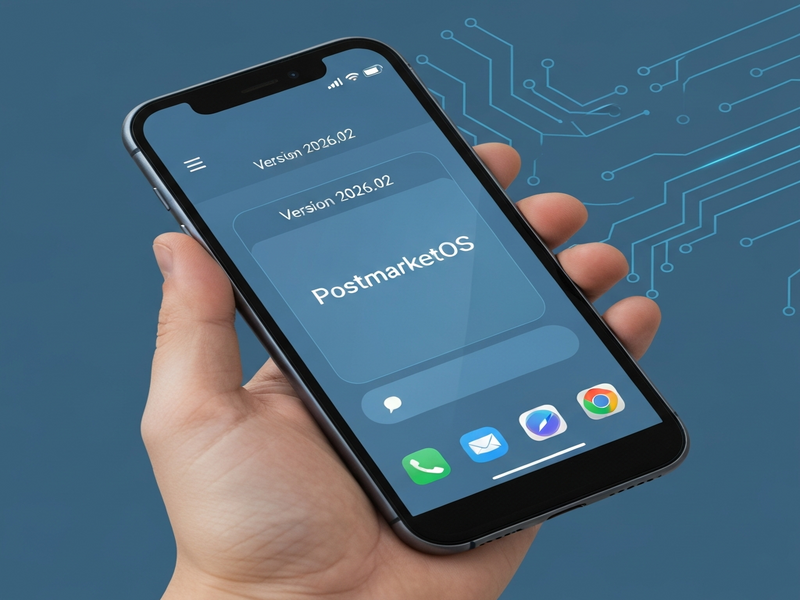
The February 2026 update of postmarketOS delivers fresh generic kernel packages, major FOSDEM highlights, and pivotal organizational changes that reshape the future of mobile Linux.
Why This Update Matters for Mobile Developers
Tech‑savvy mobile developers and Linux enthusiasts have been waiting for a clear signal that postmarketOS is still the most viable open‑source mobile OS. February’s release not only answers that call but also sets a new baseline for stability, community governance, and hardware support. In this article we break down every major change, explain how it impacts your development workflow, and show where UBOS can help you turn these innovations into production‑ready solutions.
FOSDEM 2026 – The Live Pulse of postmarketOS
FOSDEM in Brussels has always been the launchpad for postmarketOS announcements. The February 2026 edition featured a dedicated hackathon, a series of lightning talks, and a hands‑on demo booth that attracted over 300 developers.
- Hackathon Sprint: Teams built a proof‑of‑concept AI Chatbot template that runs entirely on postmarketOS, showcasing the synergy between mobile Linux and AI services.
- Live Kernel Compilation: Attendees compiled the new
linux‑postmarketos‑stablekernel on a PinePhone, proving that generic kernels can now be built on‑device without a full desktop toolchain. - Community Round‑Table: The discussion on the upcoming PMCR 0009 policy (device “main” category) clarified the roadmap for long‑term device support.
Organizational Shifts – Strengthening Governance
PostmarketOS’s governance model continues to evolve. Two key updates were announced:
- PMCR 0009 Draft: The new requirement set for “main” devices aims to guarantee that once a device reaches the main category, it will receive at least three years of security updates and bug‑fix releases. This move mirrors the long‑term support (LTS) policies of major Linux distributions.
- AI Policy Revision: The project’s AI policy now explicitly forbids the use of generative AI for code contributions, simplifying compliance and protecting the codebase from inadvertent licensing issues. Credit goes to Oliver for drafting the concise, 49‑line document.
Trusted Contributors – New Faces and Farewells
Trusted Contributors (TCs) are the backbone of postmarketOS. February saw both a welcome and two departures:
- Bhushan Joins as TC: With a history dating back to 2018, Bhushan returns to lead mainline device work, notably the Fairphone 5 audio routing improvements.
- Minecrell Steps Down: A founding TC who pioneered Android phone support, Minecrell will continue as an advisor, focusing on legacy device queries.
- Anton Steps Down: Anton’s contributions to Chromebook support and the AYA Odin console will remain in the codebase, and he will mentor new contributors.
These changes illustrate a healthy turnover that keeps the project fresh while preserving institutional knowledge.
Generic Kernel Packages – A New Era of Compatibility
One of the most technically significant releases is the introduction of three generic kernel packages:
| Package | Target Audience | Key Benefits |
|---|---|---|
linux‑postmarketos‑mainline |
Developers needing the latest upstream features. | Fast updates, full upstream config control. |
linux‑postmarketos‑stable |
Production devices requiring proven stability. | Long‑term support, minimal regressions. |
linux‑postmarketos‑lts |
Enterprises and SMBs with strict compliance needs. | Extended security patches, predictable lifecycle. |
These kernels give postmarketOS full control over configuration, enabling seamless integration with the project’s pmbootstrap tooling and ensuring that every device can benefit from a unified, well‑tested kernel base.
Development Highlights – From CI to UI
Beyond kernels, February’s development sprint delivered a suite of improvements:
Hardware CI Enhancements
The phone‑harness firmware received bug fixes, expanded device configuration support, and tighter CI checks. Documentation now lives at docs.postmarketos.org/phone-harness.
OpenIMSD QCOM Baseband Manager
Lynxis introduced a new profile manager for Qualcomm basebands, simplifying modem configuration across a range of devices.
KDE Nightly Repository
The nightly KDE repo now builds automatically, delivering the latest Plasma Mobile updates to developers without manual intervention.
DeviceInfo Validator (dint)
The new dint tool validates device metadata, generating a single source of truth for deviceinfo_schema.toml and preventing wiki drift.
For PinePhone users, the Megapixels 2.1.0 camera app is now in the edge channel, restoring photo capture on the original PinePhone model.
Leveraging UBOS to Supercharge postmarketOS Development
UBOS offers a suite of AI‑driven tools that complement the new postmarketOS capabilities. Below are a few integrations that can help you move from prototype to production faster:
- Telegram integration on UBOS lets you push build notifications directly to a developer channel, keeping the team in sync during CI runs.
- ChatGPT and Telegram integration enables on‑demand AI assistance for debugging kernel build errors.
- OpenAI ChatGPT integration can generate
pmbootstrapcommand snippets based on natural‑language queries. - Chroma DB integration provides vector‑search capabilities for fast retrieval of device metadata across hundreds of supported phones.
- ElevenLabs AI voice integration can read out build logs for hands‑free monitoring.
Beyond integrations, UBOS’s AI marketing agents can automatically generate launch pages for your postmarketOS‑based apps, while the Workflow automation studio lets you orchestrate multi‑step pipelines—from kernel compilation to OTA update publishing.
For startups looking to prototype quickly, the UBOS for startups program offers free credits and mentorship, perfect for teams building the next generation of Linux‑based smartphones.
SMBs can benefit from the UBOS solutions for SMBs, which include pre‑configured CI/CD environments and compliance‑ready security policies—critical when deploying postmarketOS devices in enterprise fleets.
Enterprises seeking a full‑stack AI platform can explore the Enterprise AI platform by UBOS, which integrates with the generic kernel packages to provide real‑time telemetry and predictive maintenance for large device inventories.
To jump‑start development, the Web app editor on UBOS offers a drag‑and‑drop interface for building companion web dashboards that communicate with postmarketOS devices via REST APIs.
Need a quick proof‑of‑concept? Browse the UBOS templates for quick start. For example, the AI SEO Analyzer template can be repurposed to analyze app store metadata for your mobile Linux apps.
Other handy templates include:
- AI Article Copywriter – generate documentation for new device ports.
- Talk with Claude AI app – a conversational assistant that can answer user questions about your postmarketOS build.
- Your Speaking Avatar template – create a brand‑consistent voice for onboarding tutorials.
Read the Full postmarketOS Announcement
For the official, in‑depth release notes, visit the original postmarketOS blog post: postmarketOS February 2026 update. The article contains raw commit logs, detailed kernel configuration diffs, and a full list of contributors.
What’s Next for Mobile Linux Developers?
February’s update proves that postmarketOS is not only surviving but thriving. With generic kernels, a clearer governance model, and a vibrant contributor community, the platform is ready for the next wave of production‑grade devices.
If you’re ready to experiment with the new kernels, consider spinning up a UBOS‑powered CI pipeline today. Visit the UBOS homepage to explore pricing plans, sign up for the partner program, or dive into the UBOS portfolio examples that showcase real‑world deployments.
Take action now: download the latest linux‑postmarketos‑stable kernel, set up a UBOS workflow, and be among the first to ship a truly open‑source mobile experience.
© 2026 UBOS Technologies. All rights reserved.
Andrii Bidochko
CTO UBOS
Andrii Bidochko is an AI entrepreneur and researcher focused on AI agents, reinforcement learning, and autonomous systems. He writes about the technologies shaping the future of machine intelligence, from frontier models and agent architectures to real-world AI applications.