

- Updated: February 26, 2026
- 5 min read
2026 Smartphone Shipments Set to Drop Amid Global Memory Shortage, IDC Forecasts
The 2026 smartphone shipment dip is projected at **12.9 %** due to a global memory shortage, according to IDC’s latest forecast.
2026 Smartphone Shipments Face 12.9% Decline Amid Memory Shortage – IDC Forecast Highlights
A sudden surge in demand for high‑performance RAM by AI‑driven data centers has created a severe memory shortage that is now rippling through the mobile ecosystem. The shortage is forcing manufacturers to cut production, driving the smartphone shipments forecast for 2026 down by nearly 13 % compared with 2025. This article breaks down the IDC numbers, examines the broader market impact, and offers actionable insights for investors, analysts, and tech‑savvy consumers.
Key Statistics at a Glance
- IDC predicts global smartphone shipments will fall from 1.26 billion in 2025 to 1.12 billion in 2026 – a 12.9 % dip.
- Average selling price (ASP) is expected to rise 14 %, reaching a record $523 per device.
- RAM prices are projected to stay elevated through 2026, with stabilization only expected by mid‑2027.
- Regional impacts: Middle East & Africa shipments down >20 %; China down 10.5 %; APAC (ex‑Japan) down 13.1 %.
IDC’s Perspective
“The memory crisis will cause more than a temporary decline; it marks a structural reset of the entire market, fundamentally reshaping the long‑term TAM, the vendor landscape, and the product mix,” said Nabila Popal, senior research director with IDC’s Worldwide Quarterly Mobile Phone Tracker.
Popal adds that the shortage will push the sub‑$100 smartphone segment “permanently uneconomical,” forcing low‑cost manufacturers to either raise prices dramatically or exit the market altogether.
How the Shortage Reshapes the Market
The ripple effects are felt across three primary dimensions:
- Manufacturer Consolidation: Smaller players lacking bargaining power for RAM contracts are likely to merge or be acquired. Larger OEMs such as Samsung and Apple can absorb price shocks, widening the competitive gap.
- Consumer Pricing Pressure: With ASP climbing to $523, price‑sensitive segments will see reduced purchasing power. This could accelerate the shift toward refurbished devices and second‑hand markets.
- Supply‑Chain Realignment: Companies are re‑evaluating component sourcing strategies, investing in alternative memory technologies (e.g., LPDDR5X, HBM) and diversifying supplier bases beyond traditional Asian fabs.
For investors, the data suggests a short‑term bearish outlook for low‑margin brands, while premium‑segment players may enjoy margin expansion. Analysts should monitor RAM price indices and the rollout of next‑gen memory chips as leading indicators for the next quarterly cycle.
Visualizing the Shipment Dip
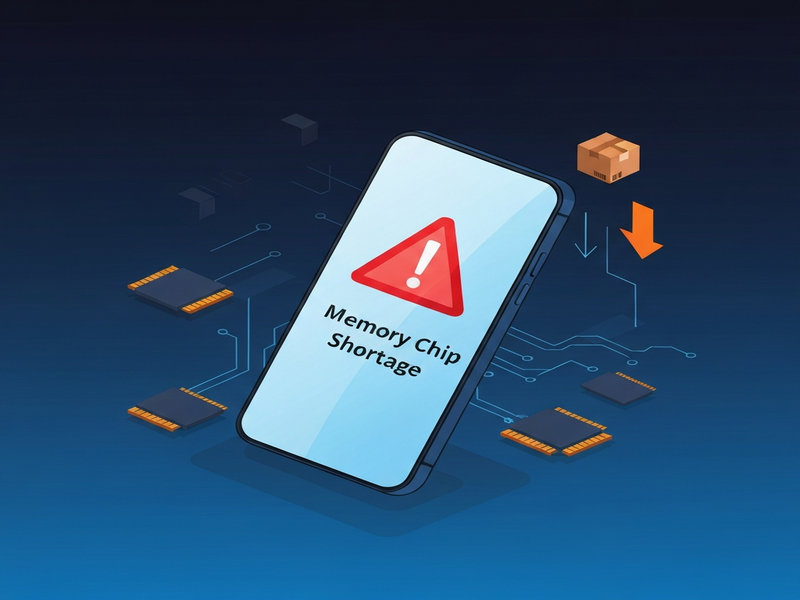
The graphic above, generated by UBOS’s AI platform, visualizes the projected 12.9 % decline alongside the 14 % ASP increase, highlighting the stark contrast between volume and value in 2026.
For the full original reporting, see the TechCrunch report that first broke the story.
Why AI‑Powered Platforms Like UBOS Matter Now
In a market where data‑driven decisions are critical, leveraging an UBOS platform overview can help manufacturers model supply‑chain scenarios, forecast component costs, and simulate pricing strategies in real time.
Startups looking to pivot quickly can benefit from UBOS for startups, which offers pre‑built templates such as the AI SEO Analyzer to optimize product pages for emerging search trends.
SMBs facing tighter margins can explore UBOS solutions for SMBs, including the Workflow automation studio, which automates inventory alerts when RAM inventory dips below threshold levels.
Enterprises seeking a holistic view of AI‑enabled operations may consider the Enterprise AI platform by UBOS. Its integration with the Chroma DB integration enables rapid retrieval of historical pricing data for predictive analytics.
For marketing teams, the AI marketing agents can generate dynamic ad copy that reflects the latest ASP trends, while the UBOS templates for quick start accelerate campaign rollout.
Developers can prototype custom dashboards using the Web app editor on UBOS, embedding widgets like the Keywords Extraction with ChatGPT to surface real‑time search term shifts caused by the memory shortage narrative.
If you’re evaluating partnership opportunities, the UBOS partner program offers co‑selling incentives for firms that integrate memory‑forecast APIs into their product suites.
Pricing transparency is essential; explore the UBOS pricing plans to find a tier that matches your organization’s scale, from early‑stage startups to Fortune‑500 enterprises.
For inspiration, browse the UBOS portfolio examples, which showcase how leading brands have navigated component shortages using AI‑driven decision frameworks.
Outlook for 2026 and Beyond
IDC expects RAM prices to begin stabilizing by mid‑2027, which should cushion the ASP surge and allow shipment volumes to recover gradually. However, the structural shift highlighted by Popal suggests that the “new normal” will feature:
- Higher baseline ASPs across all segments.
- Reduced reliance on ultra‑low‑cost devices, with a stronger focus on premium features and AI‑enabled experiences.
- Increased adoption of AI‑powered supply‑chain tools—like those offered by UBOS—to anticipate component bottlenecks before they become market‑wide crises.
Stakeholders who act now—by diversifying memory sources, investing in AI‑driven forecasting, and re‑positioning product portfolios—will be best positioned to capture the upside when the market steadies.
© 2026 UBOS. All rights reserved.
Andrii Bidochko
CTO UBOS
Andrii Bidochko is an AI entrepreneur and researcher focused on AI agents, reinforcement learning, and autonomous systems. He writes about the technologies shaping the future of machine intelligence, from frontier models and agent architectures to real-world AI applications.