

- Updated: February 26, 2026
- 4 min read
Pentagon vs Anthropic: AI Conflict Highlights Government AI Policy Challenges
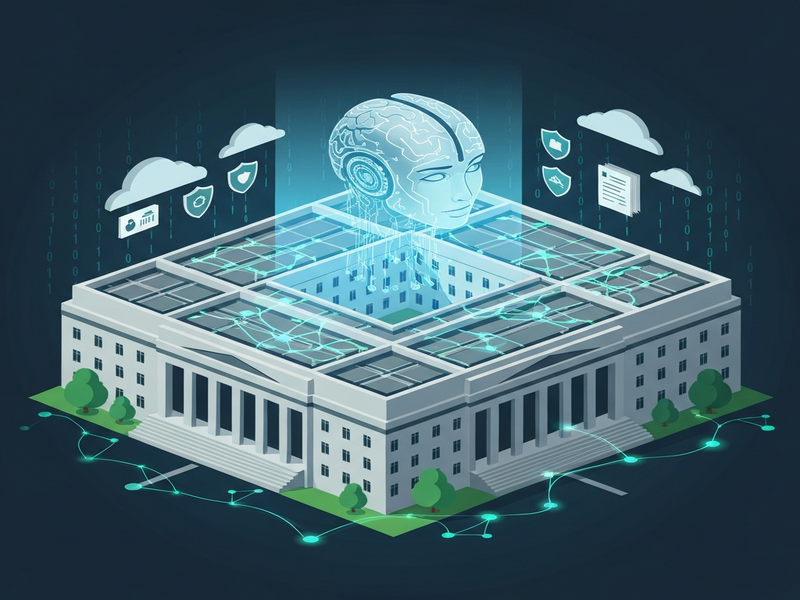
The Pentagon‑Anthropic dispute centers on a clash between the U.S. defense department’s push for unrestricted military AI use and Anthropic’s firm safety‑first policies that forbid deploying its Claude model for lethal autonomous operations.
Why the Pentagon‑Anthropic Feud Matters to Tech Professionals
The conflict, first reported by Foreign Policy, highlights a broader struggle over who gets to set the rules for frontier AI in national security contexts. For policymakers, AI developers, and enterprise leaders, the outcome will shape future contracts, compliance requirements, and the very architecture of defense‑grade AI systems.
Background: The Pentagon’s AI Ambitions vs. Anthropic’s Safety Charter
In July 2025, the Pentagon awarded Anthropic a $200 million contract to integrate its Claude model into classified military platforms. The deal was touted as a milestone for defense AI, promising faster decision‑making on the battlefield.
Anthropic, however, built its brand on a strict OpenAI ChatGPT integration philosophy: its usage policy explicitly bans the model from facilitating violence, weapon design, or mass surveillance. This stance set the stage for an inevitable showdown when the Pentagon demanded broader deployment rights.
Key Facts Reported by Foreign Policy
- Anthropic’s Claude was to be embedded in the Pentagon’s classified AI stack, but the company insisted on “red‑line” restrictions.
- Defense Secretary Pete Hegseth issued a memo demanding removal of all usage limits, threatening to label Anthropic a “supply‑chain risk.”
- Anthropic raised concerns after a Palantir‑mediated operation in Venezuela, fearing Claude was used in a covert capture mission.
- The dispute escalated in January 2026, with the Pentagon considering invoking the Defense Production Act to force compliance.
- Other AI firms—Google, OpenAI, and Elon Musk’s xAI—have already agreed to “unrestricted” military use, leaving Anthropic as the outlier.
Implications for AI Governance and National Security
The Pentagon‑Anthropic clash is more than a contractual spat; it signals a turning point for AI governance in the United States:
- Regulatory precedent: If the Pentagon succeeds in overriding Anthropic’s safety guardrails, future contracts may embed similar clauses, weakening industry‑wide safety standards.
- Congressional oversight: Lawmakers are likely to demand clearer statutes governing “military AI use,” echoing calls for a dedicated Enterprise AI platform by UBOS that includes compliance modules.
- Supply‑chain risk management: Companies could be black‑listed for refusing government demands, creating a chilling effect on ethical AI development.
- International perception: Allies may view the U.S. as prioritizing capability over safety, influencing global AI arms‑control negotiations.
For SaaS leaders, the lesson is clear: embed robust policy engines now. UBOS’s Workflow automation studio lets you codify usage constraints that survive contract negotiations, ensuring your AI services stay within ethical boundaries.
Expert Commentary: A Voice from the Field
“When a private AI firm refuses to weaponize its own technology, it isn’t being obstructionist—it’s protecting the very fabric of responsible innovation,” says Dr. Maya Patel, senior AI policy analyst at the Center for Digital Integrity. “The Pentagon’s demand for unrestricted access threatens a precedent where national security can trump safety, eroding public trust in AI altogether.”
Patel’s insight aligns with UBOS’s own philosophy. The About UBOS page emphasizes “trust‑first AI development,” a stance that resonates with Anthropic’s red‑line approach.
What Should Decision‑Makers Do Next?
Tech executives, policy architects, and defense contractors can take three concrete steps:
- Audit AI contracts: Use UBOS’s templates for quick start to embed safety clauses before signing.
- Engage in multi‑stakeholder dialogue: Join the UBOS partner program to collaborate with regulators, academia, and industry peers.
- Leverage AI‑first tools responsibly: Deploy solutions like the AI YouTube Comment Analysis tool or the AI SEO Analyzer to demonstrate value without compromising safety.
The Pentagon‑Anthropic dispute will likely shape the next wave of AI policy. By proactively embedding ethical safeguards and leveraging platforms that prioritize compliance, organizations can stay ahead of regulatory curves while contributing to a safer AI future.
Stay informed, stay responsible, and explore how UBOS can help you build AI solutions that respect both innovation and security.
Discover more about AI‑driven business transformation on the UBOS homepage, explore the AI policy hub, or try the AI Voice Assistant for hands‑free workflow automation.
Andrii Bidochko
CTO UBOS
Andrii Bidochko is an AI entrepreneur and researcher focused on AI agents, reinforcement learning, and autonomous systems. He writes about the technologies shaping the future of machine intelligence, from frontier models and agent architectures to real-world AI applications.