

- Updated: February 26, 2026
- 5 min read
Vibe Coding vs. the Maker Movement: How AI‑Driven Creation Is Reshaping Creativity
The Evolution of Vibe Coding: From Maker Movement to Modern Consumption
Vibe coding is the AI‑driven creative workflow that supersedes the Maker Movement by turning rapid prototyping into a consumption of surplus intelligence. It lets developers and marketers generate functional digital assets in minutes, while the underlying value shifts from handcrafted artifacts to curated insight, taste, and data‑rich signal.
Why Vibe Coding Matters Today
Every time a new technology appears, the instinct is to treat it as a clean break from the past. Yet the most insightful way to grasp a phenomenon is to compare it with its predecessor. For tech enthusiasts, developers, and digital marketers, the Maker Movement (2005‑2015) offers a perfect foil for understanding today’s Vibe Coding wave.
In this article we will dissect the Maker Movement, trace the rise of Vibe Coding, compare their creative processes, and reveal what the shift means for creators and businesses alike. Along the way, we’ll sprinkle practical examples from the UBOS templates for quick start and highlight how the UBOS platform overview empowers the new generation of AI‑first creators.
1. The Maker Movement: A Brief Retrospective
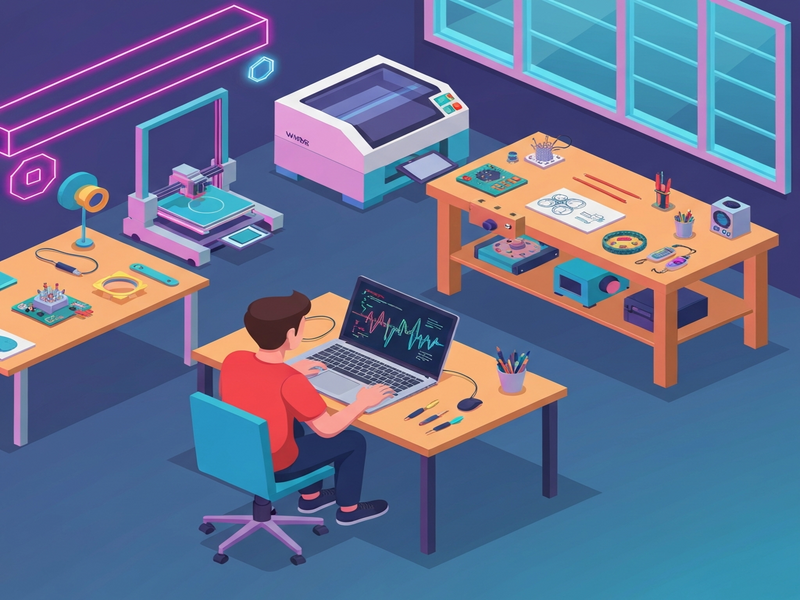
The Maker Movement celebrated tangible creation. 3D printers, Arduino boards, and laser cutters turned garages into micro‑factories. Its core promise was personal transformation: “If you can print a part, you can become more creative, entrepreneurial, and self‑reliant.”
Key characteristics:
- Physical prototyping with low‑cost hardware.
- Community‑driven “scenius” – small groups experimenting without immediate market pressure.
- Content creation that emphasized the act of making over the final product.
The movement produced cultural icons such as Chris Anderson’s About UBOS founder story and Cory Doctorow’s novel Makers. Yet, despite the hype, the promised decentralization of manufacturing never fully materialized; the deeper expertise remained locked in industrial hubs like Shenzhen.
2. Vibe Coding: Skipping the Scenius Phase
Vibe coding arrived with a bang, bypassing the slow‑burn playground that defined the Maker era. Powered by large language models (LLMs) and generative AI, developers can now spin up a functional web app, a chatbot, or a video generator in a single afternoon.
Unlike makers, Vibe coders receive immediate pressure to deliver production‑grade output. The AI marketing agents on UBOS illustrate this: they ingest brand data, generate campaign assets, and publish them without a prototype stage.
Core traits of Vibe Coding:
- Instant prototyping powered by OpenAI ChatGPT integration.
- Rapid consumption of “surplus intelligence” – AI’s massive knowledge base is treated as a resource to be spent.
- Hyper‑productive hypomanic states where evaluation lags behind creation.
The original news article describes this shift as moving from “transformation through making” to “consumption of cognitive surplus.”
3. Creative Processes: Maker vs. Vibe
3.1. Process Flow
| Aspect | Maker Movement | Vibe Coding |
|---|---|---|
| Toolset | 3D printers, Arduino, laser cutters | LLMs, generative APIs, no‑code editors |
| Time to MVP | Weeks‑to‑months | Minutes‑to‑hours |
| Feedback Loop | Human peers, community critique | Model output, automated metrics |
| Value Capture | Tangible artifacts, personal skill growth | Data signal, taste, attention, brand equity |
3.2. Value Capture Mechanisms
The Maker Movement monetized through physical products, kits, and workshops. Vibe coding, by contrast, monetizes the signal generated during rapid iteration:
- Taste & Judgment: Repeated prototyping hones an instinct for what users actually want. This intangible skill is now a premium consulting asset.
- Attention Economy: Public “built in a weekend” showcases generate social capital, similar to a YouTuber’s subscriber base. See the UBOS partner program for examples of creators turning attention into revenue.
- Data Fortress: Each prototype produces logs, prompts, and correction data that can be packaged as proprietary datasets. The Chroma DB integration helps store and query this semantic data.
3.3. Risk Profile
Makers faced low financial risk because prototypes rarely reached market. Vibe coders confront higher risk: rapid deployment can lead to brand dilution or compliance pitfalls if AI‑generated content is not vetted. The Workflow automation studio offers built‑in guardrails for compliance and version control.
4. What This Means for Creators and Enterprises
4.1. For Individual Creators
• Shift from Craft to Curation: Your portfolio should showcase not just finished apps but the insights you derived from each iteration. Use the UBOS portfolio examples to highlight data‑driven decision making.
• Monetize Taste: Offer advisory services that help startups decide which AI‑generated prototype to ship. The UBOS for startups page lists programs that reward such expertise.
• Leverage Templates: Jump‑start projects with ready‑made assets like the AI SEO Analyzer or the AI Article Copywriter. These templates let you focus on curation rather than code.
4.2. For SMBs and Enterprises
• Accelerated Time‑to‑Market: Deploy AI‑generated micro‑services via the Web app editor on UBOS. A functional prototype can be live in under an hour.
• Data‑Centric ROI: Capture the signal from each internal prototype and feed it into the ElevenLabs AI voice integration for personalized customer interactions.
• Cost‑Effective Scaling: The UBOS pricing plans allow you to pay per generated token rather than per developer hour, aligning spend with actual output.
• Governance & Compliance: Use the ChatGPT and Telegram integration to route audit logs to secure channels, ensuring traceability of AI‑generated decisions.
5. Conclusion – Embrace the Consumption Metaphor
The transition from the Maker Movement to Vibe Coding is less about abandoning hands‑on craft and more about redefining where value lives. By treating AI as a surplus resource to be spent wisely, creators can cultivate taste, capture attention, and build data fortresses that outlast any single prototype.
If you’re ready to turn rapid AI prototyping into a strategic advantage, explore the UBOS homepage and start with a free template like the Talk with Claude AI app. Join the UBOS partner program to monetize your newfound taste and signal.
Ready to code the vibe? Dive in now and let the AI surplus fuel your next breakthrough.
Andrii Bidochko
CTO UBOS
Andrii Bidochko is an AI entrepreneur and researcher focused on AI agents, reinforcement learning, and autonomous systems. He writes about the technologies shaping the future of machine intelligence, from frontier models and agent architectures to real-world AI applications.