

- Updated: February 26, 2026
- 6 min read
OpenSwarm: Autonomous AI Agent Orchestrator Launches on UBOS
OpenSwarm — The Open‑Source Autonomous AI Agent Orchestrator
OpenSwarm is an open‑source platform that coordinates multiple Claude‑powered AI agents to autonomously handle software development tasks, issue triage, and knowledge‑base management.
If you’re a CTO, product manager, or AI developer looking for a turnkey solution to turn large‑language‑model (LLM) capabilities into self‑driving workflows, OpenSwarm delivers a battle‑tested orchestration engine that plugs directly into Claude, Linear, Discord, and GitHub. The project lives on GitHub, where the community continuously adds new agents, memory layers, and scheduling strategies.
OpenSwarm Features & Architecture
Core Engine
- Autonomous Runner – a cron‑driven heartbeat that pulls Linear issues, launches agent pipelines, and persists state.
- Decision Engine – validates scope, enforces rate limits, and prioritizes tasks based on configurable policies.
- Task Scheduler – dynamic queue management with slot allocation for parallel agent execution.
Agent Pipeline
- Worker – generates code or content using Claude’s haiku‑4‑5 model.
- Reviewer – critiques the output, requests revisions, or approves the result.
- Tester & Documenter (optional) – run automated tests and produce documentation automatically.
Memory & Knowledge Graph
OpenSwarm stores long‑term embeddings in Chroma DB integration backed by LanceDB vectors, enabling agents to recall prior decisions, code patterns, and project context across sessions. A static knowledge graph performs dependency analysis and impact assessment, making the orchestration smarter over time.
The memory layer also supports ElevenLabs AI voice integration for audible status updates, and can be extended with OpenAI ChatGPT integration for hybrid LLM pipelines.
System Diagram (Simplified)
┌─────────────┐   Linear API
│  Linear     │───────────────────────┐
│  Issues     │                       │
└─────┬───────┘                       ▼
      │                     ┌─────────────────┐
      ▼                     │ AutonomousRunner│
┌─────────────┐   Cron   │ (heartbeat)     │
│ Decision    │◀─────────│                 │
│ Engine      │          └───────┬─────────┘
└─────┬───────┘                  │
      │                          ▼
      ▼                ┌─────────────────────┐
   ┌───────┐          │ PairPipeline (Worker│
   │ Queue │◀─────────│ → Reviewer → Tester)│
   └───────┘          └───────┬─────────────┘
                              │
                              ▼
                     ┌─────────────────┐
                     │ Memory (LanceDB)│
                     └───────┬─────────┘
                             │
                             ▼
                     ┌─────────────────┐
                     │ Discord Bot      │
                     └─────────────────┘
Benefits & Real‑World Use Cases
By abstracting the orchestration logic, OpenSwarm lets teams focus on business value rather than glue code. Below are the most compelling advantages for AI‑centric organizations.
- Continuous Delivery Automation – automatically turn Linear tickets into PRs, run tests, and merge when criteria are met.
- Scalable Knowledge Retention – vector‑based memory lets agents recall design patterns, reducing repetitive prompts.
- Human‑in‑the‑Loop Flexibility – Discord commands let engineers intervene, reprioritize, or inspect logs in real time.
- Multi‑Model Strategy – combine Claude for code generation with ChatGPT for natural‑language summarization via the ChatGPT and Telegram integration.
- Cost‑Effective Open Source – no vendor lock‑in, full control over deployment, and MIT licensing.
Typical Scenarios
- DevOps Automation: Auto‑generate CI/CD pipelines for new micro‑services based on issue templates.
- Customer Support Bots: Use the Customer Support with ChatGPT API template to route tickets, then let OpenSwarm create code fixes.
- Content Production: Pair a Claude writer with a reviewer to produce SEO‑optimized blog posts, then feed them into the AI SEO Analyzer for keyword refinement.
- Data Extraction Pipelines: Combine Web Scraping with Generative AI and OpenSwarm’s memory to build up‑to‑date knowledge graphs.
Installation & Getting Started
OpenSwarm runs on Node.js 22+ and can be deployed locally, on a VM, or inside Docker. Follow these steps to spin up a functional instance in under ten minutes.
Step‑by‑Step Guide
- Clone the repository:
git clone https://github.com/Intrect-io/OpenSwarm.git cd OpenSwarm - Install dependencies:
npm install - Configure secrets – copy the example file and fill in your tokens:
cp config.example.yaml config.yaml
# edit config.yaml or set environment variables
Required variables include
DISCORD_TOKEN,LINEAR_API_KEY, andCLAUDE_API_KEY. - Run in development mode (auto‑restart):
npm run dev - Production deployment – build and start:
npm run build npm start - Docker alternative – use the provided
docker‑compose.yml:docker compose up -d
After launch, invite the Discord bot to your server, run !auto start, and watch the agents pick up the first Linear issue. The web dashboard (default http://localhost:3847) gives you a live view of queue depth, memory hits, and agent logs.
Illustration: OpenSwarm Architecture at a Glance
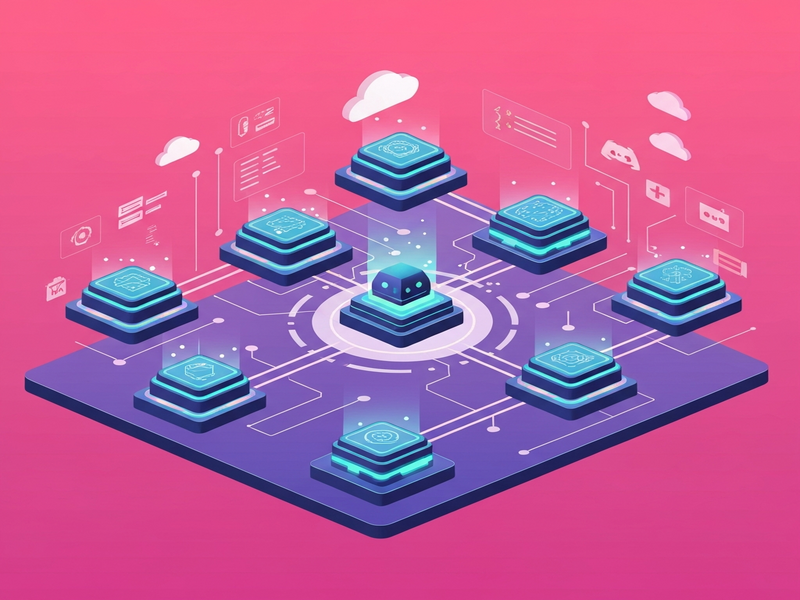
The diagram visualizes the heartbeat loop, decision engine, pair pipeline, and memory components that together enable autonomous AI orchestration.
Notice how the Workflow automation studio can be used to extend the pipeline with custom triggers, while the Web app editor on UBOS lets you prototype UI front‑ends for the same data.
Why UBOS Is the Ideal Companion for OpenSwarm
OpenSwarm focuses on the orchestration layer, but most enterprises need a full‑stack AI platform to turn the generated code into production services. The UBOS platform overview provides managed hosting, CI/CD pipelines, and built‑in observability that complement OpenSwarm’s autonomous agents.
For startups, the UBOS for startups program offers discounted compute credits and a curated marketplace of ready‑made templates such as the AI Article Copywriter or the AI Video Generator. These templates can be invoked directly from an OpenSwarm pipeline, turning a code PR into a marketing asset without manual effort.
Mid‑size businesses benefit from the UBOS solutions for SMBs, which bundle the AI marketing agents with analytics dashboards. When combined with OpenSwarm’s cognitive memory, the system can suggest next‑generation campaigns based on past performance.
Large enterprises looking for a robust, secure environment can adopt the Enterprise AI platform by UBOS. Its multi‑tenant architecture, role‑based access control, and compliance certifications make it a safe home for OpenSwarm’s autonomous agents in regulated sectors.
Pricing transparency is essential. Review the UBOS pricing plans to understand how compute, storage, and API calls are billed when you scale OpenSwarm across dozens of projects.
Finally, the UBOS partner program invites technology vendors to co‑market solutions. By listing your OpenSwarm‑based service in the UBOS portfolio examples, you gain exposure to a global audience of AI innovators.
Conclusion & Next Steps
OpenSwarm proves that autonomous AI agents can move beyond isolated chat experiences and become productive members of a software development team. Its modular architecture, vector‑based memory, and seamless Discord control make it a compelling choice for any organization eager to automate repetitive coding tasks while preserving human oversight.
Ready to experiment? Clone the repo, spin up a local instance, and watch Claude‑powered agents turn a simple Linear ticket into a fully tested pull request. Then, integrate the output with UBOS’s UBOS templates for quick start to accelerate deployment.
Visit the UBOS homepage to explore the full suite of AI tools, join the partner program, or request a personalized demo of how OpenSwarm can be embedded into your enterprise AI strategy.
Andrii Bidochko
CTO UBOS
Andrii Bidochko is an AI entrepreneur and researcher focused on AI agents, reinforcement learning, and autonomous systems. He writes about the technologies shaping the future of machine intelligence, from frontier models and agent architectures to real-world AI applications.