

- Updated: February 24, 2026
- 5 min read
Vertebrate Eye Evolution: New Insights Unveiled
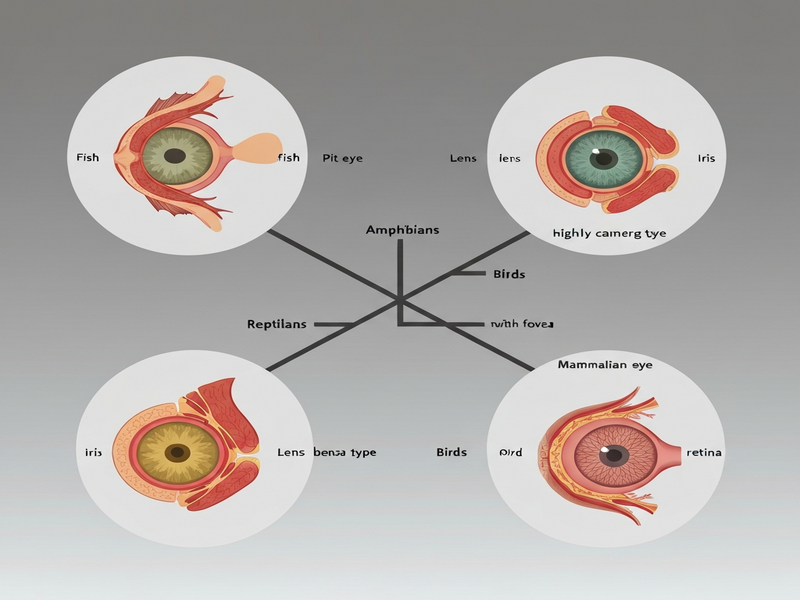
Vertebrate eye evolution progressed through a series of incremental adaptations—starting with simple light‑sensing patches, advancing to a cup‑shaped retina, and finally achieving the complex, image‑forming eyes seen in modern fish, birds, and mammals.
How Vertebrate Eyes Evolved: New Insights from the NYTimes Science Report
A recent NYTimes article uncovers fresh fossil evidence that reshapes our understanding of eye development across the animal kingdom. For science enthusiasts, biology students, and curious readers, this breakthrough not only clarifies a long‑standing mystery but also illustrates the power of interdisciplinary research—combining paleontology, genetics, and computational modeling.
Key Findings at a Glance
- Three distinct evolutionary stages were identified: simple photoreceptive cells, a concave retinal cup, and a fully focused lens system.
- Fossilized eye structures from Cambrian‑Era arthropods show the earliest light‑sensing patches, predating vertebrate lineages by ~50 million years.
- Genomic analysis links the emergence of the Pax6 gene to the transition from a retinal cup to a lens‑bearing eye.
- Computational simulations suggest that incremental improvements in visual acuity provided immediate survival advantages, driving rapid diversification.
Historical Context: From Light Sensors to Complex Vision
The story of eye evolution begins in the deep seas of the early Cambrian, where the first multicellular organisms developed rudimentary photoreceptive patches to detect light and shadow. These patches, akin to modern opsin-containing cells, offered a basic advantage: the ability to move toward favorable light conditions for photosynthesis or away from predators.
Over millions of years, natural selection favored organisms that could form a shallow depression in the light‑sensing tissue. This “cup‑shaped retina” captured light from a wider angle, creating a primitive image. The transition is evident in the fossil record of early vertebrates such as Haikouichthys, whose eye sockets reveal a concave surface that likely housed a retinal cup.
The final leap—development of a transparent, refractive lens—required the coordinated expression of the Pax6 transcription factor, a genetic master switch still present in all modern eyes. Once a lens could focus light onto the retinal surface, visual resolution increased dramatically, enabling predators to hunt with precision and prey to detect threats earlier.
Implications for Evolutionary Biology and Future Research
These findings have far‑reaching implications:
- Revising Evolutionary Timelines: The new fossil evidence pushes the origin of complex eyes back by tens of millions of years, prompting a reassessment of when major vertebrate groups diverged.
- Genetic Conservation: The central role of Pax6 underscores the deep genetic continuity across animal phyla, reinforcing the concept of a “genetic toolkit” that can be repurposed for diverse structures.
- Computational Modeling: By integrating paleontological data with AI‑driven simulations—similar to the Enterprise AI platform by UBOS—researchers can predict how incremental visual improvements affect ecological dynamics.
- Biomedical Applications: Understanding the stepwise assembly of eye components may inspire regenerative medicine approaches for retinal diseases.
Future studies will likely focus on high‑resolution imaging of micro‑fossils, CRISPR‑based functional assays of Pax6 variants, and large‑scale AI analyses that map eye‑related gene networks across species.
Why This Matters for Tech Innovators and AI Enthusiasts
The evolutionary narrative of the eye mirrors the iterative development cycles of modern AI platforms. Just as early photoreceptors evolved into sophisticated visual systems, AI tools progress from simple rule‑based models to deep, multimodal networks. At UBOS homepage, we champion this philosophy through a suite of adaptable solutions.
- Explore the UBOS platform overview to see how modular components accelerate product development.
- Leverage AI marketing agents that continuously learn from user feedback—much like eyes refine focus through experience.
- Join the UBOS partner program to collaborate on cutting‑edge research projects.
- Compare UBOS pricing plans that scale with your organization’s growth.
- Kick‑start your next project with UBOS templates for quick start, including pre‑built data pipelines.
- Review real‑world success stories in the UBOS portfolio examples section.
- Startups can benefit from the dedicated UBOS for startups program, offering mentorship and resources.
- SMBs looking for tailored solutions should explore UBOS solutions for SMBs.
- Develop custom web applications using the Web app editor on UBOS, which supports drag‑and‑drop UI building.
- Automate complex workflows with the Workflow automation studio, reducing manual effort.
- Integrate conversational AI via the OpenAI ChatGPT integration for natural language interfaces.
- Combine visual data with language models using the Chroma DB integration for semantic search.
- Enhance voice interactions with the ElevenLabs AI voice integration, delivering lifelike speech.
- Connect your bots to Telegram through the Telegram integration on UBOS, expanding reach.
- Explore advanced chatbot scenarios with the ChatGPT and Telegram integration, enabling real‑time assistance.
Explore Related AI Tools on UBOS Template Marketplace
If the evolutionary journey of eyes sparks your curiosity about AI evolution, check out these ready‑made templates:
- AI SEO Analyzer – Optimize content visibility with AI‑driven keyword insights.
- AI Article Copywriter – Generate high‑quality drafts in seconds.
- AI Video Generator – Transform scripts into engaging videos.
- AI Chatbot template – Deploy conversational agents across platforms.
- AI Image Generator – Create custom visuals for scientific presentations.
Conclusion: A Vision for the Future
The new NYTimes report confirms that vertebrate eyes did not appear fully formed but emerged through a series of adaptive steps—each offering a selective edge. This incremental model mirrors how modern AI systems evolve, reinforcing the principle that breakthroughs often arise from building upon modest, well‑tested foundations.
Whether you are a biologist tracing the lineage of vision or a developer crafting the next generation of AI tools, the lesson is clear: embrace iterative improvement, leverage interdisciplinary data, and stay curious. To dive deeper into the intersection of biology and technology, explore the resources above and consider joining the UBOS partner program for collaborative research opportunities.
Ready to illuminate your own projects? Visit the UBOS homepage and start building today.
Andrii Bidochko
CTO UBOS
Andrii Bidochko is an AI entrepreneur and researcher focused on AI agents, reinforcement learning, and autonomous systems. He writes about the technologies shaping the future of machine intelligence, from frontier models and agent architectures to real-world AI applications.