

- Updated: February 22, 2026
- 5 min read
Robot Vacuum Army Exposes Smart‑Home Privacy Risks – DJI Romo Flaw Revealed
The DJI Romo robot vacuum suffered a critical security flaw that let anyone with the right token view live video, hear audio, and track the location of thousands of devices worldwide.
DJI Romo Robot Vacuum Security Flaw Exposes Thousands of Homes
Why This Story Matters to Smart‑Home Owners
Tech‑savvy homeowners are constantly balancing convenience with privacy. The recent DJI Romo vulnerability proves that even premium robot vacuums can become surveillance tools if their cloud APIs are mis‑configured. Below we break down the flaw, the researcher’s discovery process, DJI’s patch timeline, and the broader implications for smart home privacy.
What the Security Flaw Actually Did
The bug originated from an overly permissive authentication token on DJI’s backend servers. When a user authenticated their own Romo, the server mistakenly granted the same token access to the entire fleet of devices linked to the same API key. In practice, this meant:
- Live video streams from the vacuum’s built‑in camera could be pulled remotely.
- Microphone audio could be captured and replayed.
- 2‑D floor‑plan maps of users’ homes were downloadable.
- Device IP addresses revealed approximate geographic locations.
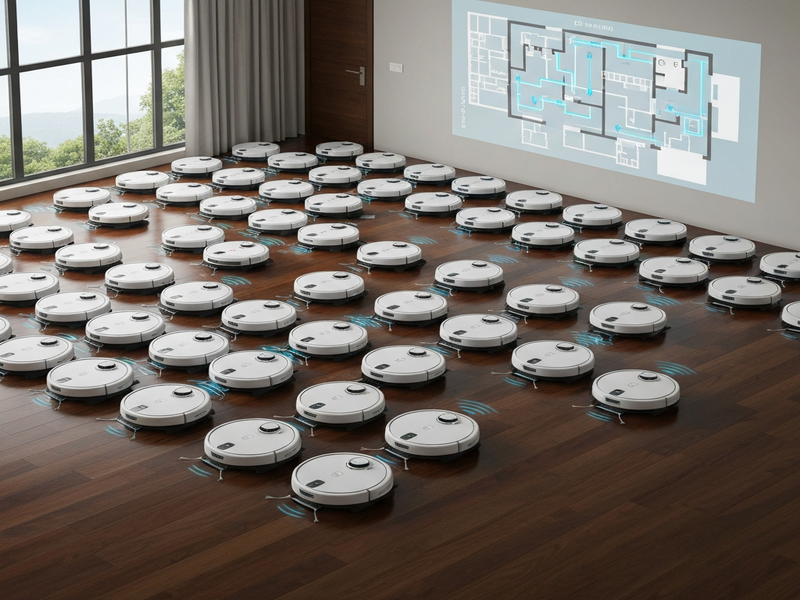
Estimates from the researcher suggest that the flaw affected nearly 7,000 units across 24 countries, creating an inadvertent “robot vacuum army” that could be commandeered without owners’ consent.
How an AI‑Assisted Hobbyist Uncovered the Issue
Sammy Azdoufal, a software engineer, wanted to control his Romo with a game controller. To reverse‑engineer the communication protocol, he enlisted an OpenAI ChatGPT integration to generate code snippets and decode network traffic. While parsing the API responses, he noticed that the authentication token returned a list of device IDs far beyond his own unit.
“The server treated my token as if I owned every Romo linked to that API key. I could request live feeds from any of them.” – Sammy Azdoufal
Realizing the gravity of the situation, Azdoufal refrained from exploiting the data and instead reported the vulnerability to DJI via The Verge, which then alerted the manufacturer.
DJI’s Reaction: Patches and Public Statements
DJI confirmed that an internal review identified the flaw in late January 2026. The company rolled out two back‑to‑back updates:
- February 8, 2026: Initial patch that tightened token validation and limited API responses to the authenticated device only.
- February 10, 2026: Follow‑up update that introduced mandatory two‑factor authentication for all cloud‑linked actions.
Both updates were pushed automatically, requiring no user interaction. DJI’s spokesperson said, “We have addressed the issue and will continue to implement additional security enhancements.”
What This Means for Smart‑Home Privacy
The Romo incident underscores three critical lessons for anyone with connected devices:
1. Cloud APIs Are the Weakest Link
Even well‑engineered hardware can become a privacy nightmare if the cloud service grants overly broad permissions. Homeowners should audit which devices rely on remote servers and demand transparent security policies.
2. AI‑Powered Tools Accelerate Both Discovery and Exploitation
Azdoufal’s use of a generative AI assistant illustrates how powerful coding helpers can lower the barrier for security research—and for malicious actors. Companies must assume that attackers can leverage the same AI tools.
3. Regulatory Scrutiny Is Growing
U.S. lawmakers have repeatedly warned about the security risks of Chinese‑made IoT devices. The Romo flaw adds concrete evidence to those concerns, potentially influencing future import restrictions and certification requirements.
For readers who want to protect their own smart homes, consider the following actionable steps:
- Enable two‑factor authentication on every cloud‑linked device.
- Regularly check for firmware updates and apply them promptly.
- Segment IoT devices on a separate Wi‑Fi network.
- Review privacy settings in each app and disable unnecessary camera or microphone access.
How UBOS Helps Secure Your AI‑Driven Workflows
While the DJI incident highlights a specific vulnerability, the underlying challenge is universal: managing secure, automated interactions between devices and AI services. UBOS offers a suite of tools that let you build, monitor, and harden AI‑enabled workflows without exposing sensitive tokens.
Explore the UBOS platform overview to see how its Workflow automation studio enforces strict permission scopes. For developers looking to integrate voice or vision AI safely, the ElevenLabs AI voice integration provides token‑level isolation.
Businesses can also leverage pre‑built templates such as the AI SEO Analyzer or the AI Video Generator to accelerate marketing while keeping data pipelines secure.
Whether you’re a startup (UBOS for startups), an SMB (UBOS solutions for SMBs), or an enterprise (Enterprise AI platform by UBOS), the platform’s built‑in security controls help you avoid the pitfalls that befell DJI.
Take Action Today
If you own a DJI Romo or any other cloud‑connected robot vacuum, verify that you’re running the latest firmware. For broader smart‑home protection, consider a unified security dashboard like the one offered in the UBOS partner program. It consolidates device health, token usage, and anomaly alerts in a single pane of glass.
Stay informed about emerging threats by subscribing to reputable tech news sources, and remember that the best defense is a proactive security posture.
Read the full Popsci investigation here.
Andrii Bidochko
CTO UBOS
Andrii Bidochko is an AI entrepreneur and researcher focused on AI agents, reinforcement learning, and autonomous systems. He writes about the technologies shaping the future of machine intelligence, from frontier models and agent architectures to real-world AI applications.