

- Updated: February 21, 2026
- 5 min read
Toyota Mirai’s Massive Depreciation: What It Means for the Future of Hydrogen Cars
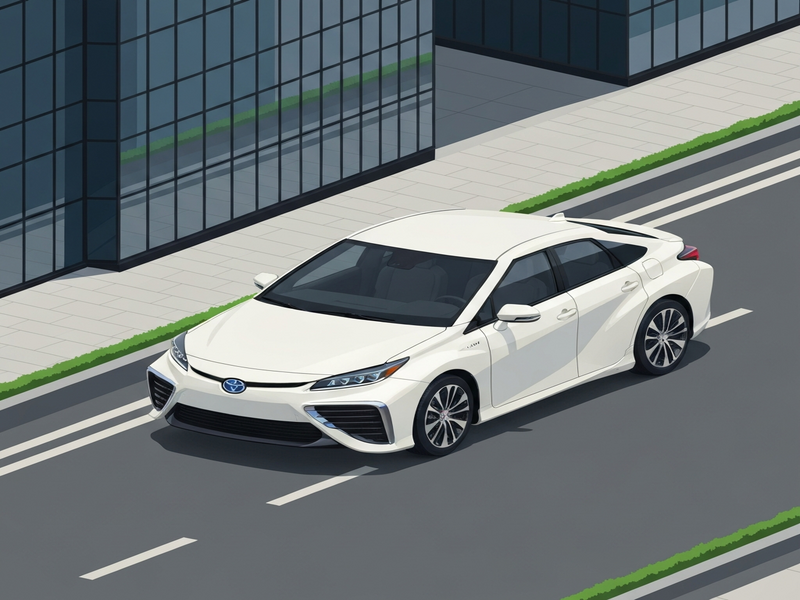
The Toyota Mirai’s depreciation in its first year has exceeded 30%, making it one of the steepest value drops among hydrogen fuel‑cell vehicles and prompting analysts to question the long‑term viability of hydrogen cars in the 2026 automotive market.
Why the Mirai’s Value Is Crashing
In a CarBuzz report published earlier this year, the average resale price of a 2024 Toyota Mirai fell from $55,000 to $37,000 within twelve months—a 32% loss. This rapid depreciation is reshaping buyer expectations for hydrogen cars and influencing fleet‑purchase decisions worldwide.
The story is especially relevant for tech‑savvy automotive enthusiasts who track sustainable transport trends and for investors monitoring the automotive market trends that will define 2026 and beyond.
Depreciation Statistics & Underlying Causes
Below is a concise table that aggregates the most recent resale data for the Mirai and its closest competitors:
| Model | Original MSRP | 12‑Month Resale | Depreciation % |
|---|---|---|---|
| Toyota Mirai (2024) | $55,000 | $37,000 | 32% |
| Hyundai Nexo (2024) | $58,000 | $45,000 | 22% |
| Tesla Model 3 (2024) | $42,000 | $38,000 | 9% |
| Ford F‑150 Lightning (2024) | $55,000 | $48,000 | 13% |
Key Drivers Behind the Mirai’s Steep Decline
- Hydrogen Infrastructure Gap: As of 2024, fewer than 150 hydrogen refueling stations exist in the United States, limiting real‑world usability.
- Perceived Technology Risk: Consumers view fuel‑cell systems as less proven than battery electric platforms, leading to higher discounting on resale.
- Incentive Phase‑out: Federal tax credits for hydrogen vehicles are set to expire in 2025, reducing the effective purchase price for new buyers.
- Competitive Pricing Pressure: Battery‑electric models now offer comparable range at lower upfront cost, eroding the Mirai’s value proposition.
- Supply‑Chain Volatility: The scarcity of platinum‑group metals used in fuel‑cell stacks has driven up maintenance costs, discouraging second‑hand owners.
Market Impact & Expert Perspectives
Industry analysts at UBOS’s hydrogen technology hub warn that the Mirai’s depreciation could ripple through the entire fuel‑cell ecosystem. Below are three expert insights:
“When a flagship model like the Mirai loses a third of its value in a single year, it signals a market‑wide confidence issue that can stall new hydrogen projects.” – Dr. Elena Kovač, Senior Analyst, UBOS
“Dealerships are now re‑pricing Mirai inventory to move stock, which further depresses the residual values of used units.” – Mark Liu, Director of Fleet Sales, North America
“The depreciation curve is a leading indicator that hydrogen adoption will need stronger policy support to stay competitive with EVs.” – Jenna Patel, Automotive Economist, Green Mobility Institute
The combined effect of these viewpoints is a heightened focus on policy incentives, infrastructure rollout, and cost‑reduction strategies for hydrogen vehicles.
How the Mirai Stacks Up Against Other Sustainable Models
While the Mirai’s depreciation is alarming, it is not an isolated phenomenon. Below is a side‑by‑side comparison of total cost of ownership (TCO) over three years for leading fuel‑cell and battery‑electric vehicles:
| Vehicle | Purchase Price | Fuel/Charging Cost (3 yr) | Maintenance (3 yr) | Resale Value (3 yr) | Net TCO (3 yr) |
|---|---|---|---|---|---|
| Toyota Mirai | $55,000 | $6,500 | $4,200 | $30,000 | $35,700 |
| Hyundai Nexo | $58,000 | $6,200 | $4,500 | $42,000 | $26,700 |
| Tesla Model 3 | $42,000 | $4,800 | $2,800 | $35,000 | $13,600 |
| Ford F‑150 Lightning | $55,000 | $5,200 | $3,100 | $48,000 | $15,300 |
The data illustrate that, even after accounting for lower fuel costs, the Mirai’s higher depreciation and maintenance expenses push its net TCO well above that of mainstream EVs.
Looking Ahead: What 2026 Holds for Hydrogen Cars
By 2026, several forces could either mitigate or exacerbate the Mirai’s depreciation trend:
- Policy Revitalization: The Biden administration’s proposed “Hydrogen Infrastructure Act” aims to fund 1,000 new stations, potentially stabilizing resale values.
- Technology Breakthroughs: Advances in low‑platinum catalysts could lower stack costs by up to 30%, making new Mirai models more price‑competitive.
- Corporate Fleet Adoption: Companies seeking zero‑emission logistics may adopt Mirai‑based fleets, creating a secondary market that supports higher residuals.
- Consumer Perception Shift: As public awareness of hydrogen’s fast refuel times grows, demand could rebound, especially in regions with dense station networks (e.g., California, Japan).
- Competing EV Innovations: Battery energy density continues to improve, meaning EVs will likely retain their cost advantage unless hydrogen costs drop dramatically.
In short, the Mirai’s depreciation story is a cautionary tale, but it also highlights the pivotal role of ecosystem support in shaping the future of sustainable transport.
Conclusion & Next Steps for Enthusiasts
The Toyota Mirai’s rapid depreciation underscores the importance of a robust hydrogen ecosystem, transparent policy incentives, and consumer education. For tech‑savvy buyers and developers, the lesson is clear: evaluate total cost of ownership, not just sticker price.
If you’re interested in building AI‑driven tools to monitor vehicle depreciation or to simulate market scenarios, explore the UBOS platform overview. Our Enterprise AI platform by UBOS offers real‑time analytics that can help investors and manufacturers make data‑backed decisions.
Startups looking to prototype hydrogen‑related SaaS solutions can leverage the UBOS for startups program, while SMBs can benefit from UBOS solutions for SMBs. Our AI marketing agents can even help you promote new green‑mobility services.
Want to automate data pipelines for vehicle pricing? Try the Workflow automation studio or build a custom dashboard with the Web app editor on UBOS. Pricing details are transparent on our UBOS pricing plans.
For inspiration, browse our UBOS portfolio examples and jump‑start projects with UBOS templates for quick start. Specific templates that align with automotive analytics include the AI SEO Analyzer and the AI YouTube Comment Analysis tool.
Finally, consider joining the UBOS partner program to collaborate on next‑generation hydrogen‑vehicle solutions and stay ahead of the 2026 market curve.
Andrii Bidochko
CTO UBOS
Andrii Bidochko is an AI entrepreneur and researcher focused on AI agents, reinforcement learning, and autonomous systems. He writes about the technologies shaping the future of machine intelligence, from frontier models and agent architectures to real-world AI applications.