

- Updated: February 19, 2026
- 7 min read
IRS Cuts About 40% of IT Staff, Turns to AI and Automation
The IRS has eliminated roughly 40 % of its IT workforce and is reshaping its technology organization, turning to generative AI and automation to keep tax‑season services running while tightening cybersecurity.
IRS Job Cuts and the Scope of the IT Re‑organization
The Internal Revenue Service announced a sweeping reduction of its technology staff in early 2026. According to the agency’s chief information officer, Kaschit Pandya, the IRS shed about 40 % of its IT employees and nearly 80 % of its senior tech leaders in a single fiscal year. This marks the most extensive tech‑staff downsizing in the agency’s modern history.
At the start of 2025 the IRS technology division comprised roughly 8,500 personnel. By October 2025 that number had fallen to 7,135, a decline of more than 1,300 positions. The Treasury Inspector General for Tax Administration (TIGTA) confirmed these figures in its latest workforce report.
Why the Cuts Happened
- Federal budget constraints following the 2024 appropriations cycle.
- A strategic shift toward “lean‑tech” operations championed by the Trump administration’s broader civil‑service reforms.
- Efforts to break down departmental silos and create cross‑functional delivery teams.
While the cuts reduced headcount, the IRS also redeployed about 1,000 technologists to frontline tax‑season support roles, a move that has drawn criticism from some internal stakeholders who question the long‑term sustainability of the model.
Re‑structuring the Remaining Workforce
To compensate for the loss of senior talent, the IRS introduced “cross‑functional squads” that own end‑to‑end delivery of specific projects, from requirements gathering to production rollout. The goal is to eliminate the “cold hand‑off” that previously plagued legacy processes.
Despite these changes, Pandya admitted that the cultural shift is still in progress: “We still see pockets of siloed work, but the new structure is a step toward a unified scorecard‑driven organization.”
AI Integration and Cybersecurity Implications
With a leaner IT staff, the IRS is accelerating its adoption of generative AI tools to automate routine tasks, improve data quality, and enhance taxpayer interactions. The agency’s roadmap highlights three primary AI use cases:
- Document processing and OCR: AI models will extract data from paper returns, reducing manual entry errors.
- Chat‑based taxpayer assistance: Conversational agents powered by large language models (LLMs) will field common queries, freeing human agents for complex cases.
- Risk analytics: Machine‑learning classifiers will flag potentially fraudulent filings for deeper review.
Balancing Automation with Security
Integrating AI into a mission‑critical agency raises significant cybersecurity concerns. The IRS must protect sensitive taxpayer data while exposing new attack surfaces through APIs and model endpoints. Key safeguards being implemented include:
- Zero‑trust network segmentation for AI workloads.
- Continuous model monitoring for data leakage and adversarial attacks.
- Strict access controls tied to the agency’s existing Identity and Access Management (IAM) framework.
Industry analysts warn that rapid AI adoption without mature governance can increase the risk of “model drift” and inadvertent disclosure of personally identifiable information (PII). The IRS’s partnership with private AI vendors is therefore being scrutinized by both the Office of Management and Budget (OMB) and congressional oversight committees.
Impact on Taxpayers and Government Services
For the average taxpayer, the immediate effects of the IRS’s tech cuts are mixed:
- Potential delays: Reduced staffing may slow the rollout of new digital filing features, especially for complex tax forms.
- Improved self‑service: AI‑driven chat assistants promise faster answers to routine questions, potentially reducing call‑center wait times.
- Security posture: Enhanced AI‑based fraud detection could lower the incidence of identity theft, but any breach would have amplified consequences.
Policy analysts stress that the success of the IRS’s transformation hinges on transparent communication with taxpayers and clear metrics for service level agreements (SLAs). Without measurable outcomes, public confidence could erode further.
How UBOS Is Positioned to Support Government Tech Modernization
UBOS offers a suite of low‑code, AI‑enabled tools that align closely with the IRS’s need for rapid automation and secure integration. Below are several UBOS capabilities that can help federal agencies like the IRS accelerate their digital agendas while mitigating risk.
Unified Low‑Code Platform
Visit the UBOS platform overview to see how a single environment can host data pipelines, AI models, and front‑end interfaces without the overhead of managing disparate systems.
AI‑Powered Automation Studio
The Workflow automation studio enables citizen developers to build end‑to‑end processes—such as automated tax‑form extraction—using drag‑and‑drop components, dramatically reducing the need for specialized developers.
Secure AI Integrations
UBOS’s native connectors for leading AI services—including OpenAI ChatGPT integration and Chroma DB integration—are built with enterprise‑grade encryption and audit logging, meeting federal security standards.
Voice‑First Interactions
For taxpayers who prefer spoken assistance, the ElevenLabs AI voice integration can power natural‑language phone bots that understand and respond to complex tax queries.
Rapid Prototyping with Templates
UBOS’s UBOS templates for quick start include ready‑made solutions such as the AI SEO Analyzer, AI Article Copywriter, and AI Video Generator. These can be adapted for internal training videos, compliance briefings, or public outreach campaigns.
Enterprise‑Scale Governance
The Enterprise AI platform by UBOS provides role‑based access control, model versioning, and audit trails—features essential for a federal agency handling sensitive taxpayer data.
Partner Ecosystem
Organizations can leverage the UBOS partner program to co‑develop custom extensions, ensuring that any solution aligns with the IRS’s unique compliance requirements.
Cost Transparency
UBOS’s pricing plans are subscription‑based, allowing agencies to forecast expenses accurately and avoid surprise capital expenditures.
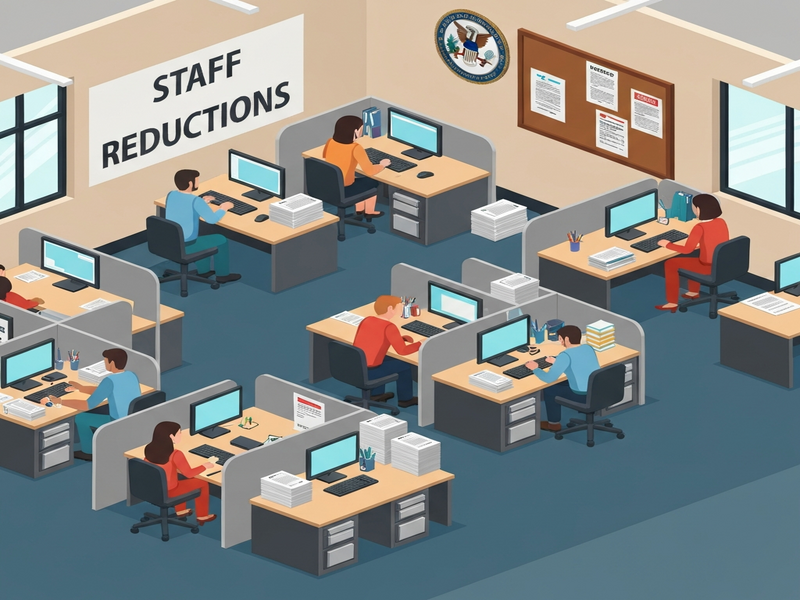
Visual Insight: AI‑Driven Transformation at the IRS
Broader Context: Government IT Modernization Trends
Beyond the IRS, many federal agencies are confronting similar talent shortages and are turning to low‑code AI platforms to maintain service continuity. The government IT page on UBOS highlights case studies where agencies reduced development cycles by up to 70 % using the same technology stack described above.
For startups and SMBs navigating comparable challenges, UBOS offers tailored solutions: see UBOS for startups and UBOS solutions for SMBs. These resources illustrate how the same principles of AI‑enabled automation can be scaled down to fit smaller budgets while still delivering enterprise‑grade security.
What Tax Professionals Should Watch Next
Tax advisors, compliance officers, and IT managers should keep an eye on three emerging signals:
- Regulatory guidance on AI use in tax administration: Expect new Treasury and IRS memos clarifying permissible model training data and audit requirements.
- Vendor certification programs: Look for certifications that demonstrate a provider’s compliance with FedRAMP and FISMA standards.
- Performance dashboards: Agencies will likely publish KPI dashboards measuring AI‑driven processing times, error rates, and security incidents.
Conclusion & Call to Action
The IRS’s aggressive IT downsizing and pivot to AI reflect a broader federal push toward leaner, more automated service delivery. While the transition poses risks—particularly around cybersecurity and service continuity—strategic adoption of low‑code, AI‑centric platforms can mitigate those challenges.
If you are a tax professional, government IT leader, or policy analyst seeking a proven, secure, and cost‑effective way to modernize tax‑technology workflows, explore UBOS’s capabilities today. Start with the UBOS homepage and request a demo of the Web app editor on UBOS to see how quickly you can prototype AI‑enhanced tax tools.
Stay informed, stay secure, and leverage AI responsibly to keep the tax system efficient for every American.
Source: The Register article on IRS job cuts