

- Updated: February 19, 2026
- 7 min read
Parachord Launches Vibe‑Coding Music Streaming App to Unite Spotify, Apple Music, and Bandcamp
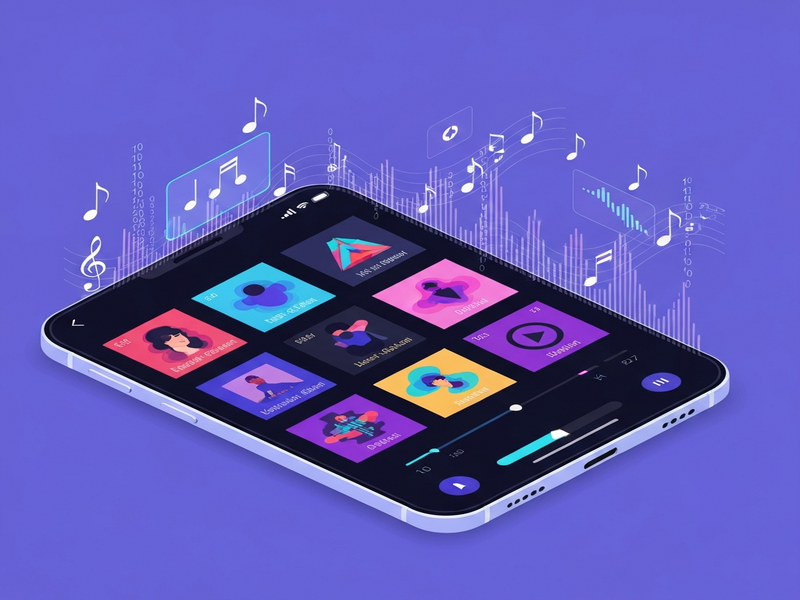
Parachord is a vibe‑coded music streaming app that uses AI to unify Spotify, Apple Music, and Bandcamp into a single, personalized listening experience, letting users share and discover music across platform silos.
AI‑Driven Music Streaming: Why Parachord Matters
In a world where streaming giants lock users into proprietary ecosystems, Parachord emerges as a bold experiment that leverages artificial intelligence to dissolve those walls. By translating a song’s “vibe” into a portable metadata tag, the app can match tracks from Spotify, Apple Music, and Bandcamp without forcing listeners to juggle multiple subscriptions.
For tech‑savvy music enthusiasts and industry professionals, this means a single, AI‑curated playlist that truly reflects personal taste—no matter where the track lives. The concept aligns with the broader UBOS technology stack, which emphasizes modular AI integrations that can be repurposed across domains.
What Is Vibe‑Coding and How Does Parachord Use It?
Vibe‑coding is a method of assigning a multidimensional “mood fingerprint” to each audio file. Instead of relying on static tags like genre or artist, the algorithm analyses tempo, timbre, lyrical sentiment, and even user‑generated context (e.g., a tweet or Instagram story) to produce a dynamic vector. Parachord then uses this vector to:
- Match songs across different services that share the same emotional profile.
- Generate playlists that evolve as the user’s listening habits shift.
- Enable cross‑platform sharing via universal links, bypassing DRM‑locked silos.
Behind the scenes, the app taps into OpenAI ChatGPT integration for natural‑language processing, while Chroma DB integration stores the high‑dimensional vectors for lightning‑fast similarity searches.
From Tomahawk to Parachord: A 15‑Year Journey
The DNA of Parachord can be traced back to the Tomahawk project, a plug‑in‑based music aggregator launched in 2011 by veteran J Herskowitz. Tomahawk allowed users to pull libraries from Rdio, Grooveshark, and Beats Music into a single UI, but it never found a sustainable business model and was discontinued in 2015.
When Herskowitz revisited the abandoned codebase a month ago, he turned to AI for a rapid rewrite. “I fired up Claude Code, pointed it at the Tomahawk repo on GitHub, and said: Look at this, understand what it does, and let’s see if we can rebuild it,” he told The Verge. Within weeks, the prototype evolved into Parachord, now capable of handling modern APIs and AI‑driven vibe analysis.
This revival showcases a core principle of the UBOS platform overview: legacy code can be resurrected and amplified with generative AI, dramatically shortening development cycles for niche products.
Seamless Integration with Spotify, Apple Music, and Bandcamp
Parachord’s value proposition hinges on three major integrations:
- Spotify: Users register a personal app in the Spotify Developer Dashboard, generate an API key, and grant Parachord read‑only access to their library and recommendations.
- Apple Music: Through Apple’s MusicKit, the app pulls user‑specific catalog data, respecting DRM while still exposing the vibe vectors.
- Bandcamp: Direct scraping (with user consent) and API calls allow independent artists’ catalogs to be indexed, preserving the “indie‑first” ethos.
Because each service requires a personal API key, Parachord avoids the massive infrastructure costs that typically force developers to monetize via tiered subscriptions. As Herskowitz notes, “I don’t need to limit features to paid tiers to cover third‑party API or hosting bills—there aren’t any.” This lean model mirrors the UBOS pricing plans, which emphasize pay‑as‑you‑go usage for AI services.
Who Is Parachord Built For?
Parachord deliberately targets a niche that mainstream services overlook:
- Listeners who purchase tracks on UBOS templates for quick start and value ownership over streaming.
- Fans of underground or regional artists who rely on Bandcamp for exclusive releases.
- Power users who track listening history on Last.fm, follow bands on Bluesky, and curate playlists based on mood rather than chart position.
This audience aligns with the UBOS solutions for SMBs, where small teams need bespoke AI tools without the overhead of enterprise contracts.
Key Quotes from the Original Reporting
“When it comes to subscriptions, Spotify won,” Herskowitz admits, acknowledging that Parachord isn’t trying to replace Discover Weekly but to complement it for a more eclectic listening habit.
“I’m building Parachord as a personal app because music listening is personal. Your taste, your library, your preferred sources, your friends, your desired social experiences around listening to music, your history—these aren’t things that should live inside someone else’s walled garden.”
These statements highlight the app’s philosophy: a user‑centric, open‑source approach that leverages AI to democratize music discovery. The sentiment resonates with the UBOS partner program, which encourages developers to build community‑first solutions.
Under the Hood: How AI Powers Parachord’s Vibe Engine
Parachord’s AI stack consists of three layers:
1. Audio Feature Extraction
Using ElevenLabs AI voice integration as a reference for high‑fidelity audio processing, Parachord extracts spectral features, rhythmic patterns, and lyrical sentiment via pretrained models.
2. Vector Embedding & Storage
The extracted features are projected into a 256‑dimensional space using a transformer‑based encoder. These vectors are persisted in Chroma DB, enabling sub‑millisecond similarity queries even across millions of tracks.
3. Recommendation Orchestration
When a user requests a “vibe‑based” playlist, the system performs a nearest‑neighbor search, filters results by availability on the user’s linked services, and finally ranks them using a lightweight ChatGPT and Telegram integration that adds contextual relevance (e.g., “songs you haven’t heard in the last 30 days”).
Practical Use Cases for Music Professionals
Beyond casual listening, Parachord offers concrete benefits for creators and marketers:
- Curated DJ Sets: DJs can pull tracks from multiple libraries, ensuring seamless transitions without manual re‑import.
- Label Promotion: Independent labels can embed universal vibe‑links in newsletters, driving traffic to Bandcamp purchases while still surfacing on Spotify.
- Data‑Driven A/B Testing: Using the AI marketing agents, teams can test which vibe profiles generate higher engagement across platforms.
Future Outlook: From Personal Project to Cottage Industry
Herskowitz believes Parachord could seed a “cottage industry” of niche music experiences built on top of existing streaming catalogs. By exposing a universal vibe API, third‑party developers could create:
- Live‑event setlist generators that adapt to crowd mood in real time.
- AI‑powered music recommendation bots for Discord or Telegram (see the GPT‑Powered Telegram Bot for a parallel example).
- Cross‑media storytelling tools that sync playlists with video or podcast content.
These possibilities echo the ambitions of the Enterprise AI platform by UBOS, which aims to provide plug‑and‑play AI services for any domain, including entertainment.
Why You Should Keep an Eye on Parachord
If you’re a tech‑savvy music lover, a developer interested in AI‑driven media, or a label looking for innovative distribution channels, Parachord represents a tangible proof‑of‑concept that AI can break down the walls of today’s streaming silos. Its open‑source roots, lean architecture, and focus on vibe‑coding make it a compelling case study for the future of personalized media.
Stay updated on the project’s progress by following the Web app editor on UBOS community, where similar AI‑enhanced tools are regularly showcased. And if you’re curious about building your own AI‑powered music utilities, explore the AI SEO Analyzer or the AI Article Copywriter templates for inspiration.
Parachord may still be in its experimental phase, but its vision—universal, vibe‑coded music discovery—could reshape how we think about streaming. As AI continues to mature, the line between “your library” and “the world’s library” will blur, and Parachord is poised to be one of the first bridges.