

- Updated: February 19, 2026
- 8 min read
Rivian Introduces Apple Watch Companion App for Vehicle Controls – A New EV Experience
Rivian’s upcoming Apple Watch companion app will let owners control key vehicle functions directly from their wrist, with a public rollout expected in Q3 2026.
Rivian Announces Apple Watch Companion App for EV Owners
Rivian, the electric‑vehicle pioneer known for its rugged R1T trucks and R1S SUVs, is extending its connectivity ecosystem to the Apple Watch. The new companion app will sit alongside the existing Rivian mobile app, offering a streamlined, glance‑able interface for the most common vehicle actions. This move reflects a broader industry trend of bringing vehicle controls to wearables, where convenience and immediacy are paramount.
For readers who follow the latest EV news, this development signals a shift toward tighter integration with the Apple ecosystem, a market segment that continues to grow among tech‑savvy drivers.
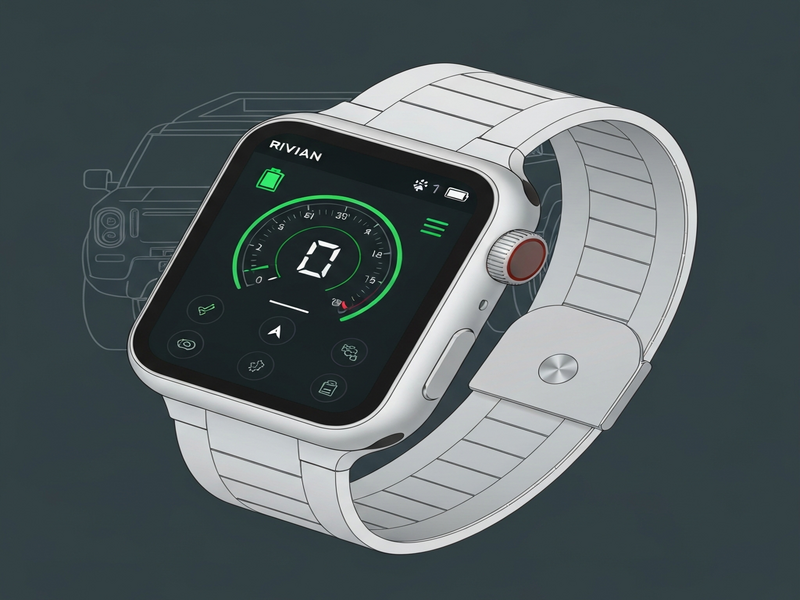
Overview of the Rivian Apple Watch App
The Apple Watch app is designed as a lightweight overlay that mirrors the most essential functions of the full‑featured Rivian mobile app. Users will install the companion app via the App Store, pair it with their Rivian account, and instantly gain wrist‑level access to vehicle status and controls.
Key design principles include:
- Speed: Actions complete within seconds, eliminating the need to pull out a phone.
- Contextual awareness: The watch surface adapts to the driver’s location (e.g., at home, at work, on the road).
- Battery efficiency: Optimized for the Watch’s limited power budget, the app runs in the background only when needed.
Key Features of the Rivian Apple Watch Companion
Vehicle Controls at a Glance
The watch interface will expose a set of four customizable quick‑action buttons. By default, these include:
- Lock / Unlock doors
- Vent windows
- Activate the vehicle alarm
- Start pre‑conditioning (climate control)
Owners of second‑generation R1 vehicles will benefit from automatic proximity unlocking, while first‑generation R1T and R1S owners will still be able to lock or unlock with a single tap.
Charging Status & Target State of Charge
Through the digital crown, users can scroll to set a target state of charge (SOC) for the next charging session. The watch will display real‑time battery level, estimated range, and charging speed, allowing drivers to make informed decisions without checking the dashboard.
Climate & Cabin Management
Adjusting interior temperature is now as simple as rotating the crown. The app will show current cabin temperature, allow users to raise or lower it by a few degrees, and even schedule pre‑conditioning for a specific departure time.
Software Updates & Notifications
Rivian’s over‑the‑air (OTA) updates will be announced on the watch, with a concise summary of what each update includes. Users can defer or accept updates directly from the wrist, ensuring the vehicle stays current without interrupting daily routines.
Location‑Based Reminders
When the watch detects that the driver is approaching a charging station, it can surface a reminder to start charging or display the nearest available stations, leveraging Apple’s location services.
Launch Timeline and Availability
Rivian has outlined a phased rollout:
| Phase | Target Date | Key Details |
|---|---|---|
| Beta Release | Early Q2 2026 | Limited to owners of 2024‑2025 R1 models; invitation‑only via Rivian app. |
| Public Launch | Mid‑Q3 2026 | Available to all Rivian owners worldwide through the App Store. |
| Feature Expansion | Late 2026 & beyond | Integration of advanced driver‑assist toggles, remote drive‑mode selection, and third‑party service shortcuts. |
Rivian plans to synchronize the watch app launch with a major firmware update that introduces “kneel mode” and a new cold‑weather battery indicator, ensuring a cohesive user experience across devices.
Why This Matters to EV Owners
For electric‑vehicle drivers, convenience and real‑time information are critical. The Apple Watch companion delivers several tangible benefits:
- Reduced Distraction: Managing vehicle functions from the wrist means fewer glances at the phone while on the move.
- Faster Decision‑Making: Instant access to charging status helps drivers plan stops more efficiently.
- Enhanced Safety: Quick lock/unlock and alarm activation improve vehicle security, especially in urban settings.
- Seamless Ecosystem Integration: The app works with Apple’s Health and Maps, allowing drivers to combine route planning with vehicle readiness.
- Future‑Proofing: As Rivian expands OTA capabilities, the watch will serve as a hub for emerging features like remote diagnostics.
Deep Integration with the Apple Ecosystem
Rivian’s watch app is not a standalone gadget; it leverages several native Apple frameworks:
- WatchKit UI: Provides a glanceable, glance‑friendly interface that respects the watch’s limited screen real estate.
- HealthKit: Syncs cabin temperature preferences with the user’s comfort profile, enabling personalized climate control.
- CoreLocation: Powers location‑based reminders for charging stations and home‑based pre‑conditioning.
- Siri Shortcuts: Users can create voice commands like “Hey Siri, start my Rivian” that trigger the same actions as the watch buttons.
For a broader view of how wearables can be integrated into vehicle platforms, see our Apple Watch integration guide, which outlines best practices for developers building cross‑device experiences.
How Rivian’s Approach Stacks Up Against Competitors
While Tesla offers a “Phone Key” and Ford provides a “FordPass” app, Rivian’s watch‑first strategy is unique in the EV market. The focus on a wearable first‑experience aligns with the brand’s outdoor, on‑the‑go lifestyle, offering a hands‑free alternative that many drivers find more natural than pulling out a phone.
Moreover, Rivian’s integration with Apple’s ecosystem means that users benefit from the same security and privacy standards that protect their iPhone data, a factor that can be a differentiator for privacy‑concerned consumers.
Real‑World Scenarios Where the Watch App Shines
Below are three typical situations illustrating the practical value of the companion app:
Morning Commute
Before stepping out, the driver glances at the watch to confirm the vehicle is unlocked and the cabin is pre‑heated to 72°F. No need to fumble with a phone while juggling coffee.
Charging on the Go
Approaching a public charger, the watch automatically displays the current SOC and suggests the optimal charging speed based on the driver’s schedule, all without opening an app.
Nighttime Security
After parking in a dimly lit lot, a quick wrist tap locks the doors and activates the alarm, giving peace of mind without reaching for a key fob.
Remote Updates
When a new OTA update is available, the watch vibrates gently, summarizing the changes. The driver can approve the update instantly, keeping the vehicle up‑to‑date.
Implications for the Wider EV Landscape
The introduction of a dedicated smartwatch companion signals a maturing of EV software ecosystems. As vehicles become more software‑centric, manufacturers will need to think beyond the traditional infotainment screen and consider how users interact with their cars throughout the day.
Key takeaways for the industry:
- Wearable integration can become a standard expectation for premium EVs.
- Developers should prioritize low‑latency, battery‑friendly APIs to meet the constraints of wearables.
- Cross‑device data consistency (phone, watch, car) will be a competitive advantage.
Companies like UBOS are already building platforms that enable rapid creation of such cross‑device experiences, offering tools like the Web app editor on UBOS and the Workflow automation studio to streamline integration pipelines.
Tools to Accelerate Your Own Wearable‑Vehicle Apps
If you’re a developer or a startup looking to replicate Rivian’s success, consider leveraging the following UBOS resources:
- UBOS platform overview – a low‑code environment for building AI‑enhanced services.
- UBOS pricing plans – flexible tiers that scale from hobby projects to enterprise deployments.
- AI marketing agents – automate promotion of your new app across channels.
- UBOS for startups – fast‑track your MVP with pre‑built templates.
- Enterprise AI platform by UBOS – for large OEMs needing robust, secure integrations.
- UBOS solutions for SMBs – cost‑effective tools for smaller fleets.
- UBOS partner program – collaborate with UBOS to co‑create industry‑leading features.
- UBOS portfolio examples – see real‑world case studies of wearable‑vehicle integrations.
- UBOS templates for quick start – jump‑start development with ready‑made UI kits.
For a quick proof‑of‑concept, you might explore the AI SEO Analyzer template, which demonstrates how to embed AI‑driven insights into a lightweight mobile interface—an approach that translates well to smartwatch screens.
Conclusion
Rivian’s Apple Watch companion app is set to redefine how EV owners interact with their vehicles, delivering speed, safety, and seamless integration with the broader Apple ecosystem. With a launch slated for Q3 2026, the feature will likely become a benchmark for future wearable‑vehicle collaborations.
For the full story and Rivian’s official statements, read the original coverage on TechCrunch.