

- Updated: February 19, 2026
- 6 min read
Meta smartwatch with AI health tracking set for 2026 launch – wearable technology breakthrough
Meta is set to launch its Malibu 2 smartwatch in 2026, featuring advanced AI‑driven health‑tracking, alongside an updated Ray‑Ban Display smart‑glasses line, while the Phoenix mixed‑reality glasses are now expected in 2027.
Meta Smartwatch Malibu 2, AI Health Tracking, and Ray‑Ban Display Glasses: 2026 Launch Timeline vs. Phoenix Mixed‑Reality Glasses
Meta (formerly Facebook) is quietly reviving its wearable ambitions with a new smartwatch, code‑named Malibu 2, slated for a 2026 release. The device promises a blend of AI‑enhanced health monitoring, seamless integration with Meta’s expanding AR ecosystem, and a design that could finally give the company a foothold in the fiercely competitive smartwatch market.
At the same time, Meta is preparing an upgraded version of its Ray‑Ban Display glasses, positioning them as the companion visual interface for the upcoming watch. Both products are part of a broader hardware roadmap that now pushes the long‑delayed Phoenix mixed‑reality (MR) glasses to a 2027 launch window.
For tech‑savvy consumers and professionals who track health metrics, explore AR experiences, or simply love cutting‑edge wearables, this timeline reshapes expectations for the next wave of Meta hardware.
Malibu 2: AI‑Powered Health Tracking at the Wrist
Meta’s internal leak, reported by The Information, reveals that Malibu 2 will be more than a conventional fitness band. The watch leverages Meta’s proprietary AI models to deliver real‑time health insights, including:
- Continuous vitals monitoring: heart‑rate variability, blood‑oxygen saturation (SpO₂), and respiratory rate.
- Predictive wellness alerts: AI predicts potential stress spikes or sleep disturbances before they manifest.
- Personalized activity coaching: Adaptive workout suggestions based on user history and contextual data (e.g., weather, calendar events).
- Smart gesture control: A neural wristband interprets subtle hand motions, reducing reliance on touch screens.
The AI engine runs locally on the device, using a lightweight version of Meta’s AI hardware insights to keep latency low and data private. This on‑device processing aligns with growing privacy expectations and reduces the need for constant cloud connectivity.
Design & Battery Life
Malibu 2 adopts a sleek, circular form factor reminiscent of classic watches, but with a flexible OLED display that can expand to show detailed health dashboards. Early renders suggest a 48‑hour battery life under continuous AI monitoring, thanks to a new low‑power chipset and adaptive refresh rates.
Ray‑Ban Display Glasses: The Visual Companion
Following the successful limited release of the original Ray‑Ban Display glasses, Meta plans an upgraded iteration that will pair directly with Malibu 2. The new glasses will feature:
- Improved waveguide optics for brighter, more vibrant AR overlays.
- Integrated neural wristband support, allowing the watch to act as the primary gesture controller.
- Enhanced battery sharing between watch and glasses via a proprietary low‑voltage link.
- Support for Meta’s upcoming AI‑driven content curation, delivering context‑aware notifications.
By unifying the watch and glasses under a single AI ecosystem, Meta aims to create a seamless “hands‑free” experience where health data, notifications, and AR content flow naturally between the two devices.
Timeline: Malibu 2 vs. Phoenix Mixed‑Reality Glasses
Meta’s hardware roadmap has undergone several revisions since the company first announced its AR ambitions. The current schedule, based on multiple insider reports, looks like this:
| Product | Code‑Name | Planned Release | Key Features |
|---|---|---|---|
| Smartwatch | Malibu 2 | 2026 (Q3‑Q4) | AI health tracking, neural wristband, gesture control |
| Smart Glasses | Ray‑Ban Display (v2) | 2026 (late) | Improved AR optics, watch‑controlled gestures |
| Mixed‑Reality Glasses | Phoenix | 2027 (early) | Full‑color MR, spatial mapping, enterprise tools |
The shift of Phoenix to 2027 gives Meta breathing room to refine its AI pipelines and ensure the Malibu 2 and Ray‑Ban Display glasses launch with a polished user experience. It also signals a strategic decision to stagger product releases, avoiding cannibalization and allowing each device to capture its own market segment.
Market Context: Who’s Competing with Meta?
Meta’s re‑entry into the smartwatch arena puts it head‑to‑head with entrenched players:
- Apple Watch: Dominates with a robust health ecosystem and watchOS 10’s AI enhancements.
- Google Pixel Watch: Leverages Wear OS and deep integration with Google Fit.
- Garmin & Fitbit: Focus on specialized fitness tracking and long battery life.
- Samsung Galaxy Watch: Offers a hybrid of Android integration and advanced health sensors.
What differentiates Malibu 2 is its tight coupling with Meta’s AR glasses and the on‑device AI that can deliver predictive health insights without sending raw data to the cloud. If Meta can execute this vision, it could carve a niche for users who want a unified AI‑driven wearable ecosystem rather than a collection of siloed devices.
Potential Impact on the Wearable Landscape
Industry analysts predict three possible outcomes:
- Convergence of health and AR: Malibu 2 could become the central hub for health data, feeding AR overlays in the Ray‑Ban Display glasses (e.g., real‑time heart‑rate display during a run).
- Shift toward privacy‑first AI: On‑device processing may set a new standard for health wearables, pressuring competitors to adopt similar architectures.
- Accelerated adoption of mixed‑reality: By establishing a wearable ecosystem early, Meta may smooth the path for Phoenix MR glasses, encouraging developers to build cross‑device experiences.
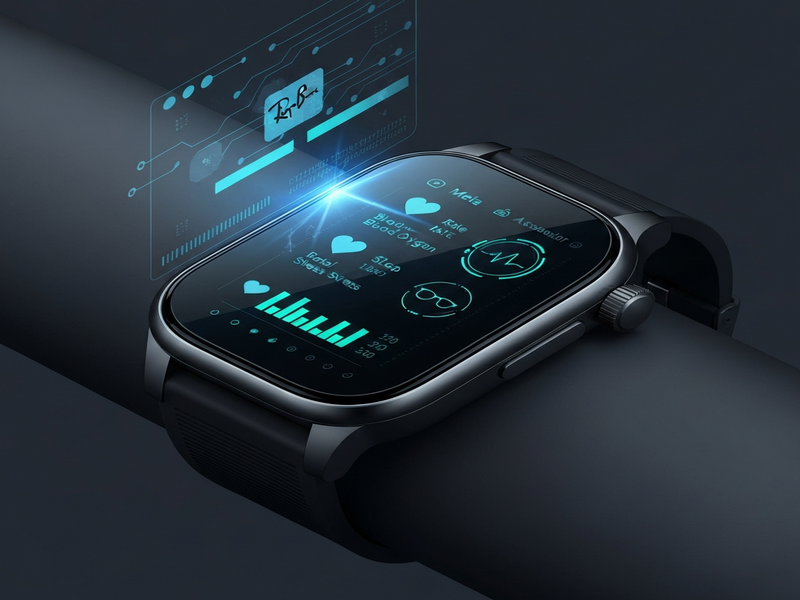
Concept illustration of the upcoming Malibu 2 smartwatch, highlighting its sleek design and integrated AI sensors.
What This Means for Developers and Enterprises
Meta’s hardware push is not just about consumer gadgets; it opens a new frontier for developers building AI‑enhanced experiences. The UBOS platform overview shows how low‑code environments can accelerate the creation of cross‑device applications that tap into Meta’s AI APIs.
Key opportunities include:
- Health‑focused apps that sync watch data with AR visualizations on the glasses.
- Enterprise dashboards that project real‑time biometric metrics onto a mixed‑reality workspace (future Phoenix integration).
- Personalized AI assistants that leverage the watch’s neural wristband for hands‑free commands.
Developers can prototype these experiences using UBOS’s UBOS templates for quick start, which include pre‑built connectors for health sensors and AR rendering pipelines.
Stay Ahead of the Curve
Whether you’re a health enthusiast, an AR developer, or a business leader scouting the next wave of wearable tech, Meta’s upcoming lineup warrants close attention. For deeper analysis of Meta’s broader wearable strategy, explore our dedicated Meta wearables overview. To understand the underlying AI chips that will power these devices, read our AI hardware insights.
Ready to build the future? Join the UBOS partner program and get early access to AI‑ready APIs, templates, and a community of innovators shaping the next generation of wearables.
Andrii Bidochko
CTO UBOS
Andrii Bidochko is an AI entrepreneur and researcher focused on AI agents, reinforcement learning, and autonomous systems. He writes about the technologies shaping the future of machine intelligence, from frontier models and agent architectures to real-world AI applications.