

- Updated: February 19, 2026
- 6 min read
Ring’s AI‑Powered Search Party Expands: From Lost Dogs to Crime Prevention – Amazon’s Surveillance Push
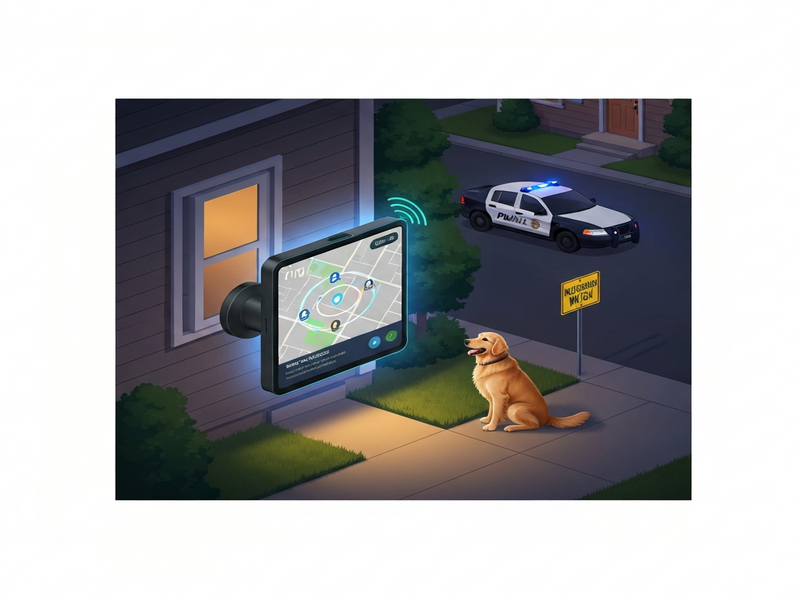
Ring’s AI‑powered Search Party is a crowd‑sourced video‑search feature that lets users scan footage from the Ring camera network to locate lost pets, and, according to a leaked internal email, it is being positioned as a stepping‑stone toward broader neighborhood crime‑prevention capabilities.
Ring, the Amazon‑owned smart‑home security brand, recently unveiled a high‑profile Super Bowl ad that showcased its new Search Party for Dogs feature. The commercial sparked a wave of discussion about privacy, surveillance, and the future of AI‑driven neighborhood safety. An internal email obtained by The Verge reveals that Ring’s founder Jamie Siminoff envisions the technology expanding far beyond pet recovery, aiming to “zero out crime in neighborhoods.” This article breaks down what the feature does today, the ambitions hinted at in the leaked memo, public reaction, and how it fits into the larger AI surveillance landscape.
What is Ring’s AI‑powered Search Party?
Search Party is an AI‑enhanced tool built into the Ring Neighbors app that allows any subscriber to launch a community‑wide search of live and recorded video streams. Users can specify a target—originally a lost dog—and the system scans thousands of cameras for matching visual cues, then notifies participants when a potential match appears.
Key capabilities include:
- Real‑time object detection powered by custom deep‑learning models.
- Automatic alerts sent to the initiator and nearby users when a match is found.
- Opt‑in sharing: footage is only shared if the camera owner consents, preserving a degree of privacy control.
Ring already offers AI‑driven search for people, vehicles, and other objects within a user’s own camera feed. Search Party extends that capability across the entire Ring network, turning a solitary search into a collaborative effort.
Leaked internal email reveals expansion plans
In an October 2025 email sent to all Ring employees, founder Jamie Siminoff wrote:
“This is by far the most innovative that we have launched in the history of Ring… You can now see a future where we are able to zero out crime in neighborhoods.”
The memo outlines a roadmap that includes:
- Expanded object categories: From dogs to people, vehicles, and suspicious activity.
- Integration with law‑enforcement requests: Faster, AI‑filtered video sharing for investigations.
- Predictive alerts: Using anomaly detection to flag potential crimes before they happen.
While Ring maintains that the current version cannot search for people, the email suggests that the underlying AI infrastructure is being built with that capability in mind. The company frames the feature as a “community safety tool,” but critics argue the same technology could enable mass surveillance.
Public and privacy reaction
Privacy advocates quickly mobilized after the Super Bowl spot aired. Key concerns include:
- Scope of data sharing: Even with opt‑in controls, the sheer volume of cameras creates a de‑facto surveillance grid.
- Potential for mission creep: Features designed for pet recovery could be repurposed for law‑enforcement or commercial monitoring.
- Bias in AI models: Object‑detection algorithms may misidentify people of certain demographics, leading to false alerts.
Ring’s spokesperson Emma Daniels emphasized that “sharing has always been the camera owner’s choice,” but the company’s recent partnership with facial‑recognition tech and its partner program raise questions about how data pipelines might evolve.
Community forums on Reddit and X (formerly Twitter) have been split: many homeowners appreciate the convenience of locating lost pets, while others fear a slippery slope toward a “Big Brother” neighborhood.
How this fits into broader AI surveillance trends
Ring’s ambitions echo a larger industry movement where consumer‑grade cameras are being repurposed for public‑safety analytics. Companies are layering AI models on top of existing video streams to extract actionable insights—ranging from fire detection to traffic monitoring.
For enterprises looking to build similar capabilities, the Enterprise AI platform by UBOS offers a modular stack that includes video ingestion, real‑time inference, and secure data sharing. The platform’s Workflow automation studio lets developers design custom alert pipelines without writing extensive code.
Developers can also experiment with pre‑built templates such as the GPT‑Powered Telegram Bot or the AI Video Generator to prototype notification systems that could one day complement Ring‑style search parties.
The rise of AI‑driven surveillance raises policy questions. As detailed in the AI surveillance overview, regulators are still catching up with technology that can identify faces, license plates, and even emotional states in real time.
Key facts at a glance
- Search Party is an AI‑enabled, community‑wide video search launched for locating lost dogs.
- The feature is opt‑in; footage is shared only with owners’ permission.
- A leaked internal email hints at future expansion toward crime‑prevention and predictive policing.
- Privacy groups warn of potential mass surveillance and algorithmic bias.
- Ring’s parent company Amazon has integrated facial‑recognition and law‑enforcement request tools into its ecosystem.
- Similar AI‑driven surveillance solutions are emerging across smart‑home and enterprise markets.
- UBOS offers a suite of tools—like the UBOS platform overview and UBOS templates for quick start—that enable rapid prototyping of AI video analytics.
Conclusion and future outlook
Ring’s AI‑powered Search Party illustrates both the promise and peril of embedding advanced computer‑vision into everyday devices. While the immediate benefit—helping families reunite with lost pets—is tangible, the leaked roadmap suggests a longer‑term vision of neighborhood‑wide crime reduction.
For tech‑savvy homeowners, the decision to adopt Ring’s ecosystem now hinges on trust in the company’s privacy safeguards and the broader regulatory environment. For developers and enterprises, the feature serves as a case study in scaling AI from a niche use case to a platform‑wide capability.
Stay updated on Ring’s evolving policies and feature set by following the Ring updates page. As AI continues to blur the line between convenience and surveillance, transparent governance and user control will be the decisive factors that determine whether tools like Search Party become community assets or privacy liabilities.
Meta description suggestions
- Ring’s AI‑powered Search Party helps locate lost dogs and may soon expand to crime‑prevention, sparking privacy debates.
- Learn how Ring’s Search Party works, what a leaked internal email reveals, and why privacy advocates are concerned.
- Explore the future of AI surveillance with Ring’s Search Party and see how UBOS platforms enable similar solutions.
Businesses interested in building AI‑driven security solutions can explore the AI marketing agents for automated threat alerts, or check out the UBOS solutions for SMBs that combine video analytics with workflow automation.
Startups looking for rapid prototyping can leverage the UBOS for startups program, which includes access to the Web app editor on UBOS and a library of AI templates such as the AI SEO Analyzer or the AI Article Copywriter.
For those curious about voice‑enabled AI, the ElevenLabs AI voice integration demonstrates how natural‑language audio can complement video alerts, while the Chroma DB integration offers scalable vector storage for image embeddings—useful for large‑scale object detection like Ring’s Search Party.
Pricing transparency is essential; explore the UBOS pricing plans to see how cost structures compare with subscription models used by Ring.
Andrii Bidochko
CTO UBOS
Andrii Bidochko is an AI entrepreneur and researcher focused on AI agents, reinforcement learning, and autonomous systems. He writes about the technologies shaping the future of machine intelligence, from frontier models and agent architectures to real-world AI applications.