

- Updated: February 18, 2026
- 5 min read
Polestar unveils four new electric models – EV launch 2026‑2028
Polestar will launch four brand‑new electric models between 2026 and 2028, starting with the high‑performance Polestar 5 GT this summer and ending with the compact premium Polestar 7 SUV in 2028.
Polestar Unveils Four New Electric Models: 2026‑2028 Launch Roadmap
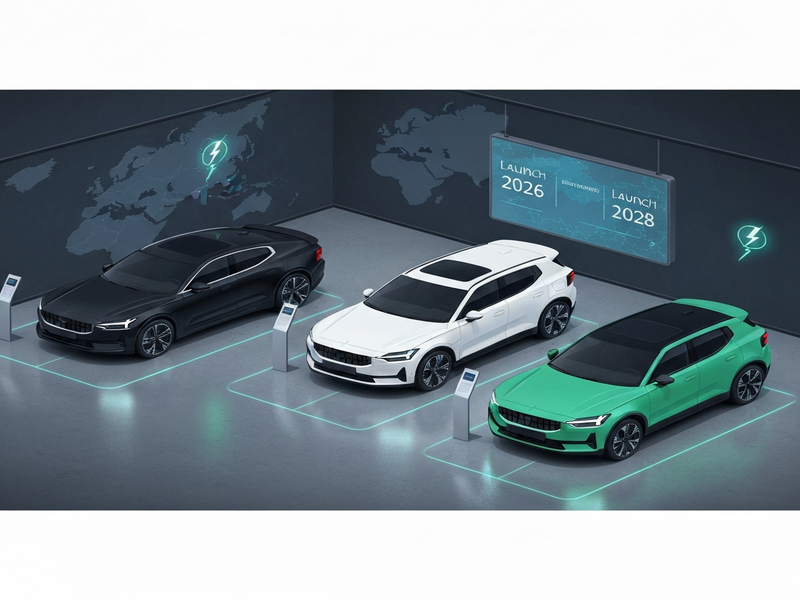
Swedish‑Chinese automaker Polestar announced a bold four‑model expansion plan that will reshape its portfolio and the broader electric‑vehicle (EV) market. The roadmap, revealed in a press release and covered by the original Verge article, details a staggered launch schedule from summer 2026 through 2028, targeting premium performance, versatile utility, and mass‑market appeal.
2026‑2028 Model Timeline & Key Specs
Polestar 5 Grand Tourer (2026)
- Range: 460 miles (WLTP)
- Powertrain: 800‑volt architecture, up to 884 hp
- 0‑60 mph in 3.1 seconds (Performance trim)
- Price starting at $120,000
- Luxury‑focused interior with sustainable materials
CEO Michael Longscheller describes the 5 as “our brand halo car, bringing a new level of performance and luxury to the grand‑tourer segment.”
Polestar 4 Long‑Roof Variant (Late 2026)
- Body style: Estate‑like station wagon for European markets
- Enhanced cargo space without sacrificing aerodynamics
- Same 300‑mile range as the standard Polestar 4
- Target price: $55,000‑$65,000
Longscheller notes, “Sweden is famous for its estate cars, and its SUVs are world‑class. We are combining the space of an estate and the versatility of an SUV with the dynamic performance that is Polestar.”
Polestar 2 Next‑Gen (Early 2027)
- Platform: Updated Compact Modular Architecture (CMA)
- Battery: 75 kWh (up to 350 miles)
- Fast‑charging: 10‑80 % in under 20 minutes
- Software: Integrated with the latest OpenAI ChatGPT integration for in‑car AI assistance
- Price: Expected around $45,000
The next‑gen Polestar 2 aims to recapture the momentum that made the original model a bestseller, while slashing production costs through a refreshed design.
Polestar 7 Compact Premium SUV (2028)
- Segment: Compact premium SUV – Europe’s largest EV segment
- Range: 400 miles (estimated)
- Power: Dual‑motor AWD, 400 hp
- Price: Competitive entry point around $50,000
- Built on a European production line to reduce tariffs and carbon footprint
Longscheller emphasizes, “We are convinced that we can offer customers a progressive performance‑driven car for a very attractive price point, built in Europe.”
Strategic Significance for Polestar and the EV Market
Polestar’s four‑model rollout is more than a product expansion; it’s a strategic pivot designed to address three core challenges facing the EV industry today.
1. Cost Reduction & Platform Efficiency
By revamping the Polestar 4 and re‑engineering the Polestar 2 on a shared modular platform, Polestar can achieve economies of scale. The updated architecture reduces part count, shortens assembly time, and leverages UBOS platform overview for rapid software updates.
2. Market Segmentation & Growth
The lineup covers four distinct market niches:
- Luxury GT – Polestar 5 targets affluent early adopters seeking performance.
- Versatile Utility – Polestar 4 long‑roof appeals to European families.
- Mass‑Market Premium – Polestar 2 successor offers a price‑competitive entry.
- Compact SUV – Polestar 7 captures the booming European SUV segment.
3. Sustainable Mobility & Brand Positioning
All four models will be built with recycled materials, low‑emission manufacturing, and a focus on circular‑economy principles. This aligns with Polestar’s “climate‑positive” brand promise and resonates with tech‑savvy consumers demanding transparency.
“Our new portfolio is designed to deliver performance, practicality, and sustainability at a price that makes sense for today’s buyers. By 2028, Polestar will have a model in every major EV segment, reinforcing our commitment to a climate‑positive future.” – Michael Longscheller, CEO, Polestar
What This Means for Tech‑Savvy Consumers
For early adopters and enthusiasts, the upcoming models bring several tangible benefits:
- Faster Charging – 800‑volt architecture on the Polestar 5 reduces charge time to under 20 minutes for an 80 % boost.
- AI‑Enhanced Experience – Integrated ChatGPT and Telegram integration enables voice‑activated navigation, real‑time diagnostics, and personalized recommendations.
- Transparent Sustainability Metrics – Each vehicle will display lifecycle emissions in the infotainment system, empowering owners to track their carbon impact.
- Future‑Proof Software – Leveraging the Web app editor on UBOS, Polestar can push OTA updates that add new features without a dealership visit.
How UBOS Powers the Next Generation of EV Software
Polestar’s digital strategy is tightly coupled with the capabilities of the UBOS homepage. Below are a few UBOS tools that directly support the new EV lineup:
- AI Marketing Agents – Accelerate launch campaigns with AI marketing agents that personalize ads based on driver profiles.
- Workflow Automation Studio – Streamline production workflows using the Workflow automation studio, reducing time‑to‑market for software updates.
- Enterprise AI Platform – Manage massive sensor data streams with the Enterprise AI platform by UBOS, enabling predictive maintenance.
- Pricing Transparency – Offer dynamic pricing models via the UBOS pricing plans, aligning vehicle cost with subscription services.
- Startup Enablement – New EV tech startups can prototype on the UBOS for startups sandbox, fostering innovation around charging infrastructure.
- SMB Solutions – Fleet operators benefit from UBOS solutions for SMBs, optimizing route planning and energy usage.
- Template Marketplace – Jump‑start AI features with ready‑made templates like the AI SEO Analyzer or the AI Article Copywriter for content generation.
- Voice Interaction – Deploy the ElevenLabs AI voice integration for natural‑language commands inside the vehicle.
Conclusion & Future Outlook
Polestar’s ambitious four‑model plan positions the brand at the intersection of performance, practicality, and sustainability. By leveraging cutting‑edge hardware, AI‑driven software, and a modular production strategy, Polestar aims to close the gap between premium EV pricing and mass‑market accessibility.
For consumers, the upcoming lineup promises faster charging, smarter in‑car assistants, and transparent carbon metrics—features that align perfectly with the expectations of today’s tech‑savvy audience. As the EV market continues to accelerate, Polestar’s 2026‑2028 roadmap could serve as a benchmark for how legacy automakers reinvent themselves in a rapidly evolving landscape.
Stay tuned to our UBOS portfolio examples for real‑world case studies of how AI and automation are reshaping automotive experiences.
Andrii Bidochko
CTO UBOS
Andrii Bidochko is an AI entrepreneur and researcher focused on AI agents, reinforcement learning, and autonomous systems. He writes about the technologies shaping the future of machine intelligence, from frontier models and agent architectures to real-world AI applications.