

- Updated: February 17, 2026
- 7 min read
Agoda Launches APIAgent: Zero‑Code MCP Server for REST‑to‑GraphQL Conversion and AI Agents
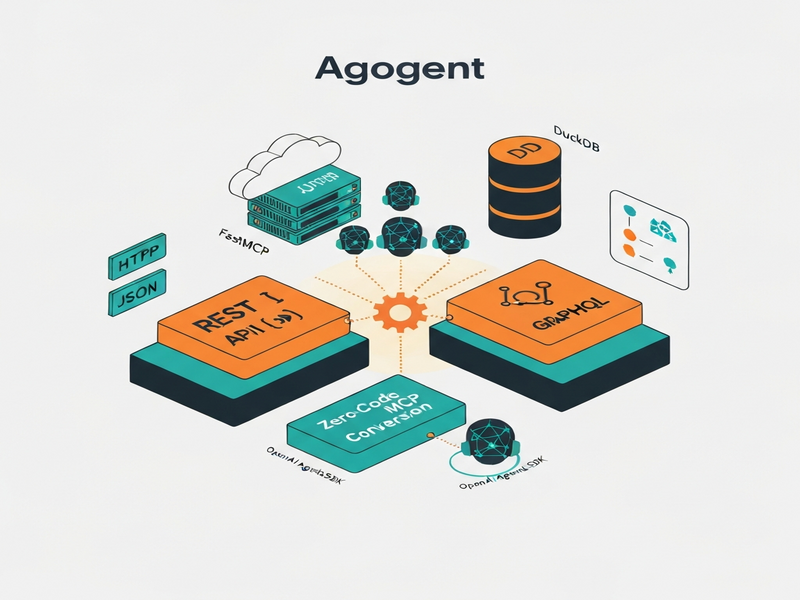
APIAgent is an open‑source gateway released by Agoda that instantly converts any REST or GraphQL API into a Model Context Protocol (MCP) server—without writing a single line of code or deploying a custom service.
Travel‑tech leader Agoda just announced a game‑changing tool that eliminates the notorious “integration tax” for AI agents. The original MarkTechPost article details how the new APIAgent lets developers hook large language models (LLMs) directly to any existing API, turning data sources into instantly callable AI tools.
What Is APIAgent and How Does Zero‑Code MCP Conversion Work?
At its core, APIAgent is a universal MCP server that sits between an LLM (such as Claude, GPT‑4, or Gemini) and the myriad micro‑services a modern enterprise runs. By feeding the tool an OpenAPI specification for a REST endpoint or a GraphQL schema, APIAgent automatically generates the necessary tool definitions that the LLM can invoke—no Python, no TypeScript, no Docker images required.
The Technical Stack Behind the Magic
- FastMCP – a high‑performance MCP server layer that handles request routing, authentication, and rate‑limiting with sub‑millisecond latency.
- OpenAI Agents SDK – orchestrates the LLM’s reasoning, turning natural‑language intents into concrete API calls.
- DuckDB – an embedded SQL engine that post‑processes large payloads locally, enabling sorting, filtering, and aggregation before the data reaches the model.
Step‑by‑Step Flow
- Schema Introspection: APIAgent reads the OpenAPI/GraphQL definition, builds a catalog of endpoints, parameters, and response shapes.
- Dynamic Tool Generation: The catalog is exposed to the LLM as callable functions, following the MCP specification.
- LLM Reasoning: The model decides which tool to invoke based on the user query.
- SQL Post‑Processing (DuckDB): If the raw API returns massive datasets, DuckDB runs a temporary SQL query to trim the result set.
- Response Formatting: The final JSON is packaged back to the LLM, which then crafts a concise, human‑readable answer.
Key Features That Differentiate APIAgent
FastMCP Engine
Provides a lightweight, production‑ready MCP server that can scale horizontally with minimal configuration.
OpenAI Agents SDK Integration
Leverages the same SDK used by OpenAI’s own agents, ensuring compatibility with the latest LLM capabilities.
DuckDB‑Powered SQL Layer
Enables on‑the‑fly data shaping, turning raw API dumps into precise, query‑driven results without extra services.
Recipe Learning
Automatically records successful query‑to‑API execution traces as reusable “recipes,” cutting latency and LLM token usage on repeat requests.
Security‑First Model
Runs in read‑only mode by default; mutating actions (POST/PUT/DELETE) are blocked unless explicitly whitelisted in a YAML config.
Zero‑Code Deployment
Simply point APIAgent at an endpoint URL and a schema file—no Docker, no CI/CD pipelines, no server‑side code.
The Integration Tax: Why APIAgent Matters
Before APIAgent, every new data source required a bespoke MCP server. For enterprises with thousands of micro‑services, this meant:
- Hundreds of developer‑hours spent writing boilerplate code.
- Continuous maintenance as APIs evolve (versioning, deprecation, schema changes).
- Operational overhead for deploying, monitoring, and scaling each MCP instance.
- Increased risk of security gaps when custom adapters expose mutable endpoints.
Agoda’s APIAgent eliminates these pain points by acting as a single, schema‑driven proxy that can be reused across any number of services. The result is a dramatic reduction in time‑to‑value for AI‑enabled products.
Benefits for Developers and Enterprises
For Developers
- Speed: Spin up an MCP interface in minutes instead of weeks.
- Consistency: Uniform tool definitions across all APIs reduce cognitive load.
- Lower Costs: Recipe learning cuts LLM token consumption by up to 60 % on repetitive queries.
- Safety: Built‑in read‑only defaults prevent accidental data mutation.
For Enterprises
- Scalable AI Integration: One proxy can serve thousands of internal services.
- Governance: Centralized security policies simplify compliance audits.
- Future‑Proofing: Adding a new API only requires an updated OpenAPI spec.
- Rapid Innovation: Product teams can prototype AI‑driven features without waiting for backend changes.
How UBOS Extends the APIAgent Vision
While Agoda’s APIAgent focuses on turning APIs into MCP servers, the UBOS platform overview provides a broader low‑code canvas where these MCP endpoints can be orchestrated alongside other AI services.
For marketers looking to automate campaign creation, the AI marketing agents can consume APIAgent‑exposed data (e.g., real‑time inventory or pricing) to generate personalized ad copy on the fly.
Startups often struggle with budget constraints. The UBOS pricing plans include a free tier that lets early‑stage teams experiment with APIAgent integrations without upfront costs.
Need a quick prototype? Grab a pre‑built UBOS templates for quick start and plug your newly minted MCP endpoint into a ready‑made workflow.
Complex business processes can be visualized and automated using the Workflow automation studio, which now supports direct calls to APIAgent‑powered tools.
If you prefer a visual builder, the Web app editor on UBOS lets you drag‑and‑drop APIAgent calls into interactive dashboards.
For founders, the UBOS for startups program offers mentorship on integrating AI agents with existing SaaS stacks, a perfect match for Agoda’s APIAgent use‑case.
SMBs can also benefit. The UBOS solutions for SMBs include out‑of‑the‑box connectors that leverage APIAgent to expose legacy ERP data to modern AI assistants.
Large enterprises looking for a unified AI layer can explore the Enterprise AI platform by UBOS, which integrates APIAgent alongside other enterprise‑grade services such as identity management and audit logging.
Seeing real‑world results helps decision‑makers. Check out the UBOS portfolio examples that showcase AI‑driven workflows built on top of APIAgent‑style integrations.
Developers interested in co‑creating extensions can join the UBOS partner program, which offers revenue sharing for plugins that wrap APIAgent endpoints.
Communication channels matter. UBOS already supports a Telegram integration on UBOS, enabling AI agents to push notifications directly to chat groups.
Combine that with the ChatGPT and Telegram integration to let users query APIAgent‑exposed data from within their favorite messenger.
If your stack already uses OpenAI, the OpenAI ChatGPT integration provides a seamless bridge to the MCP layer.
Data‑intensive workloads benefit from vector search. The Chroma DB integration lets you store embeddings generated by LLMs and query them alongside APIAgent data.
For voice‑first experiences, the ElevenLabs AI voice integration can read back APIAgent results as natural‑sounding speech.
Explore ready‑made AI tools in the UBOS Template Marketplace that complement APIAgent:
- AI SEO Analyzer – feed APIAgent‑exposed content data for instant SEO insights.
- AI Article Copywriter – generate marketing copy using live product data.
- AI Video Generator – create video assets that incorporate up‑to‑date pricing or availability info.
- AI Chatbot template – build a customer‑support bot that queries your internal APIs via APIAgent.
- AI Image Generator – produce custom visuals on demand, powered by data fetched through APIAgent.
Conclusion: A New Era of Plug‑and‑Play AI Integration
Agoda’s APIAgent proves that the future of AI‑driven applications lies in eliminating the manual glue code that traditionally binds LLMs to business data. By offering a zero‑code, schema‑first MCP server, it empowers developers to focus on user experience rather than integration plumbing.
If you’re ready to accelerate AI adoption across your organization, start by exploring the UBOS homepage for a unified low‑code environment that already embraces APIAgent‑style connectivity. Combine it with the powerful templates and integrations above, and you’ll have a production‑ready AI stack in days, not months.
Take the next step: try the free tier, spin up an APIAgent proxy, and watch your AI agents become instantly data‑aware.