

- Updated: February 15, 2026
- 5 min read
Acer and Asus Banned in Germany Over H.265 Patent Ruling – Court Blocks PC Sales
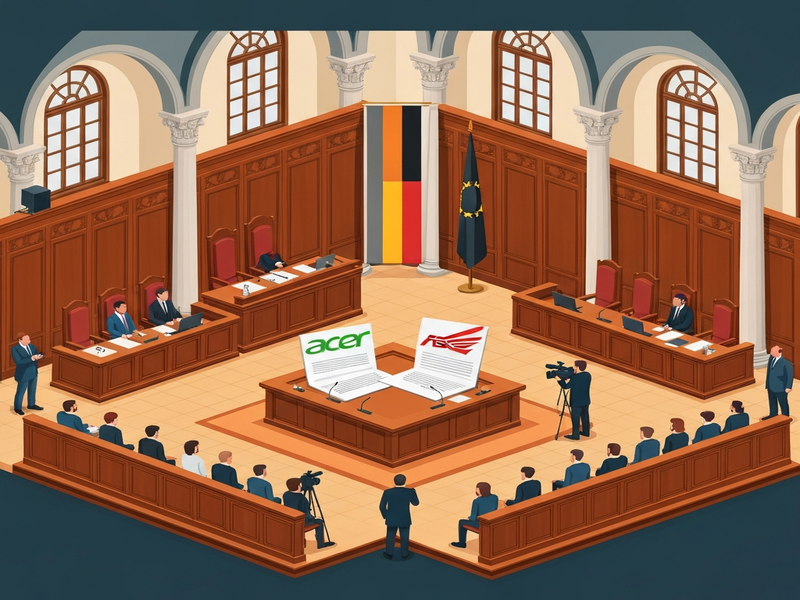
German Court Bars Acer & Asus from Selling PCs Over Nokia H.265 Patent Infringement
The German court has issued an injunction that bans Acer and Asus from selling PCs and laptops in Germany because they allegedly infringe Nokia’s H.265 (HEVC) patents.
In a landmark decision announced on 12 February 2026, the Landgericht Berlin ruled that both Acer and Asus must immediately cease the distribution of any computer hardware that incorporates the disputed H.265 video‑compression technology within the German market. The ruling follows a lengthy patent‑infringement lawsuit filed by Nokia, which claims the two manufacturers used its patented HEVC technology without a valid licence. The court’s order not only halts current sales but also mandates the recall of existing inventory, creating a ripple effect across retailers, supply‑chain partners, and end‑users.
Background on Nokia’s H.265 (HEVC) Patents
The H.265 standard, also known as High‑Efficiency Video Coding (HEVC), was ratified in 2013 as the successor to H.264. It offers up to 50 % better compression efficiency, making it a cornerstone for 4K/8K streaming, video conferencing, and modern gaming. Nokia, through a series of acquisitions and internal R&D, amassed a portfolio of essential patents covering key encoding and decoding algorithms. These patents are licensed globally via standard‑essential‑patent (SEP) pools, but Nokia has historically taken a more aggressive stance in enforcing its rights, especially in Europe where patent litigation is common.
Over the past decade, Nokia has pursued multiple infringement actions against major OEMs, arguing that many devices ship with HEVC‑enabled hardware or software without proper licensing. The German case is the latest in this series, and it underscores the growing importance of patent compliance for hardware manufacturers that embed advanced video codecs in their products.
Details of the Injunction Against Acer and Asus
- Scope of the Ban: All desktop PCs, laptops, and all‑in‑one systems sold in Germany that contain H.265 decoding or encoding capabilities are covered.
- Effective Date: The injunction takes effect immediately upon publication of the judgment, giving the companies a 30‑day window to remove the products from all sales channels.
- Recall Requirement: Existing stock already in German retail outlets must be withdrawn and either destroyed or retrofitted with a licensed HEVC solution.
- Financial Penalties: The court has authorized Nokia to claim damages for each infringing unit sold, with preliminary estimates ranging from €5 to €15 per device.
- Appeal Rights: Both Acer and Asus have filed notices of appeal, but the injunction remains enforceable during the appellate process.
The ruling also references a prior German Federal Court of Justice (BGH) decision that affirmed the enforceability of SEPs against downstream manufacturers, even when the OEM claims to be a “mere assembler.” This legal precedent strengthens Nokia’s position and signals to the broader industry that compliance cannot be assumed.
Impact on the German PC Market and Consumers
Germany accounts for roughly 15 % of Europe’s total PC sales, making it a critical market for both Acer and Asus. The injunction is expected to cause:
- Supply‑Chain Disruption: Retailers such as MediaMarkt, Saturn, and Amazon.de will need to pull affected SKUs, potentially leading to temporary stock shortages.
- Price Volatility: With reduced inventory, remaining units may see price spikes, while competitors with fully licensed HEVC solutions could gain market share.
- Consumer Inconvenience: End‑users who purchased recent Acer or Asus laptops may face warranty complications or be forced to seek firmware updates that replace the HEVC codec with a licensed alternative.
- Strategic Shifts: OEMs may accelerate the adoption of alternative codecs (e.g., AV1) or negotiate blanket licences to avoid future litigation.
Industry analysts predict a short‑term dip of 2‑3 % in overall PC shipments in Germany for Q1 2026, followed by a rebound as manufacturers adjust their product lines. The incident also highlights the importance of robust IP‑management tools for tech companies—a niche where platforms like UBOS platform overview are gaining traction.
Expert Commentary
“The German injunction is a clear reminder that SEP enforcement is not limited to the United States or Asia. Companies must treat European patent pools with the same diligence they apply elsewhere,” says Dr. Martina Keller, a senior partner at the IP law firm Hoffmann & Partners. “Failure to secure proper licences can result in costly recalls, brand damage, and lost market access.”
Related Resources from UBOS
While the legal battle unfolds, businesses looking to safeguard their AI‑driven products from similar risks can explore several UBOS solutions:
- Enterprise AI platform by UBOS – a secure environment for deploying AI models with built‑in compliance checks.
- AI marketing agents that automate content creation while respecting intellectual‑property constraints.
- UBOS pricing plans offer flexible tiers for startups and SMBs navigating complex licensing landscapes.
- About UBOS – learn how the company’s mission aligns with responsible AI deployment.
For the full legal text and official court documents, see the original news article.
Conclusion & Future Outlook
The German injunction against Acer and Asus serves as a watershed moment for the European PC industry. It underscores the growing power of patent holders like Nokia in shaping product roadmaps and highlights the necessity for manufacturers to embed rigorous IP‑management processes early in the design phase. As the market adjusts, we can expect:
- Accelerated migration toward royalty‑free codecs such as AV1, especially for new laptop releases.
- Increased collaboration between OEMs and licensing bodies to secure blanket agreements covering multiple standards.
- Greater adoption of compliance‑focused platforms—like the Web app editor on UBOS—that embed patent‑check APIs directly into the development workflow.
For tech‑savvy consumers and industry professionals, staying informed about these legal developments is essential. Not only does it affect purchasing decisions, but it also shapes the strategic direction of hardware innovation across Europe. By monitoring court rulings and leveraging tools that ensure compliance, stakeholders can navigate the evolving landscape with confidence.
Want to future‑proof your AI‑enabled applications? Explore the Workflow automation studio to build compliant, scalable solutions today.