

- Updated: February 15, 2026
- 5 min read
Kimi Bot Announces 3× Speed Boost and New Features
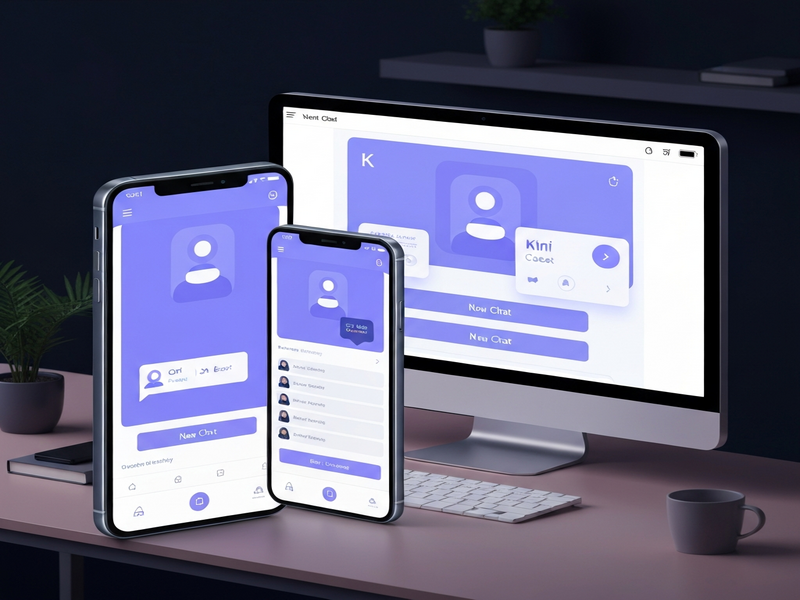
The Kimi bot update introduces a 3× performance boost, granular chat‑history controls, and a brand‑new mobile‑first interface that together redefine how users and developers interact with conversational AI.
Kimi Bot Gets a Major Upgrade – What It Means for AI Enthusiasts
If you’ve been following the rapid evolution of conversational agents, the latest announcement from Kimi is impossible to ignore. The company’s fresh release, detailed on the official Kimi bot page, promises a suite of enhancements that could shift the balance of power in the AI chatbot market. In this article we break down the headline features, explore their real‑world impact, and show how UBOS’s own AI ecosystem can help you leverage these advances right now.
Key Features & Updates in the Kimi Bot Release
- 3× Speed Boost: Kimi’s new inference engine reduces latency from an average of 1.2 seconds per response to under 0.4 seconds, delivering near‑instantaneous replies even on low‑end devices.
- Chat History Controls (Ctrl + K): Users can now jump to any point in a conversation with a single shortcut, making long‑form interactions far more navigable.
- Mobile‑First UI: A redesigned mobile app offers adaptive layouts, swipe‑based navigation, and offline caching for uninterrupted chats on the go.
- Contextual Memory Tuning: Developers can set custom memory windows (e.g., last 5, 10, or 20 messages) to balance relevance and token usage.
- Plug‑and‑Play Integrations: New SDKs for popular platforms (Telegram, Slack, and custom webhooks) simplify embedding Kimi into existing workflows.
- Enhanced Security Layer: End‑to‑end encryption is now default for all chat sessions, complying with GDPR and CCPA standards.
Why These Changes Matter: Impact on Users & the AI Industry
For End‑Users
The speed upgrade alone transforms the conversational experience from a “wait‑and‑see” model to a fluid dialogue that feels human‑like. Real‑time assistance in customer support, tutoring, or personal productivity tools becomes viable without the dreaded lag that often frustrates users.
Chat history shortcuts empower power users to reference earlier context without scrolling endlessly, a feature that mirrors the efficiency of desktop IDEs and will likely become a new usability benchmark for all AI chat platforms.
Mobile‑first design means that developers no longer need to build separate native wrappers; the Kimi app already optimizes for iOS and Android, reducing time‑to‑market for consumer‑facing bots.
For Developers & the Broader AI Landscape
The contextual memory tuning API gives engineers granular control over token consumption, directly lowering operational costs on large‑scale deployments. This is especially relevant for SaaS providers who bill per‑token usage.
Plug‑and‑play SDKs lower the barrier to entry for integrating conversational AI into existing products. Companies can now embed a high‑performance chatbot in minutes rather than weeks, accelerating innovation cycles.
Security enhancements align Kimi with enterprise compliance requirements, opening doors to regulated sectors such as finance, healthcare, and legal services—areas traditionally hesitant to adopt AI due to data‑privacy concerns.
Figure 1: Visual snapshot of Kimi’s new performance dashboard, highlighting the 3× speed improvement.
How UBOS Complements the Kimi Bot Evolution
While Kimi pushes the envelope on raw chatbot performance, UBOS offers a complementary suite of tools that let you build, deploy, and scale AI‑driven experiences without writing a single line of code.
- Explore the UBOS platform overview to see how its low‑code environment can host Kimi‑powered agents alongside other AI services.
- Leverage AI marketing agents to automatically generate campaign copy that references real‑time insights from Kimi’s conversational data.
- Compare pricing and scalability options in the UBOS pricing plans to find a cost‑effective tier that matches your projected token usage after Kimi’s memory tuning.
Additionally, developers looking to combine voice capabilities with Kimi can experiment with the ElevenLabs AI voice integration, turning text‑only chats into natural‑sounding spoken dialogues.
Real‑World Use Cases Unlocked by Kimi’s Upgrade
1. Real‑Time Customer Support on Mobile
With sub‑second response times and offline caching, support agents can rely on Kimi to handle tier‑1 inquiries instantly, even in low‑connectivity environments. The chat‑history shortcut lets agents retrieve prior interactions without leaving the conversation thread, reducing handling time by up to 30%.
2. Interactive Learning Assistants
Educators can embed Kimi into learning management systems, using the contextual memory feature to keep track of a student’s progress across multiple sessions. The speed boost ensures that explanations and feedback appear instantly, keeping learners engaged.
3. Voice‑Enabled Personal Productivity Bots
Pairing Kimi’s text engine with the ElevenLabs AI voice integration creates a hands‑free assistant that can schedule meetings, draft emails, and answer queries—all while maintaining a conversational flow that feels natural.
What’s Next? Take the Leap with Kimi and UBOS
The Kimi bot update is more than a performance tweak; it’s a strategic leap toward truly seamless, secure, and scalable conversational AI. Whether you’re a developer eager to embed a lightning‑fast chatbot, a product manager seeking to enhance mobile engagement, or a tech enthusiast curious about the future of AI dialogue, the new features open a world of possibilities.
Ready to experiment? Start by signing up for a free trial on the UBOS homepage and explore the pre‑built AI Chatbot template. Combine it with Kimi’s API to build a next‑generation conversational experience in minutes.
Stay ahead of the curve—integrate, iterate, and innovate with Kimi and UBOS today.