

- Updated: February 13, 2026
- 5 min read
Top AI Talent Walks Away from OpenAI and xAI – Implications for the AI Industry
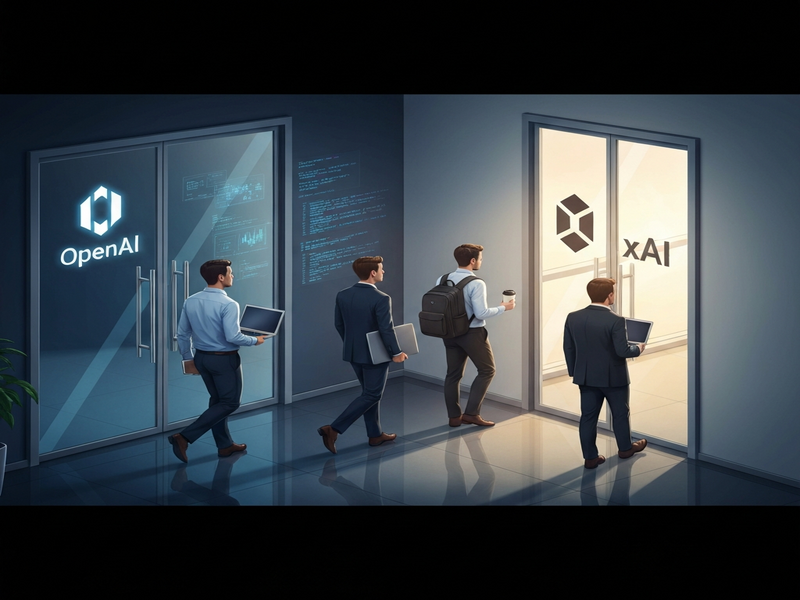
OpenAI and xAI are currently experiencing a significant talent exodus, with senior researchers, founders, and policy leaders leaving both organizations, a shift that could reshape the competitive dynamics of the AI industry.
Why the AI Talent Exodus Matters Now
In the past month, the AI community has watched a cascade of high‑profile exits from two of the sector’s most influential players: OpenAI, the creator of ChatGPT, and xAI, Elon Musk’s ambitious venture into artificial general intelligence. The departures range from founding engineers to senior policy executives, and they signal deeper strategic and cultural tensions that could affect everything from product roadmaps to investor confidence.
A Rapid Summary of the Exodus
- OpenAI: Disbanded its Mission Alignment team, dismissed a senior policy director who opposed the new “adult mode,” and saw several research scientists resign for “personal growth.”
- xAI: Half of its founding team left within weeks—some voluntarily, others through a “restructuring” that re‑assigned roles and eliminated positions.
- Common thread: Both companies cite rapid scaling, governance disagreements, and divergent visions for AI safety as catalysts.
Root Causes Behind the Departures
Understanding why top talent is walking away requires a multi‑dimensional look at internal dynamics, market pressures, and personal motivations. The following categories capture the most frequently cited reasons:
1. Governance & Ethical Disagreements
OpenAI’s recent shift toward commercial products—especially the controversial “adult mode”—has sparked internal debate. A senior policy executive, who preferred a more cautious rollout, was terminated, prompting concerns about the company’s commitment to responsible AI.
2. Organizational Restructuring
xAI’s rapid hiring spree in 2024 was followed by a “restructuring” wave in early 2026. The move eliminated several founding roles, leading to a perception that the company was prioritizing speed over stability.
3. Competitive Opportunities
The booming AI startup ecosystem offers lucrative equity packages and creative freedom. Many departing engineers have already joined emerging platforms that promise more open‑source collaboration, such as the UBOS platform overview, which emphasizes modular AI development.
4. Burnout & Work‑Life Balance
The relentless pace of model iteration and the pressure to deliver market‑ready features have taken a toll. A former OpenAI researcher told the TechCrunch Equity podcast that “the line between work and personal life has blurred to the point where sleep feels optional.”
Potential Ripple Effects Across the AI Landscape
The talent drain from OpenAI and xAI is not an isolated HR issue; it reverberates through the entire AI ecosystem. Below are the most consequential impacts:
- Slower Innovation Pace: Loss of core researchers may delay breakthroughs in large‑scale language models and multimodal systems.
- Shift in Competitive Balance: Smaller, agile startups could capture market share by attracting disaffected talent.
- Regulatory Scrutiny: Departures tied to ethical disagreements may prompt regulators to demand greater transparency from AI firms.
- Talent Market Inflation: Compensation packages for AI engineers are expected to rise as companies compete for the limited pool of experts.
Key Takeaways from the TechCrunch Equity Podcast
“When you see half a founding team walk out, it’s a symptom of deeper misalignment, not just a personnel issue,” said host Kirsten Korosec during the episode.
The hosts also highlighted three strategic lessons for AI leaders:
- Prioritize clear governance frameworks that balance rapid productization with safety.
- Invest in employee well‑being programs to mitigate burnout, especially during intense model releases.
- Maintain transparent communication about restructuring to preserve trust among remaining staff.
For a full transcript and additional context, read the original TechCrunch coverage here.
How UBOS Helps Companies Navigate Talent Turbulence
As AI firms grapple with staffing volatility, platforms that lower the barrier to building and deploying models become critical. UBOS offers a suite of tools designed to empower teams of any size:
- UBOS AI news hub provides real‑time updates on industry trends, helping leaders stay ahead of talent shifts.
- Company updates showcase how UBOS customers are scaling AI projects without massive engineering hires.
- Our Enterprise AI platform by UBOS delivers pre‑built pipelines, reducing the need for deep‑specialist staff.
- The Workflow automation studio lets product teams orchestrate data ingestion, model training, and deployment with drag‑and‑drop simplicity.
- For rapid prototyping, explore the UBOS templates for quick start, including the AI SEO Analyzer and AI Article Copywriter.
Startups can also benefit from the UBOS for startups program, which offers discounted access to the Web app editor on UBOS. Meanwhile, SMBs looking for cost‑effective AI solutions can explore UBOS solutions for SMBs.
AI‑Powered Marketing & Customer Engagement
Companies worried about losing marketing talent can leverage AI marketing agents to automate copy generation, campaign optimization, and performance analytics. Templates such as the Before‑After‑Bridge copywriting template and the AIDA Marketing Template empower non‑technical marketers to produce high‑impact content instantly.
Voice & Multimodal AI Integration
For teams building conversational agents, UBOS supports the Telegram integration on UBOS and the ChatGPT and Telegram integration. Pair these with the ElevenLabs AI voice integration to deliver natural‑sounding voice assistants without hiring dedicated audio engineers.
Looking Ahead: Will the Exodus Stabilize?
Analysts predict a two‑phase trajectory:
- Short‑term turbulence: Expect continued departures as both firms finalize restructuring and clarify their ethical stances.
- Mid‑term consolidation: Companies that invest in transparent governance and employee well‑being are likely to retain core talent and attract new hires.
In the meantime, the broader AI community can mitigate talent shortages by adopting platforms that democratize model development—exactly where UBOS positions itself as a catalyst for sustainable growth.
Stay Informed, Stay Ahead
Subscribe to our AI news feed and follow the latest company updates to see how industry leaders are adapting to the evolving talent landscape.