

- Updated: February 5, 2026
- 8 min read
Reviving America’s Builder Spirit: Lessons from History and a Path Forward
The United States once led the world in building transformative infrastructure, but today a growing anti‑tech sentiment and a sprawling “vetocracy” are stalling new projects, urging policymakers and innovators to return to a supply‑side, building‑focused mindset.
Why America’s Builder Spirit Has Stalled – And How We Can Reignite It
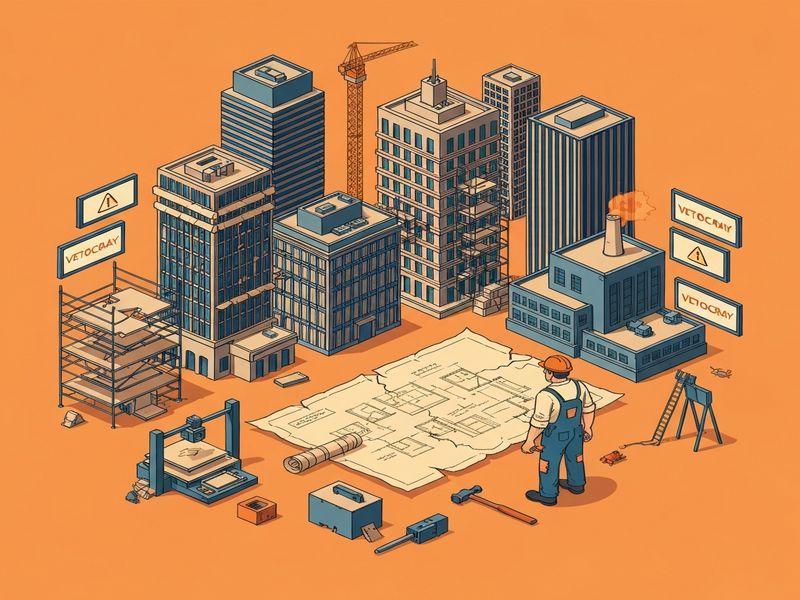
In a recent Garry’s List analysis, journalist Jason Crawford reminded us that the progressive era once celebrated massive engineering feats—from the Panama Canal to the Moon landing. Today, however, the same progressive coalition often frames technology as a threat, fostering an anti‑tech, zero‑sum narrative that hampers the very growth it once championed. This article dissects Crawford’s argument, adds historical context, and offers a roadmap for a new “building‑first” policy agenda that aligns with modern technology policy and infrastructure development.
From Builders to Blockers: The Shift in Progressive Thought
Crawford’s central claim is simple yet powerful: the progressive movement that once embraced dams, power lines, and rockets has morphed into a movement that frequently opposes the very tools of progress. He describes a cultural pivot where concerns about pollution, warfare, and inequality turned into a blanket anti‑technology stance, creating a “vetocracy” where every project faces a cascade of veto points.
- Historical pride in large‑scale projects (Panama Canal, TVA, Apollo program).
- Emergence of a scarcity mindset that frames growth as a zero‑sum game.
- Regulatory overload—NEPA statements ballooning from dozens to over 1,700 pages.
- Policy focus on demand‑side subsidies rather than supply‑side creation.
Historical Benchmarks of American Building Ambition
To understand the magnitude of the current slowdown, we must revisit three iconic projects that defined an era of optimism.
1. The Panama Canal – A 13th Labor of Hercules
Completed in 1914 under Theodore Roosevelt’s vision, the Panama Canal was more than a shipping shortcut; it was a geopolitical triumph that reshaped global trade. The project faced massive engineering challenges, yet it succeeded because decision‑makers were empowered to say “yes” and move forward despite opposition.
2. The Tennessee Valley Authority (TVA) – Electrifying Rural America
Launched by Franklin D. Roosevelt in the 1930s, the TVA brought electricity to millions of households that had never known light. It combined flood control, navigation, and economic development under a single federal agency, illustrating how coordinated public investment can spark regional prosperity.
3. The Apollo Moon Landing – A Symbol of Human Possibility
President John F. Kennedy’s 1961 pledge to land a man on the Moon galvanized an entire nation. The Apollo program’s success in 1969 proved that massive, coordinated R&D could achieve feats once thought impossible, reinforcing the belief that technology could solve humanity’s biggest challenges.
These projects shared a common thread: a willingness to accept risk, streamline approvals, and prioritize long‑term national benefit over short‑term political friction. Today, that willingness is eroding.
The Modern Vetocracy: How Too Many Veto Points Stall Progress
The term “vetocracy,” coined by the Niskanen Center, captures a system where every stakeholder—environmental groups, local municipalities, industry lobbyists, and even individual citizens—holds a legal right to halt a project. While inclusive governance is essential, the current balance has tipped toward paralysis.
Regulatory Overload
The National Environmental Policy Act (NEPA) was designed to ensure thoughtful environmental review. In 1970, a typical Environmental Impact Statement (EIS) ran a few dozen pages. Today, the average EIS exceeds 1,700 pages, creating a bureaucratic mountain that can delay projects for years and inflate costs dramatically.
Supply‑Side vs. Demand‑Side Economics
Modern policy often leans on demand‑side subsidies—housing vouchers, universal healthcare subsidies, or stimulus checks—without expanding the underlying supply. As Crawford notes, this “cost‑disease socialism” pushes prices higher because more money chases a static or shrinking pool of goods (housing, doctors, energy). The solution lies in unlocking supply, not just subsidizing demand.
Case Study: Housing and Infrastructure
New York City built 28 subway stations between 1900‑1904, yet it took 17 years to add just three stations on the Second Avenue line a century later. The engineering capability remained, but the political will to approve and fund projects evaporated. Similar patterns appear in high‑speed rail, renewable energy farms, and AI research facilities.
Re‑Igniting the Builder Mindset: A Supply‑Side Blueprint
To reverse the anti‑tech tide, policymakers, entrepreneurs, and technologists must champion a supply‑side agenda that emphasizes “building first.” Below are actionable pillars that can restore America’s tradition of large‑scale innovation.
- Streamline Permitting. Consolidate overlapping review processes into a single “fast‑track” pipeline for projects that meet clear environmental thresholds. The About UBOS team has built a UBOS platform overview that demonstrates how modular workflows can reduce friction in complex approval chains.
- Invest in Public‑Private Partnerships. Leverage the agility of private tech firms while retaining public oversight. For example, the Enterprise AI platform by UBOS enables secure data sharing between government agencies and AI startups, accelerating infrastructure planning.
- Prioritize AI‑Driven Planning. Use generative AI to model project outcomes, forecast demand, and optimize resource allocation. The AI marketing agents illustrate how AI can automate complex decision‑making, a capability that can be repurposed for urban planning.
- Expand Workforce Capacity. Address the doctor‑shortage analogy by expanding training slots for engineers, data scientists, and construction trades. The UBOS for startups ecosystem offers mentorship pipelines that can be adapted for vocational pipelines.
- Adopt Modular, Scalable Solutions. Deploy plug‑and‑play AI services—like the AI SEO Analyzer or the AI Article Copywriter—to accelerate project documentation, permitting, and community outreach.
By focusing on these pillars, the United States can transition from a scarcity‑driven narrative to an “abundance agenda” where new homes, clean energy, and cutting‑edge research become the norm rather than the exception.
How UBOS Tools Can Accelerate the New Builder Era
UBOS provides a suite of low‑code, AI‑enhanced tools that empower both public agencies and private innovators to prototype, test, and launch infrastructure projects at unprecedented speed.
Rapid Prototyping with the Web App Editor
The Web app editor on UBOS lets teams build custom permitting dashboards without writing a single line of code. Imagine a city’s planning department launching a citizen‑feedback portal in days rather than months.
Automating Workflows
The Workflow automation studio can stitch together data from GIS, environmental models, and community surveys, automatically generating the documentation required for a streamlined EIS.
Leveraging AI Templates for Immediate Impact
UBOS’s UBOS templates for quick start include ready‑made solutions such as the AI YouTube Comment Analysis tool for gauging public sentiment, or the AI Survey Generator to collect stakeholder input at scale.
By integrating these tools, agencies can cut the “vetocracy” lag time, delivering projects that meet both environmental standards and community expectations.
Action Steps for Policymakers, Entrepreneurs, and Tech Leaders
The path forward requires coordinated effort across three fronts:
- Legislative Reform: Pass “Fast‑Track Infrastructure” bills that limit EIS length for projects meeting predefined sustainability criteria. Learn from the UBOS partner program which showcases how public‑private coalitions can lobby effectively.
- Technology Adoption: Deploy AI‑driven analytics (e.g., Keywords Extraction with ChatGPT) to identify bottlenecks and predict project timelines.
- Community Engagement: Use conversational AI bots—like the AI Chatbot template—to keep citizens informed and gather real‑time feedback, turning opposition into partnership.
When these steps are combined with a cultural shift back to “building first,” the United States can reclaim its role as the world’s premier innovator.
Conclusion: Choose the Path of Builders, Not Blockers
History shows that America’s greatest achievements—canals, electrification, moon landings—were possible because leaders said “yes” and cut through red tape. Today’s “vetocracy” and anti‑tech sentiment threaten to rewrite that legacy as one of stagnation. By embracing supply‑side economics, streamlining approvals, and leveraging AI platforms like UBOS, we can spark a new era of abundance and innovation.
The choice is clear: continue to let veto points dictate the future, or rally a new generation of builders who view technology as a catalyst for prosperity. As Crawford reminds us, the tools are still here; we only need the will to use them.
Source: Garry’s List – “We Used to Build Things, What Happened?”
UBOS pricing plans provide flexible tiers for startups and enterprises alike.
UBOS portfolio examples showcase real‑world deployments in infrastructure and AI.
UBOS solutions for SMBs demonstrate how small firms can scale with AI‑driven automation.
AI Video Generator can be used to create public outreach videos for new projects.
AI Image Generator helps visualize future infrastructure concepts.
AI Email Marketing can keep stakeholders informed throughout a project lifecycle.
Andrii Bidochko
CTO UBOS
Andrii Bidochko is an AI entrepreneur and researcher focused on AI agents, reinforcement learning, and autonomous systems. He writes about the technologies shaping the future of machine intelligence, from frontier models and agent architectures to real-world AI applications.