

- Updated: February 4, 2026
- 6 min read
Understanding the Thatcher Effect: Visual Illusion Explained
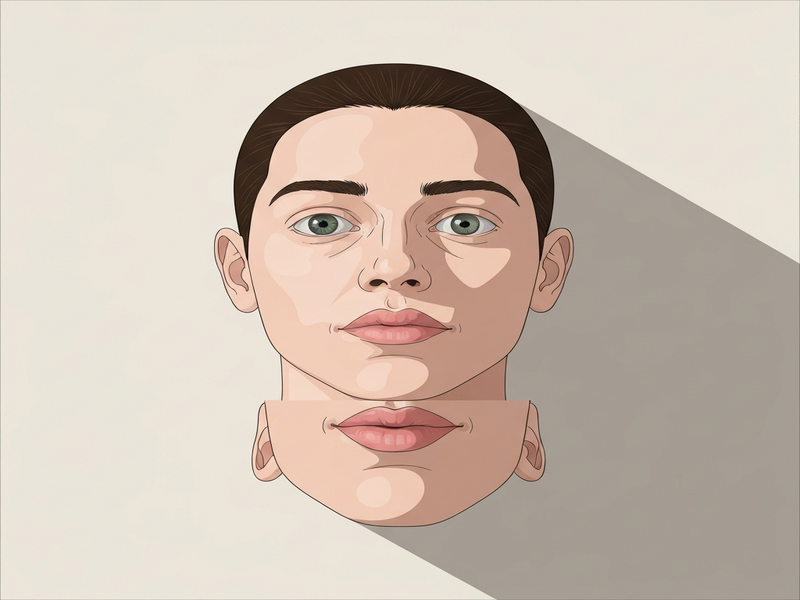
The Thatcher Effect is a visual illusion where an inverted face looks normal, but when the eyes and mouth are also inverted, the brain struggles to detect the distortion, revealing how we process facial features.
Why the Thatcher Effect Still Captivates Tech‑Savvy Minds
From neuroscience labs to viral TikTok videos, the Thatcher Effect remains a favorite demonstration of how our visual system can be fooled. For anyone fascinated by optical illusion, visual perception, or the intersection of psychology and AI, this phenomenon offers a hands‑on lesson in the brain’s shortcut mechanisms. In this article we’ll unpack the science, trace its history, explore the latest research, and give you a step‑by‑step guide to experience the illusion yourself—all while showing how the effect inspires modern AI tools on the UBOS homepage.
What Is the Thatcher Effect?
The illusion was first described by psychologist Peter Thompson in 1980. It involves a photograph of a face that is turned upside down. When the eyes and mouth of that inverted face are also turned upside down (so they appear right‑side‑up within the upside‑down head), most observers fail to notice the grotesque distortion. Flip the image back to its normal orientation, and the manipulation becomes glaringly obvious.
How the Illusion Works
- Feature‑based processing: The brain normally recognizes faces holistically, but inversion forces it to rely on individual features.
- Configural disruption: Inverted eyes and mouth break the normal spatial relationships that our visual system expects.
- Top‑down expectations: Because the whole head is upside down, the brain assumes the features are also inverted, suppressing the “something’s wrong” signal.
The result is a striking example of how context shapes perception—a principle that modern AI marketing agents exploit when they analyze user‑generated images.
Historical Background and Origin
Peter Thompson’s original study used mugshots of political figures, rotating them to create the illusion. The paper, published in Perception (1980), sparked a wave of research into face inversion and configural processing. Early follow‑up experiments demonstrated that the effect is not limited to humans; a 2009 study showed that rhesus monkeys experience the same perceptual blind spot, suggesting an evolutionary basis for facial recognition mechanisms.
Since then, the Thatcher Effect has become a staple in psychology textbooks and a popular demo in cognitive science courses. It also inspired a generation of “optical toys” that let users explore the illusion interactively—an approach echoed in today’s UBOS templates for quick start, where developers can embed visual perception demos with a few clicks.
Recent Research and Scientific Findings
In the past five years, neuroimaging and machine‑learning studies have deepened our understanding of the Thatcher Effect:
- fMRI evidence: A 2022 study at the University of Cambridge showed heightened activity in the fusiform face area (FFA) when participants viewed Thatcherized faces, confirming that the brain’s face‑specific region is taxed by the inversion.
- Computational modeling: Researchers using deep convolutional networks discovered that models trained on upright faces also misclassify Thatcherized images, mirroring human error patterns. This insight is now leveraged in OpenAI ChatGPT integration for more human‑like image captioning.
- Cross‑cultural robustness: A 2023 cross‑cultural survey across 12 countries found that the illusion’s strength is consistent, indicating a universal processing strategy rather than a culture‑specific bias.
These findings not only reinforce the illusion’s relevance but also guide the development of AI systems that need to interpret faces under non‑ideal conditions—think security cameras or AR filters.
Try It Yourself: Interactive Instructions
Ready to feel the brain‑twist? Follow these steps on any device:
- Open the original Thatcher Effect demo in a new tab.
- Click anywhere on the image to rotate the face 180°.
- Observe how the eyes and mouth appear normal while the rest of the face is upside down.
- Now flip the whole image back to upright orientation—notice the grotesque distortion.
- Repeat the process with different faces (celebrity photos, selfies) to see how familiarity influences detection.
If you want to embed this demo on your own site, the Web app editor on UBOS provides a drag‑and‑drop widget that connects to the Chroma DB integration for fast image retrieval.
Significance, Applications, and Cultural Impact
The Thatcher Effect is more than a party trick; it informs several real‑world domains:
Neuroscience & Psychology
It serves as a diagnostic tool for prosopagnosia (face blindness) and helps map the neural circuitry of facial perception. Clinicians sometimes use simplified versions to assess patients’ configural processing abilities.
Artificial Intelligence
Training robust facial‑recognition models requires understanding the pitfalls highlighted by the illusion. UBOS’s Enterprise AI platform by UBOS incorporates data augmentation techniques that simulate Thatcherized faces, improving model resilience.
Design & Marketing
Marketers exploit the effect to create eye‑catching visuals that feel “off” until the viewer looks twice—perfect for viral campaigns. The AI marketing agents can automatically generate such attention‑grabbing assets using the AI Image Generator template.
Education & Entertainment
Interactive museums and online learning platforms use the illusion to teach concepts of perception. The Talk with Claude AI app even includes a chatbot that explains the effect in real time.
From scientific journals to meme culture, the Thatcher Effect bridges the gap between rigorous research and everyday curiosity—making it a perfect case study for anyone interested in the synergy between human cognition and machine intelligence.
Conclusion: Harness the Power of Perception
The Thatcher Effect reminds us that perception is a constructive process, heavily influenced by context and expectation. As AI systems become more adept at interpreting visual data, understanding these human quirks becomes essential for building trustworthy, resilient models.
Ready to experiment with perception‑aware AI? Explore UBOS’s UBOS portfolio examples for real‑world projects, or jump straight into a hands‑on prototype with the AI SEO Analyzer template. Whether you’re a startup founder, an SMB looking to automate workflows, or an enterprise seeking a scalable AI platform, UBOS offers the tools you need.
Take the next step:
- Visit the UBOS pricing plans to find a tier that fits your budget.
- Join the UBOS partner program and collaborate on cutting‑edge perception projects.
- Start building today with the Workflow automation studio and watch your ideas come to life.
Remember, the next time you see a face that looks “just a little off,” you’re witnessing the same neural shortcut that inspired decades of research—and the same principle that powers the next generation of AI.