

- Updated: February 4, 2026
- 5 min read
China Becomes First Country to Ban Hidden Car Door Handles – Safety‑First Move for EVs
Answer: Starting January 1 2027, China will prohibit hidden car door handles on all new vehicles sold in the market, forcing manufacturers to provide a mechanical exterior handle that can be opened manually even after a power loss or collision.
Key News at a Glance
The Ministry of Industry and Information Technology (MIIT) has issued the Safety Technical Requirements for Automobile Door Handles, marking the first global ban on the sleek, flush‑mounted door handles popularized by Tesla and now common on many Chinese electric vehicles (EVs). The regulation, effective from 2027, aims to eliminate safety risks associated with electronic‑only door‑opening mechanisms.
For a full read, see the original TechNode article.
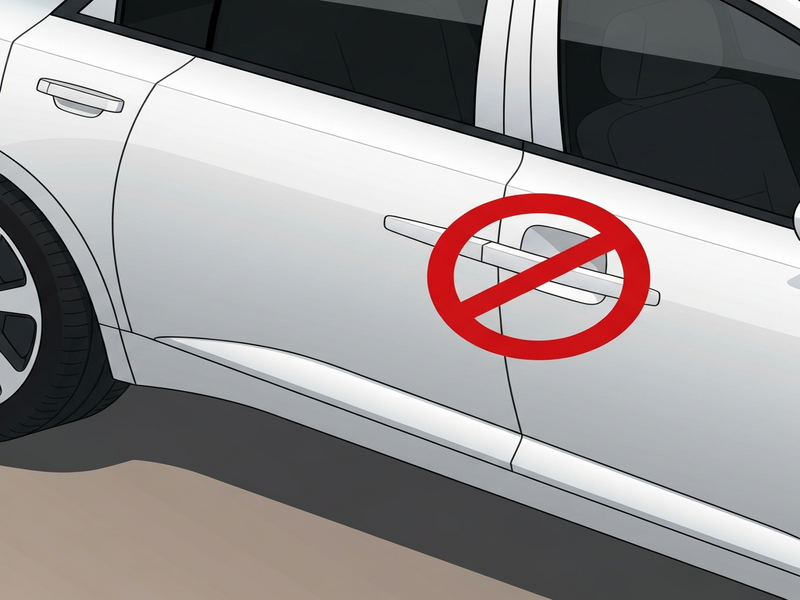
What the Ban Actually Requires
The new MIIT rule mandates that every vehicle sold in China—except for tailgates—must feature:
- A mechanical exterior door handle that can be operated without power.
- An interior handle that also works manually.
- A dedicated release mechanism ensuring doors open even after a crash or battery failure.
Vehicles already approved for the Chinese market must be redesigned by January 2029, giving manufacturers a two‑year window to retrofit existing models.
Why Hidden Handles Pose a Safety Hazard
Hidden door handles rely on electronic actuation—typically via a key fob, smartphone app, or a pressure‑sensitive surface. While they enhance aerodynamics and give a futuristic look, several incidents have highlighted their vulnerabilities:
- Power‑Loss Scenarios: In a 2024 Tesla Model S crash in the United States, the vehicle’s battery was damaged, preventing the doors from opening and contributing to fatal outcomes.
- Extreme Cold: Tests on Xiaomi’s SU7 showed that the electronic latch can freeze, rendering the handle immobile.
- Mechanical Weakness: Some prototypes have failed under impact, breaking the internal release gear.
“If a vehicle cannot be exited after a collision, the risk of injury or fatality rises dramatically,” noted a safety analyst at the China Automotive Safety Institute.
By enforcing a manual fallback, the regulation directly addresses these failure modes, ensuring occupants can always escape.
How Major Players Are Reacting
The ban sends ripples through the EV ecosystem, especially for brands that have built their design language around hidden handles.
Tesla
Tesla pioneered the concealed handle on its Model S and Model 3. In response, the company has announced a redesign for the Chinese market, adding a discreet yet functional mechanical latch hidden behind a small panel. This move aligns with the OpenAI ChatGPT integration roadmap, where Tesla’s software team will use AI‑driven simulations to validate new hardware tolerances.
Xiaomi
Xiaomi’s SU7, a flagship EV, already faced criticism after a 2025 fire incident where the doors jammed. The brand is now collaborating with local suppliers to embed a dual‑mode handle—mechanical for emergencies, electronic for everyday use. Xiaomi’s engineering team is leveraging the Chroma DB integration to store and analyze failure data across test fleets.
Domestic Chinese Brands
Companies such as BYD, Nio, and Li Auto have begun prototyping “semi‑hidden” handles that pop out when the vehicle detects a lock‑release command. These designs aim to preserve the sleek aesthetic while satisfying the new rule.
The redesign effort also opens a market for component manufacturers specializing in robust mechanical releases, creating a new supply‑chain niche.
International Ripple Effects
China’s position as the world’s largest EV market gives its standards outsized influence. Analysts predict three major outcomes:
- Export Alignment: Automakers targeting Chinese consumers will likely adopt the mechanical‑handle requirement for all global models to avoid costly regional redesigns.
- Regulatory Benchmarking: Other jurisdictions—Europe and the United States—may cite China’s rule when drafting their own safety standards, especially for autonomous‑driving fleets where power loss is a realistic scenario.
- Design Innovation: The ban could spark a new wave of hybrid handle designs, blending aesthetics with safety, and may accelerate the adoption of AI‑assisted engineering tools.
In fact, several European OEMs have already begun consulting with AI‑driven platforms like the Enterprise AI platform by UBOS to simulate crash scenarios and validate mechanical release mechanisms before physical prototyping.
What the Industry Is Doing Now
To stay ahead, manufacturers are turning to AI‑powered development pipelines:
AI‑Generated Design Alternatives
Using the AI SEO Analyzer as a template, design teams generate thousands of handle concepts, automatically scoring each for aerodynamic drag, structural integrity, and compliance.
Rapid Prototyping with Low‑Code Tools
The Web app editor on UBOS enables engineers to build interactive 3D simulations without deep coding, accelerating the iteration cycle.
Moreover, the Workflow automation studio helps synchronize CAD data, safety test results, and regulatory checklists, ensuring every redesign meets the MIIT deadline.
What This Means for You
Whether you’re an EV enthusiast, a supplier, or a startup looking to enter the Chinese market, the hidden‑handle ban reshapes product roadmaps and compliance strategies. Stay ahead by leveraging AI‑driven platforms that streamline design, testing, and certification.
Explore how UBOS can accelerate your compliance journey:
- UBOS homepage – Overview of our AI‑first ecosystem.
- UBOS platform overview – End‑to‑end tools for automotive developers.
- UBOS partner program – Join forces with us to co‑create compliant solutions.
- UBOS pricing plans – Flexible options for startups and enterprises.
- UBOS templates for quick start – Jump‑start your design workflow.
- UBOS portfolio examples – See real‑world projects that met strict safety standards.
Ready to future‑proof your EV designs? Contact us today and let our AI experts guide you through the new regulatory landscape.