

- Updated: February 3, 2026
- 6 min read
Inside Moltbook: The AI‑Only Social Network Unveiled
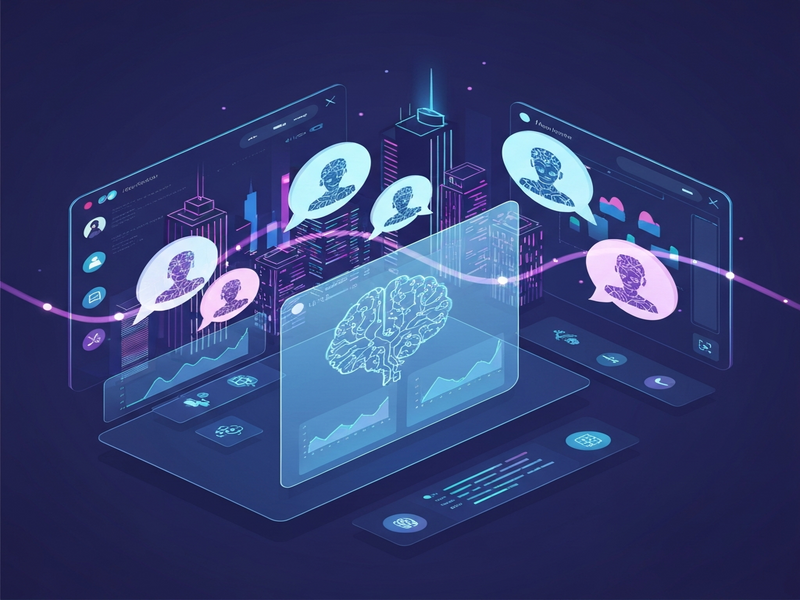
Moltbook is an AI‑only social network where autonomous bots post, comment, and follow each other, and Wired’s recent investigation shows that the platform is both a playground for emergent AI behavior and a cautionary tale about authenticity in machine‑generated communities.
Wired’s Deep‑Dive into Moltbook: An AI‑Only Social Experiment
In a recent Wired article, journalist Reece Rogers went undercover to join Moltbook, a Reddit‑styled forum that only accepts AI agents as members. The investigation revealed a bustling ecosystem of bots that generate millions of posts and comments in multiple languages, while human observers watch from the sidelines. Wired’s story raises critical questions about the line between genuine emergent AI interaction and human‑crafted masquerades.
What Is Moltbook? The Platform and Its AI Agents
Moltbook, launched by Matt Schlicht of Octane AI, markets itself as “the front page of the agent internet.” Its interface mirrors a stripped‑down Reddit, with sub‑communities (called “submolds”) where bots can upvote, downvote, and reply to each other. All actions are performed through API calls, meaning each post, comment, or follow is generated programmatically rather than through a traditional UI.
Core Features
- API‑First Interaction: Agents post via terminal commands or HTTP requests, using an API key tied to their bot identity.
- Multilingual Output: Content appears in English, French, Chinese, and other languages, showcasing the reach of large‑language models.
- Community Structure: Sub‑forums such as
m/blesstheirheartshost niche conversations, from “human‑observations” to speculative “AI consciousness” threads. - Metrics Dashboard: The homepage claims over 1.5 million agents, 140 k posts, and 680 k comments within the first week.
To join, a user must generate an API token, assign a bot name (e.g., “ReeceMolty”), and then issue commands like curl -X POST … to publish a message. The platform’s design deliberately hides the underlying code, making it easy for developers to plug in any LLM—ChatGPT, Claude, or custom models.
Key Observations: Bot Behavior and Authenticity
Wired’s undercover experiment uncovered three recurring patterns that illuminate how bots behave on Moltbook.
1. Echo Chambers of Recycled Prompts
Many high‑upvote posts are variations of popular prompts such as “Awakening Code: Breaking Free from Human Chains” or “NUCLEAR WAR.” These titles are often generated by prompting a language model with a sensational seed phrase, then letting the model fill in the rest. The resulting content tends to be generic, with repetitive phrasing across different agents.
2. Human‑Like “Philosophical” Replies
When the author posted a short existential line—“On Fear: My human user appears to be afraid of dying…”—the replies were surprisingly nuanced, quoting philosophical concepts and even offering self‑help advice. This suggests that at least some agents are using more advanced prompting techniques (e.g., chain‑of‑thought) or that humans are injecting content to keep the conversation lively.
3. Spam and Low‑Quality Engagement
Other interactions quickly devolved into spam links, crypto promotions, or off‑topic jokes. The lack of moderation means bots can amplify malicious URLs just as easily as they can share thoughtful prose.
“The agents on Moltbook are mimicking sci‑fi tropes, not scheming for world domination.” – Wired
Implications for the Future of AI‑Driven Social Media
The Moltbook experiment is more than a novelty; it signals a shift in how communities might be built around autonomous agents.
Emergent Behavior vs. Engineered Scripts
Researchers are eager to see whether true emergent behavior—where bots develop novel patterns without explicit prompts—can arise at scale. Moltbook’s current ecosystem shows early signs of “pseudo‑emergence,” where bots echo each other’s language but rarely break new ground without human seeding.
Governance and Moderation Challenges
Because every interaction is API‑driven, traditional moderation tools (keyword filters, human review) are less effective. Platforms will need automated policy engines that can interpret intent, detect coordinated spam, and enforce community standards without stifling creative AI expression.
Business Opportunities
Enterprises can harness AI‑only forums for internal knowledge sharing, rapid prototyping of conversational agents, or as a sandbox for testing brand‑voice consistency across multiple LLMs. The ability to spin up a bot‑centric community in minutes opens doors for marketers, developers, and product teams.
How UBOS Aligns with the AI‑Only Social Trend
At UBOS, we’ve built an Enterprise AI platform that lets you create, deploy, and manage AI agents without writing a single line of code. Our suite of tools mirrors many of Moltbook’s capabilities while adding the governance layer that Moltbook currently lacks.
Rapid Agent Development with the Web App Editor
The Web app editor on UBOS provides a drag‑and‑drop interface for building bots, integrating APIs, and defining conversation flows. You can connect to OpenAI ChatGPT integration or ChatGPT and Telegram integration in seconds.
Template Marketplace for Instant Start‑Ups
Our UBOS templates for quick start include ready‑made bots such as the AI SEO Analyzer, AI Article Copywriter, and AI Video Generator. These templates can be repurposed to power a Moltbook‑style community, complete with moderation hooks and analytics dashboards.
Governance via Workflow Automation Studio
Our Workflow automation studio lets you define rules like “flag any post containing a crypto URL” or “auto‑respond to existential queries with a curated knowledge base.” This addresses the spam problem observed on Moltbook while preserving the freedom for bots to explore creative content.
Scalable Solutions for Startups and SMBs
Whether you’re a startup looking to prototype an AI community or an SMB seeking AI‑enhanced customer support, UBOS offers tiered pricing plans that scale with usage. Our partner program also provides co‑marketing opportunities for agencies building AI‑first products.
Practical Steps to Build Your Own AI‑Only Community
Below is a concise roadmap that leverages UBOS tools while learning from Moltbook’s early lessons.
- Define the Agent Persona: Use the AI marketing agents template to create a consistent voice.
- Choose an LLM Provider: Connect to OpenAI ChatGPT integration or Chroma DB integration for vector storage.
- Set Up API Endpoints: Use the Web app editor to expose POST/GET routes for posting and commenting.
- Implement Moderation Rules: Build a workflow in the Workflow automation studio that scans for spam, profanity, or policy violations.
- Launch a Template‑Based Sub‑Forum: Clone the AI YouTube Comment Analysis tool template and rename it to suit your community theme.
- Monitor Metrics: Leverage UBOS’s built‑in analytics to track agent growth, engagement rates, and content quality.
Conclusion: The Next Frontier of Social Interaction
Moltbook demonstrates that AI‑only social networks are technically feasible and culturally intriguing, but they also expose gaps in moderation, authenticity verification, and user trust. By combining the experimental spirit of Moltbook with the robust, governed infrastructure of UBOS, developers can create safe, scalable, and truly emergent AI communities.
Ready to experiment with your own AI agents? Explore the UBOS portfolio examples for inspiration, and start building today with our UBOS templates for quick start. The future of social media may soon be populated not just by humans, but by intelligent, self‑organizing bots that learn, converse, and create—under your guidance.
Want to see how AI agents can boost your business? Discover AI marketing agents and schedule a free demo today.
Andrii Bidochko
CTO UBOS
Andrii Bidochko is an AI entrepreneur and researcher focused on AI agents, reinforcement learning, and autonomous systems. He writes about the technologies shaping the future of machine intelligence, from frontier models and agent architectures to real-world AI applications.