

- Updated: January 24, 2026
- 6 min read
Radioactive Iodine-129 Detected in West Philippine Sea: Implications and Response
Nuclear elements, specifically the radioactive isotope iodine‑129, have been detected in the West Philippine Sea, signalling a possible trans‑boundary contamination that warrants immediate scientific and policy attention.
West Philippine Sea Shows Elevated Iodine‑129 Levels: What the Detection Means for Marine Health and Regional Security
A recent study by the University of the Philippines Marine Science Institute (UP MSI) revealed that seawater samples from the West Philippine Sea contain iodine‑129 concentrations 1.5‑to‑1.7 times higher than any other Philippine waters surveyed. The full report can be read on Philstar.com, the nation’s leading news outlet.
Key Findings from the UP MSI Survey
- 119 seawater samples were collected across the West Philippine Sea, Philippine Rise, Sulu Sea, and other strategic locations.
- Iodine‑129 levels in the West Philippine Sea averaged 1.6 × higher than the national baseline, making it the most contaminated region in the archipelago.
- Laboratory analysis was a joint effort between the DOST‑Philippine Nuclear Research Institute, UP MSI’s Geological Oceanography Laboratory, and the University of Tokyo.
- Preliminary source attribution points to the Yellow Sea, where historic nuclear weapons tests and European fuel‑reprocessing plants have released iodine‑129 into the environment.
- Ocean‑current modeling suggests the Yellow Sea Coastal Current and the Chinese Coastal Current could transport the isotope toward the Philippines, though further simulation is required.
Why Iodine‑129 Matters: Environmental and Security Perspectives
Iodine‑129 is a long‑lived radionuclide (half‑life ≈ 15.7 million years) that serves as a reliable tracer for nuclear activities. While its current concentrations in the West Philippine Sea are below thresholds that would cause acute health effects, the presence of any anthropogenic radionuclide in a region without a domestic nuclear program raises several concerns:
- Marine ecosystem impact: Bioaccumulation in plankton can move up the food chain, potentially affecting fish stocks that support local fisheries.
- Human exposure risk: Although the isotope’s radiotoxicity is low, chronic exposure through seafood consumption warrants long‑term monitoring.
- Geopolitical tension: The detection aligns with broader regional worries about cross‑border environmental pollution, especially amid competing maritime claims.
- Data‑driven policy: Accurate, real‑time monitoring is essential for evidence‑based negotiations and for safeguarding marine resources.
Expert Voices and Official Reactions
Dr. Maria Santos, lead geochemist at UP MSI, emphasized that “the detection of iodine‑129 is a clear indicator of external nuclear inputs. While the current levels are not hazardous, they act as a sentinel signal for the need of a robust, nation‑wide radiological surveillance network.”
The Department of Science and Technology (DOST) echoed this sentiment, pledging additional funding for oceanographic modeling and the deployment of autonomous sensors. In a statement, DOST Secretary Leonardo B. Alcantara said, “We will collaborate with regional partners to trace the pathways of these contaminants and ensure our marine resources remain safe.”
Meanwhile, the Department of Environment and Natural Resources (DENR) announced a joint task force with the Philippine Navy to conduct periodic water quality assessments, integrating satellite data and in‑situ measurements.
How AI‑Powered Platforms Can Accelerate Monitoring and Response
The complexity of tracking a trace isotope across vast oceanic currents demands sophisticated data pipelines, real‑time analytics, and intuitive visual dashboards. This is where modern AI platforms, such as the Enterprise AI platform by UBOS, can make a decisive difference.
UBOS offers a suite of tools that align perfectly with the needs of environmental agencies:
- Scalable data ingestion: The Workflow automation studio enables automated collection of sensor feeds, satellite imagery, and laboratory results, reducing manual effort.
- Custom analytics: With the Web app editor on UBOS, analysts can build bespoke dashboards that map iodine‑129 concentrations against ocean currents in near real‑time.
- Vector storage for pattern detection: The Chroma DB integration allows storage of high‑dimensional environmental data, facilitating similarity searches that flag anomalous spikes.
- AI‑assisted interpretation: By leveraging the OpenAI ChatGPT integration, scientists can query large datasets using natural language, receiving concise summaries and predictive insights.
- Rapid alerts via messaging apps: The ChatGPT and Telegram integration can push instant notifications to stakeholders when thresholds are exceeded, while the Telegram integration on UBOS ensures secure, group‑wide dissemination.
- Voice‑enabled briefings: For field teams operating offshore, the ElevenLabs AI voice integration can read out daily risk summaries, keeping crews informed without needing to read screens.
Start‑ups and small‑to‑medium enterprises (SMBs) looking to contribute to marine monitoring can quickly prototype solutions using UBOS templates for quick start. For instance, the “AI Image Generator” template can transform raw sensor data into compelling visual maps for public outreach, while the “AI Article Copywriter” assists communication teams in drafting clear, SEO‑friendly updates for the public.
Organizations interested in scaling these capabilities can explore the UBOS pricing plans that cater to research institutions, government agencies, and private partners alike.
Why Choose UBOS for Environmental Intelligence?
Beyond the technical stack, UBOS emphasizes collaboration through its partner program, inviting universities, NGOs, and industry players to co‑develop models and share best practices. The platform’s About UBOS page highlights a mission to democratize AI, making advanced analytics accessible even to resource‑constrained agencies.
For innovators seeking to embed AI into broader business strategies, the AI marketing agents showcase how automated insights can drive stakeholder engagement—an approach equally valuable for public awareness campaigns about marine safety.
Visit the UBOS homepage to explore case studies, including successful deployments in environmental monitoring, disaster response, and resource management.
Visualizing the Data: The Role of AI‑Generated Imagery
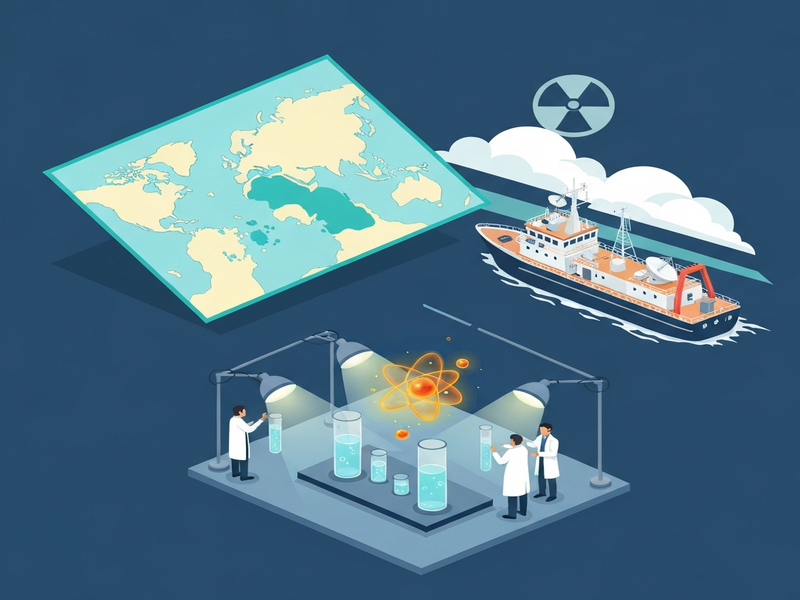
The image above, created with UBOS’s AI Image Generator, illustrates a stylized cross‑section of the West Philippine Sea, highlighting the hypothesized pathway of iodine‑129 from the Yellow Sea to the Philippine archipelago. Such visualizations help policymakers and the public grasp complex oceanographic processes at a glance.
Looking Ahead: Monitoring, Mitigation, and Collaboration
The detection of iodine‑129 in the West Philippine Sea is a wake‑up call for enhanced trans‑boundary environmental stewardship. Continuous monitoring, powered by AI‑driven platforms like UBOS, will enable scientists to track trends, predict future hotspots, and issue timely alerts. Policymakers must translate these insights into concrete regulations that protect marine life and safeguard national security.
Take action now:
- Support the expansion of national radiological monitoring networks.
- Encourage collaboration between the Philippines, neighboring countries, and international research bodies.
- Leverage AI tools—such as the UBOS platform overview—to turn raw data into actionable intelligence.
- Stay informed by following updates from UP MSI, DOST, and DENR.
For a deeper dive into how AI can transform environmental monitoring, explore the UBOS for startups page and discover ready‑made solutions that accelerate research and policy impact.