

- Updated: January 17, 2026
- 5 min read
Federal Reserve Chair Powell Reaffirms Independence, Economic Outlook and Interest Rate Policy
Jerome Powell announced that the Federal Reserve will keep its current interest‑rate stance, stress the importance of Fed independence, and project a cautiously optimistic economic outlook.
Federal Reserve Chair Jerome Powell’s Speech: Key Takeaways, Market Reaction, and Economic Outlook
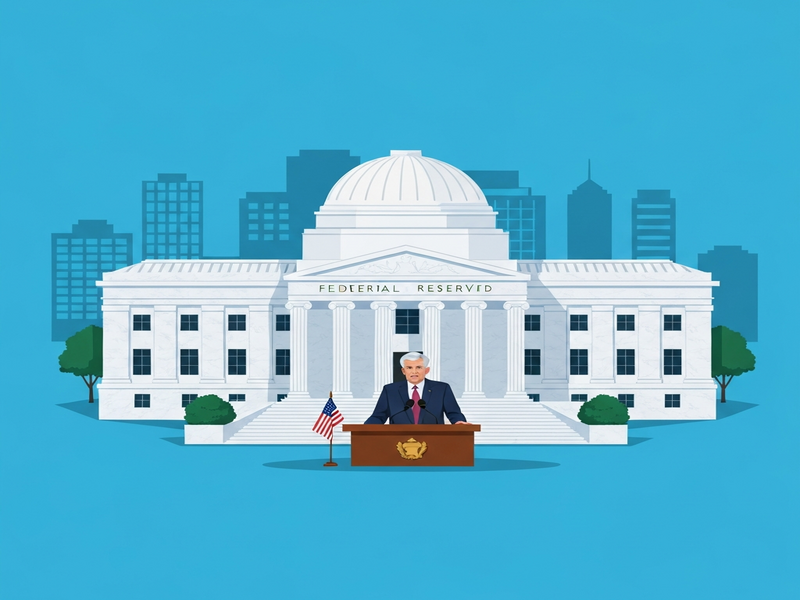
In a widely‑watched address on January 11, 2026, Federal Reserve Chair Jerome Powell outlined the central bank’s policy direction amid lingering inflation pressures and a resilient labor market. The speech, delivered to a mixed audience of economists, investors, and business leaders, reaffirmed the Fed’s commitment to price stability, highlighted the need for an independent monetary authority, and offered a nuanced view of the U.S. economy’s near‑term trajectory. Below, we break down the most critical points, the immediate market reaction, and why these insights matter for financial analysts, investors, and corporate strategists.
Key Points from Powell’s Remarks
1. Fed Independence Remains Paramount
Powell underscored that the Federal Reserve must remain free from political pressure to fulfill its dual mandate of price stability and maximum employment. He warned that attempts to influence rate decisions could erode credibility and destabilize markets.
2. Interest‑Rate Stance: “Hold Steady, Assess Data”
The Chair signaled that the Fed will maintain the current target range for the federal funds rate, emphasizing a data‑dependent approach. While inflation has eased from its 2022 peak, it remains above the 2 % target, prompting a “wait‑and‑see” posture rather than immediate cuts or hikes.
3. Economic Outlook: Moderately Positive but Cautious
Powell painted a picture of a labor market that continues to add jobs, albeit at a slower pace, and consumer spending that remains robust. However, he highlighted lingering supply‑chain constraints and global headwinds that could temper growth.
- GDP growth projected at 1.8 %–2.2 % for 2026.
- Unemployment expected to stay near 3.7 %.
- Core PCE inflation forecast to gradually decline to 2.3 % by year‑end.
Market Reaction Summary
The immediate market response was mixed. Treasury yields slipped modestly as investors priced in a lower probability of a near‑term rate hike, while equity indices rallied on the back of the Fed’s reaffirmed independence and the promise of a stable policy environment.
Equities
The S&P 500 rose 0.6 % within the hour after the speech, driven by financials and technology stocks that benefit from a predictable rate outlook.
Fixed Income
U.S. 10‑year Treasury yields fell 4 basis points, settling around 3.85 % as bond traders adjusted expectations for future policy moves.
“The Federal Reserve will continue to do what the data tells us, free from any political influence, because that is the only way to preserve confidence in our monetary policy.” – Jerome Powell
For the full transcript and video, read the original speech on the Federal Reserve’s website.
Why This Matters for AI‑Driven Financial Tools
As monetary policy shapes market liquidity, AI platforms that provide real‑time analytics must ingest Fed data promptly. For instance, the Enterprise AI platform by UBOS offers built‑in connectors to ingest economic releases, enabling analysts to model rate‑sensitivity scenarios instantly.
Companies leveraging AI marketing agents can adjust ad spend forecasts based on the Fed’s stance, while the Workflow automation studio lets you trigger alerts whenever the Fed releases new guidance.
For startups seeking to embed macro‑economic insights into their products, the UBOS for startups toolkit includes pre‑built templates such as the AI SEO Analyzer that can factor in interest‑rate trends when forecasting traffic growth.
Small‑ and medium‑sized businesses can benefit from the UBOS solutions for SMBs, which integrate the Telegram integration on UBOS to push real‑time Fed updates to decision‑makers on their preferred messaging platform.
If you need to generate quick insights from the speech, the UBOS templates for quick start include a “Monetary Policy Summary” template that automatically extracts key figures and sentiment using the OpenAI ChatGPT integration.
For developers building custom dashboards, the Web app editor on UBOS makes it easy to embed the AI Article Copywriter to auto‑generate post‑speech commentary for newsletters.
Analysts interested in visualizing the Fed’s data can use the Chroma DB integration to store vectorized economic text, enabling semantic search across multiple speeches.
For a more engaging delivery of the speech’s highlights, the ElevenLabs AI voice integration can synthesize a natural‑sounding audio summary that can be shared on corporate intranets.
Finally, the UBOS partner program offers co‑marketing opportunities for fintech firms that want to showcase how their solutions react to Fed policy changes in real time.
Broader Economic Context
To understand how Powell’s remarks fit into longer‑term trends, explore our economic trends analysis, the latest monetary policy analysis, and the upcoming market outlook report.
Conclusion
Jerome Powell’s speech reaffirmed the Federal Reserve’s commitment to an independent, data‑driven policy path while signaling a steady‑hand approach to interest rates. The market’s modest rally reflects confidence that the Fed will avoid abrupt moves, but analysts should stay vigilant for any shifts in inflation dynamics or geopolitical shocks.
If you’re a financial professional looking to turn these insights into actionable strategies, explore the UBOS pricing plans and start a free trial of our AI‑enhanced analytics suite today.