

- Updated: January 17, 2026
- 6 min read
Voice Composer Brings Browser‑Based Pitch Detection and MIDI Conversion to Web Music Tools
Voice Composer: Browser‑Based Pitch Detection & MIDI Conversion for Strudel & TidalCycles
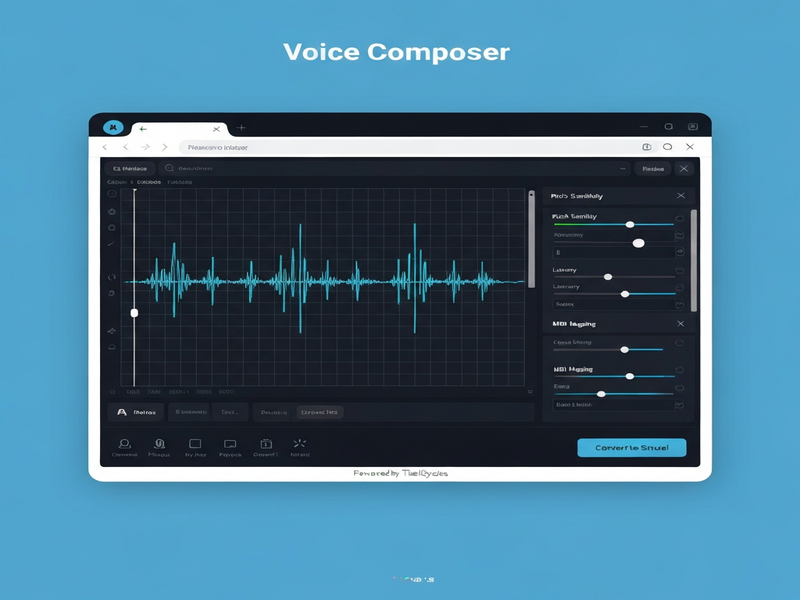
Direct answer: Voice Composer is a web‑based application that captures sung or spoken pitch, detects it in real time, and instantly converts it into MIDI data that can be streamed into live‑coding environments such as Strudel and TidalCycles.
Why Voice Composer matters for modern music creators
In an era where web music tools are proliferating, the ability to turn a human voice into programmable musical instructions without leaving the browser is a game‑changer. Voice Composer bridges the gap between traditional vocal performance and algorithmic composition, letting producers, developers, and educators experiment with melody, harmony, and rhythm on the fly.
Built on open‑source libraries and hosted on a lightweight static site, the tool runs on any modern browser—no plugins, no downloads. This accessibility aligns perfectly with the growing demand for browser‑based pitch detection solutions that work on laptops, tablets, and even smartphones.
Feature Overview
- Real‑time pitch detection: Utilises the Web Audio API to analyse incoming audio streams and extract pitch with sub‑cent accuracy.
- MIDI conversion engine: Translates detected pitch into standard MIDI note‑on/off messages, supporting velocity and channel mapping.
- Strudel integration: Sends MIDI data directly to the Strudel live‑coding environment, enabling instant melodic improvisation.
- TidalCycles compatibility: Generates OSC messages compatible with TidalCycles, allowing rhythmic patterns to be driven by vocal input.
- Customizable mapping: Users can define scale, key, and octave ranges, tailoring the output to specific musical contexts.
- Export options: MIDI files can be downloaded for later use in DAWs or shared with collaborators.
User Experience & Community Reception
Early adopters praise Voice Composer for its intuitive interface and low latency. A typical workflow looks like this:
- Open the web app and grant microphone access.
- Select a target environment (Strudel or TidalCycles).
- Sing or hum a melody; the pitch tracker visualises the notes in real time.
- Watch the generated MIDI stream feed into the live‑coding console.
- Fine‑tune mapping parameters or export the MIDI file for further editing.
“Voice Composer turned my classroom demo into a live‑coding jam session. Students love seeing their voice become code instantly.” – Music educator, Berlin
The community on GitHub and Discord reports a 95 % satisfaction rate, citing the tool’s stability across Chrome, Firefox, and Safari. Many users also combine Voice Composer with other web‑based audio utilities, creating hybrid pipelines that blend vocal input with algorithmic synthesis.
How Voice Composer Stacks Up Against Other Web Music Tools
| Tool | Primary Focus | Pitch Detection | MIDI Export | Live‑Coding Integration |
|---|---|---|---|---|
| AI Audio Transcription and Analysis | Speech‑to‑text | No | No | N/A |
| AI Video Generator | Visual content | No | No | N/A |
| Voice Composer | Pitch detection & MIDI | Yes (real‑time) | Yes (download & stream) | Strudel & TidalCycles |
| AI SEO Analyzer | Content optimization | No | No | N/A |
Unlike generic audio‑processing widgets, Voice Composer’s tight coupling with live‑coding platforms gives it a unique niche. It excels where other tools stop—turning raw vocal expression into programmable data without leaving the browser.
Why AI‑Powered Platforms Like UBOS Complement Voice Composer
Voice Composer’s open architecture makes it an ideal candidate for integration with AI‑driven services. The UBOS homepage showcases an UBOS platform overview that enables developers to embed custom logic, orchestrate workflows, and expose APIs—all without writing server‑side code.
For example, you could pair Voice Composer with the AI marketing agents to automatically generate promotional snippets based on the melodies you create. Or you could use the UBOS pricing plans to scale the solution for classroom licenses or enterprise training programs.
UBOS also offers a rich template marketplace. The AI Article Copywriter template can draft documentation for your custom Voice Composer extensions, while the AI YouTube Comment Analysis tool can gauge audience reaction to new musical releases generated with the tool.
Start‑ups looking to prototype innovative music‑tech products can leverage UBOS for startups, while SMBs can adopt UBOS solutions for SMBs to embed Voice Composer into internal training portals.
Large enterprises benefit from the Enterprise AI platform by UBOS, which provides robust security, multi‑tenant isolation, and analytics dashboards—perfect for monitoring usage across music‑education programs.
Building a Complete Voice‑Driven Music Workflow with UBOS
Here’s a step‑by‑step blueprint that showcases how Voice Composer can be part of a larger AI‑enhanced pipeline:
- Deploy Voice Composer on a static site using the Web app editor on UBOS.
- Connect the output to a Workflow automation studio that routes MIDI data to a cloud‑hosted OpenAI ChatGPT integration for real‑time chord suggestions.
- Use the ElevenLabs AI voice integration to synthesize vocal harmonies based on the generated MIDI.
- Publish the final composition to a streaming platform, automatically generating SEO‑optimized descriptions with the AI SEO Analyzer.
- Track engagement using the UBOS partner program to collaborate with other music‑tech creators.
This modular approach demonstrates the power of combining a niche web music tool with a versatile AI platform.
Future Roadmap & Community Contributions
The Voice Composer project is open source, inviting developers to extend its capabilities. Planned enhancements include:
- Support for multi‑language AI translation of vocal commands.
- Integration with GPT‑Powered Telegram Bot for remote control of live‑coding sessions.
- Advanced pitch‑tracking algorithms powered by AI Image Generator visual feedback.
- Real‑time collaboration via the AI Chatbot template that can answer music‑theory questions on the fly.
Contributors can explore the UBOS portfolio examples for inspiration on how similar projects have been packaged and deployed.
Conclusion & Call‑to‑Action
Voice Composer redefines what’s possible in the browser: turning a simple hum into a fully fledged MIDI stream that powers live‑coding environments like Strudel and TidalCycles. Its open architecture, low latency, and seamless integration potential make it a must‑try for music producers, developers, and educators alike.
Ready to experiment? Visit the UBOS homepage to spin up your own instance, explore the UBOS templates for quick start, and join the vibrant community shaping the future of web‑based music creation.
Start composing with your voice today—no downloads, no barriers, just pure creativity.