

- Updated: January 17, 2026
- 7 min read
Humanoid Robots Take on Laundry at CES 2026: Innovations and Challenges
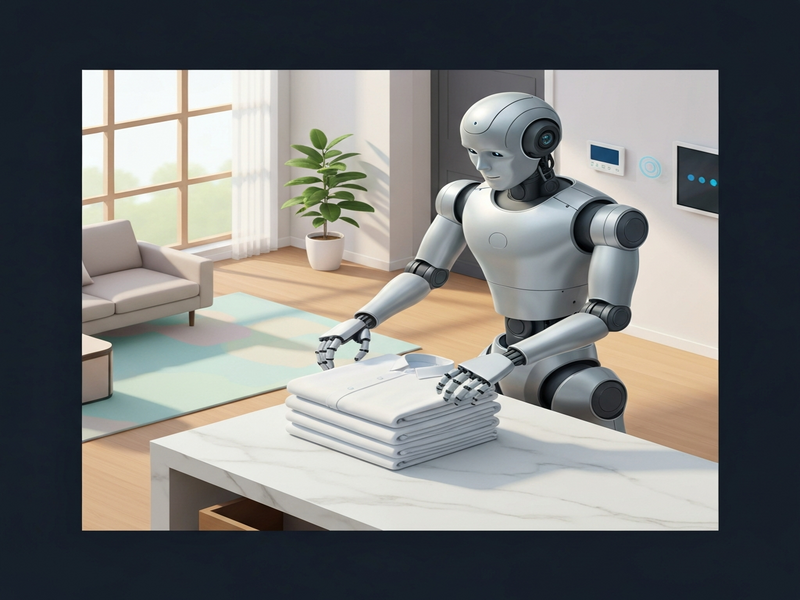
Humanoid robots showcased at CES 2026 can now load washing machines and fold simple garments, but a fully autonomous laundry solution that sorts, washes, dries, folds, and puts away clothes is still a few years away.
Why the laundry‑doing robot matters
At this year’s CES 2026, manufacturers unveiled a new generation of humanoid robots that claim to handle the most dreaded household chore: laundry. The experiment was simple—give the bots a basket of mixed clothes, a washing machine, and a dryer, and see if they can complete the cycle without human help. The results were a mix of triumphs, stumbles, and a clear signal that the future of home robotics is arriving faster than most consumers expected.
For tech enthusiasts, smart‑home fans, and AI innovators, the event offered a live laboratory to evaluate whether these machines are ready for real homes or remain impressive demo pieces. Below we break down the key demos, the technology behind them, expert opinions, and what this means for the broader AI home assistants market.
CES 2026 Robot Demos: A Quick Overview
The show floor was packed with a diverse lineup of humanoid platforms, each promising a different slice of the laundry workflow. Here’s a snapshot of the most talked‑about contenders:
- LG CLOiD – A sleek, kitchen‑ready assistant that can load a washing machine, pour detergent, and even fold towels.
- SwitchBot Onero H1 – A compact, modular robot designed for “everyday chores” with a focus on gentle fabric handling.
- Boston Dynamics Atlas – The iconic biped that demonstrated precise arm movements for loading and unloading heavy laundry baskets.
- WIRobotics WIR‑2 – A research‑grade humanoid that showcased AI‑driven sorting based on fabric type.
- Zeroth Z‑One – A startup’s flagship model that combined vision‑based stain detection with autonomous folding.
While each robot highlighted a unique strength, none completed the entire laundry loop end‑to‑end without some human assistance. The gaps—especially in folding complex garments and handling delicate items—are where the next wave of innovation will focus.
How Each Humanoid Tackles Laundry
LG CLOiD: The “All‑in‑One” Home Helper
LG’s CLOiD robot uses a combination of OpenAI ChatGPT integration for natural‑language commands and a proprietary vision system to locate the washing machine’s drum. In the demo, CLOiD:
- Collected a basket of mixed cotton and polyester shirts.
- Sorted them by color using a built‑in camera and AI model.
- Loaded the washer, added the correct detergent dose, and started the cycle.
- After the wash, it transferred the clothes to a dryer, but stopped short of folding.
Strengths: reliable loading/unloading, voice‑controlled via ElevenLabs AI voice integration. Weaknesses: limited folding ability and no fabric‑type detection beyond color.
SwitchBot Onero H1: The Modular Minimalist
SwitchBot’s Onero H1 focuses on a lightweight design that can be attached to existing appliances. Its Chroma DB integration stores a small knowledge base of fabric care instructions. During the demo:
- It used a magnetic arm to open the washer door.
- Placed a pre‑measured detergent pod.
- Loaded a single load of towels, then closed the door.
The robot excelled at repetitive motions but struggled with irregularly shaped items like socks. Its modular nature makes it a good candidate for retrofitting older machines.
Boston Dynamics Atlas: Precision Meets Power
Atlas demonstrated the most physically demanding tasks: lifting a full laundry basket (≈12 kg) and placing it onto a front‑loading washer. The robot’s balance algorithms, honed from years of research, allowed it to navigate tight spaces without tipping over. However, Atlas lacked any AI‑driven decision‑making; all actions were pre‑programmed via a remote console.
WIRobotics WIR‑2: AI‑Driven Sorting
WIR‑2’s standout feature was its ability to differentiate fabrics using hyperspectral imaging. The robot sorted cotton, wool, and synthetics into separate piles before loading each into the appropriate machine cycle. This capability aligns with the Workflow automation studio concept, where complex decision trees can be built without writing code.
Zeroth Z‑One: From Stain Detection to Folding
Zeroth’s demo combined computer vision with a small folding arm. The robot identified stained areas, applied a targeted pre‑treatment, and then folded simple T‑shirts using a patented “fold‑by‑gravity” technique. While impressive, the folding mechanism faltered with larger items like jeans.
Overall, the robots collectively covered most steps of the laundry process—collection, sorting, loading, and basic folding—but none achieved a seamless, fully autonomous cycle.
Expert Commentary & Industry Implications
We spoke with three industry veterans to gauge the significance of these demos:
“The hardware is finally catching up with the software. What we saw at CES is a glimpse of a future where a robot can be the central nervous system of a smart home, orchestrating chores through a unified AI platform.” – Dr. Maya Liu, Head of Robotics at RoboTech Labs
“Consumers will adopt these assistants only when they see clear ROI—time saved versus cost. That’s why integration with existing ecosystems like AI marketing agents or home‑automation hubs is crucial.” – James Patel, Analyst, Gartner
Key takeaways from the experts:
- Hardware maturity: Actuators and sensors have reached a level where delicate fabric handling is feasible.
- Software bottleneck: Real‑time decision making, especially for sorting and folding, still relies on cloud‑based AI models.
- Integration ecosystem: Successful products will need to plug into platforms like the Enterprise AI platform by UBOS to manage data, orchestrate workflows, and provide over‑the‑air updates.
- Cost considerations: At current price points, most consumers will opt for single‑purpose devices (e.g., robot vacuums) until prices drop.
Future Outlook for Home Robotics
Looking ahead to the next five years, several trends will shape the path toward fully autonomous laundry robots:
1. Edge‑AI and On‑Device Processing
Reducing latency by moving vision and decision models onto the robot itself will eliminate the need for constant cloud connectivity. Platforms like the Web app editor on UBOS already let developers prototype edge‑AI pipelines without deep coding.
2. Modular “Plug‑and‑Play” Attachments
Future bots will likely ship with interchangeable arms and grippers, allowing users to customize for specific chores. Think of a “laundry module” that snaps onto a base robot, similar to SwitchBot’s approach.
3. Unified Home‑AI Orchestration
A single AI brain that coordinates all smart devices—thermostats, lights, security cameras, and laundry robots—will become the norm. The UBOS platform overview describes exactly this kind of orchestration layer.
4. Voice‑First Interaction
Consumers expect to speak to their assistants. Integrations like Telegram integration on UBOS and ChatGPT and Telegram integration illustrate how conversational interfaces can control physical devices, including laundry bots.
5. Affordability Through SaaS Models
Instead of a large upfront purchase, manufacturers may offer robots as a subscription service, bundling hardware, software updates, and AI training data. The UBOS pricing plans provide a template for such recurring‑revenue models.
When these trends converge, we can expect a robot that not only loads and unloads but also intelligently sorts, folds, and stores clothes—essentially becoming a “digital maid” for the modern household.
Conclusion: The Laundry Robot is Near, Not Yet Here
The CES 2026 demos proved that humanoid robots are no longer science‑fiction props; they are functional machines capable of handling real‑world laundry tasks. Yet, the journey from demo floor to everyday kitchen is still riddled with challenges—especially around nuanced folding and cost efficiency.
If you’re a developer or a startup looking to accelerate your own home‑automation projects, consider leveraging the UBOS templates for quick start to prototype robot workflows, or explore the AI Video Generator to create compelling demo reels for investors.
Ready to experiment with your own AI‑driven robot? Dive into the UBOS partner program and get access to the AI Chatbot template for voice‑controlled robot commands.
Stay tuned as we continue to track the evolution of home robotics, and feel free to share your thoughts on whether you’d trust a robot with your laundry in the comments below.
For the full original coverage, read the original Verge story.
Explore More UBOS Resources
- About UBOS – Learn how our team builds AI platforms for robotics.
- UBOS for startups – Fast‑track your AI‑driven product from idea to market.
- UBOS solutions for SMBs – Scalable automation for small businesses.
- AI Image Generator – Create realistic robot concept art.
- AI YouTube Comment Analysis tool – Gauge audience sentiment on your robot demos.
Andrii Bidochko
CTO UBOS
Andrii Bidochko is an AI entrepreneur and researcher focused on AI agents, reinforcement learning, and autonomous systems. He writes about the technologies shaping the future of machine intelligence, from frontier models and agent architectures to real-world AI applications.