

- Updated: January 7, 2026
- 6 min read
Intel Unveils Custom Panther Lake Handheld Gaming PC
Intel’s new Panther Lake‑based handheld gaming PC is a custom‑designed, portable gaming device that promises desktop‑class performance in a pocket‑sized form factor.
At The Verge Intel unveiled a bold vision: a handheld gaming platform built around a bespoke “Panther Lake” CPU. The announcement positions Intel to compete directly with Qualcomm’s upcoming Windows handhelds and AMD’s Strix Halo‑powered devices, potentially reshaping the portable‑gaming market that has been dominated by ARM‑based solutions.
Custom CPU Architecture and Performance Goals
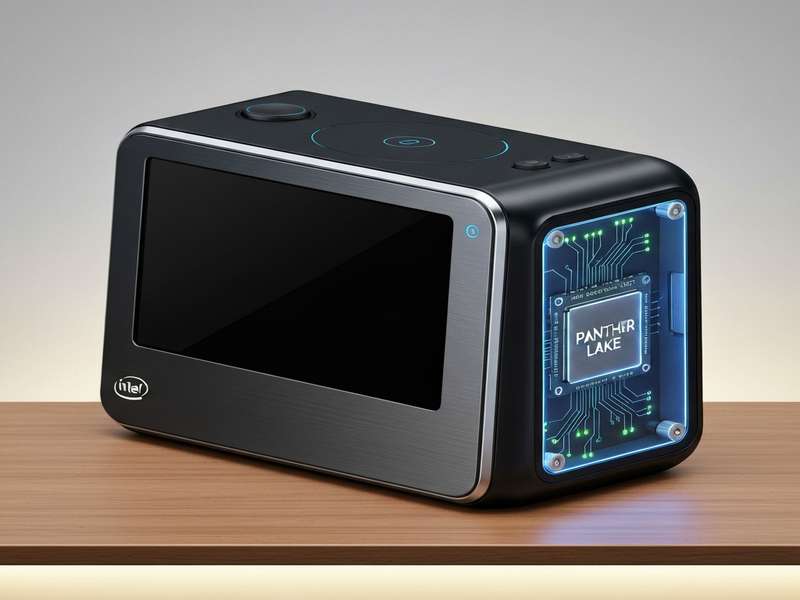
The heart of the new handheld is a custom Intel Core G3 variant engineered specifically for low‑power, high‑throughput gaming. Leveraging Intel’s 18A process node, the chip slices the die to allocate extra transistor budget to the integrated GPU, aiming to outpace the Arc B390 graphics found in today’s Intel‑based handhelds.
Key architectural highlights include:
- Up to 8 W TDP with dynamic power scaling for sustained frame rates.
- Enhanced Xe‑LP graphics cores tuned for Vulkan and DirectX 12 workloads.
- Integrated AI acceleration blocks to offload inference tasks such as upscaling and voice chat.
- Support for LPDDR5X memory up to 16 GB, reducing latency in texture streaming.
By tailoring the silicon to the handheld form factor, Intel hopes to close the performance gap that has historically favored AMD’s Ryzen Z1 series and Qualcomm’s Snapdragon 8 Gen 2. The custom design also opens the door for future firmware updates that can unlock additional cores or boost clocks without a hardware redesign.
Design Highlights and Form Factor Details
While Intel has kept the exact chassis under wraps, leaked renderings suggest a sleek, ergonomically‑shaped device reminiscent of the Steam Deck but slimmer and lighter. Anticipated specifications include:
- 7‑inch 1080p IPS display with a 120 Hz refresh rate.
- Dual analog sticks, D‑pad, and programmable shoulder buttons.
- USB‑C Power Delivery up to 65 W for rapid charging.
- Optional detachable keyboard dock for a hybrid laptop experience.
The device will run Windows 11, giving gamers access to the full library of PC titles, Xbox Game Pass, and native support for popular launchers like Steam and Epic. Intel’s partnership with hardware OEMs is still being finalized, but the company hinted at collaborations with major manufacturers to ensure a premium build quality.
For developers, the platform promises a unified SDK that abstracts the underlying hardware, making it easier to optimize games for the handheld without rewriting large codebases. This could be a game‑changer for indie studios looking to reach a mobile audience without sacrificing performance.
How It Stacks Up Against Existing Handheld Gaming Devices
To understand the potential impact, let’s compare the upcoming Intel handheld with three market leaders: the Steam Deck, ASUS ROG Ally, and the upcoming Qualcomm‑based Windows handheld rumored for GDC.
| Feature | Intel Panther Lake Handheld | Steam Deck | ASUS ROG Ally |
|---|---|---|---|
| CPU | Custom Intel Core G3 (18A) | AMD Zen 2 (4 cores) | AMD Ryzen Z1 (4 cores) |
| GPU | Xe‑LP (enhanced) | RDNA 2 (8 CU) | RDNA 2 (8 CU) |
| RAM | LPDDR5X up to 16 GB | LPDDR5 16 GB | LPDDR5 16 GB |
| Battery Life (average gaming) | ≈ 3‑4 hrs (optimised) | ≈ 2‑3 hrs | ≈ 2‑3 hrs |
| OS | Windows 11 | SteamOS 3 (Linux) | Windows 11 |
The Intel offering’s biggest advantage is its native Windows environment combined with a CPU that can be fine‑tuned for gaming workloads. While the Steam Deck excels in price‑to‑performance, it runs a Linux‑based OS that can be a barrier for some titles. The ASUS ROG Ally is a strong competitor, but its AMD‑based silicon may not match the AI‑accelerated features Intel is embedding in Panther Lake.
Potential Market Impact and Future Roadmap
If Intel delivers on its promises, the handheld could reshape the portable gaming landscape in three key ways:
- Desktop‑class performance on the go: Developers will have a single Windows target, reducing the need for separate mobile ports.
- AI‑enhanced gameplay: Built‑in AI blocks could enable real‑time upscaling (similar to DLSS) and smarter voice chat, giving the device a unique selling point.
- Ecosystem expansion: Intel’s partnership model, hinted at by Dan Rogers, suggests a pipeline of accessories, docks, and cloud‑gaming integrations that could create a thriving ecosystem.
The roadmap appears to include a Q3 2026 hardware reveal, followed by a developer preview program in early 2027. Intel also plans to release a suite of software tools that integrate with its UBOS platform overview, allowing creators to build companion apps, performance dashboards, and AI‑driven overlays directly on the handheld.
For startups eyeing the gaming market, the UBOS for startups program could provide low‑cost access to the same development environment, accelerating time‑to‑market for indie titles. Meanwhile, SMBs looking to adopt the device for internal training or demo stations can explore UBOS solutions for SMBs, which include device‑management and remote update capabilities.
From an enterprise perspective, the handheld could serve as a secure, portable workstation for field engineers. Intel’s Enterprise AI platform by UBOS already supports edge deployment, meaning the same AI acceleration hardware could be repurposed for on‑site analytics, AR overlays, or remote assistance.
What’s Next for Gamers and Developers?
The excitement around Intel’s Panther Lake handheld is only the beginning. As the device moves from concept to production, the community will need reliable tools to create, test, and market new experiences. UBOS offers a suite of resources that align perfectly with this emerging platform:
- Web app editor on UBOS – design companion web apps that run alongside your handheld games.
- Workflow automation studio – automate build pipelines and OTA updates for your handheld titles.
- UBOS pricing plans – flexible pricing for indie developers and large studios alike.
- UBOS portfolio examples – see real‑world case studies of AI‑enhanced gaming projects.
- UBOS templates for quick start – jump‑start your handheld app with pre‑built templates.
For those interested in AI‑driven content creation, explore the AI marketing agents to promote your game across social channels, or check out the UBOS partner program for co‑marketing opportunities.
Ready to experience the future of portable gaming? Keep an eye on Intel’s announcements, and start prototyping today with UBOS’s powerful development suite.