

- Updated: January 5, 2026
- 7 min read
Mira Ultra4 Hormone Monitor Debuts at CES 2026 – At‑Home Reproductive Health Testing Redefined
The Mira Ultra4 Hormone Monitor is an FDA‑listed, at‑home health device that lets women test four key reproductive hormones from a urine sample in about 16 minutes, delivering lab‑grade insights directly to a smartphone app.
Introduction: A New Chapter for Hormone Testing at CES 2026
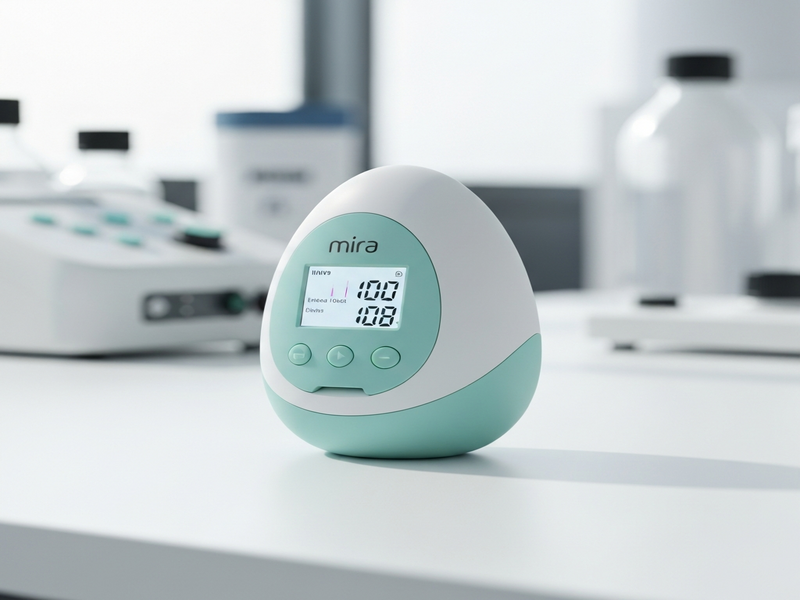
At the CES 2026 showcase, health‑tech startup Mira unveiled the Ultra4 Hormone Monitor, a sleek egg‑shaped gadget that promises to demystify hormone health for women of reproductive age. Unlike traditional at‑home kits that require mailing samples to a lab, Mira’s solution delivers results on‑device, empowering users to track fertility, PCOS, perimenopause, and broader metabolic health in real time.
Product Description and Key Features
What Is Inside the Ultra4 Kit?
- Egg‑shaped Analyzer: A handheld device that reads test strips and syncs with the Mira app via Bluetooth.
- Ultra4 Wand: A disposable, collapsible silicone cup with a test strip that detects four hormones—FSH, LH, E3G, and PdG.
- Companion App: Guides users through sample collection, displays results, and offers personalized testing schedules.
Four Hormones, One Test
The Ultra4 wand simultaneously measures:
- Follicle Stimulating Hormone (FSH) – indicator of ovarian reserve.
- Luteinizing Hormone (LH) – triggers ovulation.
- Estrone‑3‑Glucuronide (E3G) – a metabolite of estrogen.
- Pregnanediol‑3‑Glucuronide (PdG) – a progesterone metabolite.
Key User Experience Highlights
- Quick Sample Collection: Pee into the reusable silicone cup, dip the wand for 15 seconds.
- Fast Analysis: Insert the wand into the analyzer; results appear in ~16 minutes on the device and in the app.
- Actionable Insights: The app translates hormone levels into easy‑to‑understand charts, alerts, and recommendations.
- Custom Testing Schedules: Based on goals (fertility, PCOS management, menopause tracking), the app suggests optimal testing frequency.
Why It Stands Out
Mira’s approach merges the convenience of at‑home testing with the accuracy of clinical labs. The device is FDA‑listed as a Class I medical device, indicating low risk while still meeting stringent quality standards. Moreover, the integration of a robust data platform enables longitudinal tracking—something most over‑the‑counter ovulation kits lack.
Pricing and Availability
The Ultra4 ecosystem is sold as a bundle or à la carte:
| Component | Price (USD) |
|---|---|
| Analyzer (stand‑alone) | $149 |
| Ultra4 Wand Pack (5 tests) | $99 |
| Complete Ultra4 Kit (Analyzer + 5‑wand pack) | $249 |
The kit ships worldwide from Mira’s online store and is expected to hit major retailers by Q3 2026. Early‑bird customers receive a complimentary 30‑day subscription to the Mira app’s premium analytics.
Target Audience and Use Cases
While the Ultra4 is marketed primarily to women seeking deeper insight into reproductive health, its utility spans several personas:
- Fertility‑Focused Individuals: Track ovulation windows and ovarian reserve with real‑time hormone data.
- PCOS & Perimenopause Patients: Identify hormonal patterns that trigger symptoms and discuss data‑driven treatment plans with clinicians.
- Health‑Tech Enthusiasts: Early adopters who value quantified self‑tracking and integration with other wellness platforms.
- General Wellness Seekers: Women who want to monitor metabolic health markers linked to hormone fluctuations.
The device also appeals to clinicians who can request patients to share their app data, enabling more precise, data‑backed consultations.
Comparison to Existing Solutions
Traditional at‑home hormone kits typically involve a single hormone test (e.g., LH) and require mailing samples to a lab, resulting in delays of days to weeks. Below is a quick side‑by‑side comparison:
| Feature | Mira Ultra4 | Standard Ovulation Kit | Lab‑Based Test |
|---|---|---|---|
| Hormones Measured | FSH, LH, E3G, PdG | LH only | Full panel (10+ hormones) |
| Result Time | ~16 minutes | Minutes (single line) | Days‑weeks |
| Cost per Test | $20‑$25 | $10‑$15 | $150‑$300 |
| Data Integration | App‑based trends, exportable CSV | None | Electronic health record (optional) |
The Ultra4 bridges the gap between cheap single‑hormone kits and expensive lab panels, delivering multi‑hormone insight at a fraction of the cost and with immediate feedback.
Expert and User Perspectives
Sylvia Kang, Mira’s CEO and co‑founder, explains the vision: “We wanted to give women a proactive tool that feels as simple as checking a step count, yet provides clinically relevant hormone data.” She notes that 40 % of current users are not trying to conceive but are managing PCOS, perimenopause, or general hormonal balance.
“Having real‑time hormone data changed how I talk to my OB‑GYN. We could pinpoint the exact phase where my estrogen spikes caused migraines, and adjust my treatment accordingly.” – Emily R., 32, software engineer
Reproductive endocrinologists also see promise. Dr. Maya Patel, MD, comments: “While we still rely on comprehensive labs for diagnosis, a device like Ultra4 can serve as an early‑warning system, prompting patients to seek care before symptoms become severe.”
How Mira’s Approach Aligns with the Broader AI‑Driven Health Landscape
Mira’s data‑centric model mirrors the capabilities of platforms like UBOS platform overview, which enable developers to build AI‑powered health applications without deep coding. By exposing hormone trends via an API, third‑party tools could integrate Ultra4 data into personalized wellness dashboards.
For startups looking to prototype similar solutions, the UBOS for startups program offers low‑cost compute and pre‑built connectors for popular AI services, including the OpenAI ChatGPT integration. Imagine a chatbot that interprets your hormone trends and suggests diet or lifestyle tweaks in real time.
Small‑ and medium‑size businesses can also benefit. The UBOS solutions for SMBs include workflow automation that could trigger alerts to a health coach when a user’s LH spikes unexpectedly.
Enterprises seeking a scalable AI health stack can explore the Enterprise AI platform by UBOS, which supports secure data pipelines—critical for handling sensitive hormone data.
Developers wanting to prototype a custom UI can start with the Web app editor on UBOS, while automation enthusiasts may appreciate the Workflow automation studio for building reminder flows.
Pricing transparency is also a focus at UBOS, as detailed in the UBOS pricing plans, which illustrate how subscription models can keep hardware costs predictable—an approach Mira mirrors with its wand‑refill subscriptions.
For inspiration, check out the UBOS portfolio examples, where health‑tech firms have launched AI‑driven diagnostics using similar modular architectures.
If you’re looking for ready‑made templates to accelerate development, the UBOS templates for quick start include a “Health Tracker” starter kit that could be adapted for hormone monitoring.
One particularly relevant template is the AI SEO Analyzer, which demonstrates how to ingest data, run AI models, and present actionable insights—exactly the workflow Mira’s app employs for hormone interpretation.
Conclusion: Is the Mira Ultra4 Right for You?
The Mira Ultra4 Hormone Monitor represents a significant step forward in at‑home health tech, delivering multi‑hormone analytics quickly, affordably, and with a user‑friendly interface. For women seeking deeper insight into fertility, PCOS, perimenopause, or overall metabolic health, the Ultra4 offers a compelling alternative to both single‑hormone kits and costly lab panels.
If you’re ready to explore this technology, visit the UBOS homepage for more AI‑driven health solutions, or head straight to Mira’s product page via the original Verge article for the latest pricing and pre‑order details.
Take control of your hormone health today—because understanding your body shouldn’t require a trip to the lab.