

- Updated: January 4, 2026
- 6 min read
China’s CXMT Targets $4.2 Billion IPO to Challenge Global DRAM Leaders
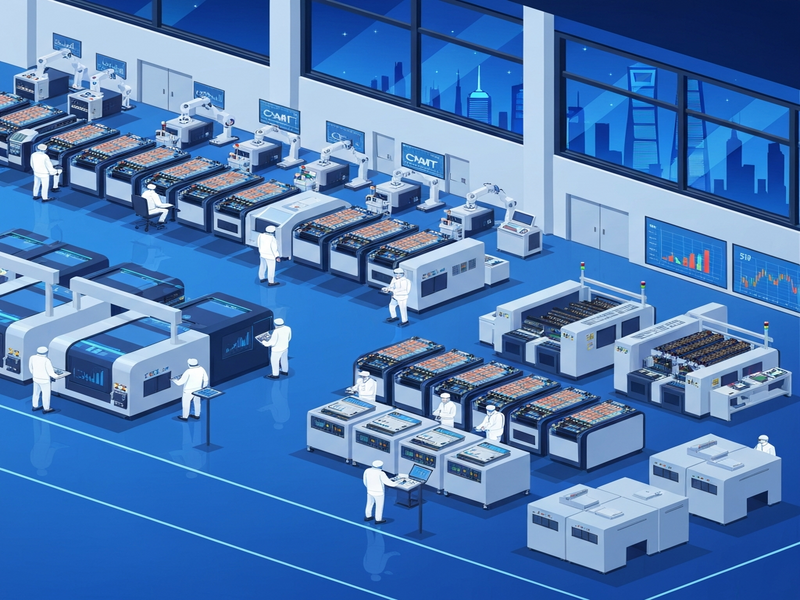
CXMT, China’s largest domestic DRAM manufacturer, is pursuing a $4.2 billion IPO on the Shanghai STAR Market to accelerate fab upgrades, advance DRAM process technology, and fund next‑generation memory R&D.
Company Background and Market Position
Founded in 2016, ChangXin Memory Technologies Group Co., Ltd. (CXMT) emerged to break the long‑standing monopoly of Samsung, SK Hynix, and Micron in the global DRAM market. Operating under an integrated device manufacturing (IDM) model, CXMT controls the full value chain—from R&D and design to wafer fabrication—allowing rapid iteration and cost control.
Today, CXMT ranks first in China and fourth worldwide by production capacity, a remarkable climb for a company less than a decade old. Its product portfolio spans DDR4, DDR5, LPDDR4X, LPDDR5, and the latest LPDDR5X, serving servers, smartphones, AI accelerators, and autonomous‑vehicle platforms.
For a deeper look at how AI‑driven platforms can accelerate product development, explore the UBOS platform overview.
IPO Size, Allocation, and Target Market
CXMT’s prospectus, filed on December 30, 2025, requests up to CNY 29.5 billion (≈ USD 4.22 billion). The capital will be allocated to three strategic pillars:
- Upgrading mass‑production DRAM wafer lines to 1‑zB (zettabyte) capacity.
- Advancing process nodes from 20 nm to sub‑10 nm for DDR5/LPDDR5X.
- Funding forward‑looking R&D on next‑generation memory architectures (e.g., DDR6, compute‑in‑memory).
The STAR Market, China’s high‑tech equity board, is designed for companies with strategic national importance. CXMT’s filing marks the first acceptance under the new pre‑review mechanism for critical‑core‑technology firms, underscoring the Chinese government’s backing.
If you’re a startup looking to leverage AI‑enhanced financial modeling, the UBOS for startups suite offers ready‑made templates.
Competitive Landscape vs. Samsung, SK Hynix, and Micron
According to Omdia’s 2024 data, the global DRAM market share is dominated by:
| Vendor | Market Share (2024) |
|---|---|
| Samsung Electronics | 40.35 % |
| SK Hynix | 33.19 % |
| Micron Technology | 20.73 % |
| CXMT | ≈ 3.97 % |
While CXMT’s share is modest, its rapid growth trajectory and domestic market advantage position it as a credible challenger. The company’s ability to produce DDR5 chips with 8 000 Mbps bandwidth narrows the performance gap with Samsung’s flagship offerings.
For teams building AI‑enhanced market analysis dashboards, the AI SEO Analyzer can surface competitor trends in real time.
Production Capacity and Technology Upgrades
CXMT currently operates three 12‑inch fabs located in Hefei and Beijing, collectively delivering over 30 million DRAM chips per month**. The upcoming IPO proceeds will fund:
- Installation of a new 20 nm DDR5 line, projected to add 12 million chips/month.
- Conversion of existing 20 nm lines to 10 nm, boosting yield by 15 %.
- Deployment of advanced lithography equipment sourced from domestic suppliers, reducing reliance on foreign toolsets.
These upgrades are expected to cut unit cost by up to 12 % and improve profit margins, a critical factor as global DRAM prices stabilize after the 2023‑2024 volatility.
To automate the rollout of such complex fab projects, consider the Workflow automation studio, which integrates IoT sensor data with AI‑driven scheduling.
Financial Performance and R&D Investment
CXMT reported cumulative revenue of CNY 57 billion (≈ USD 8.16 billion) from 2022 through H1 2025. However, heavy capital expenditures and R&D spending resulted in net losses of CNY 40.86 billion (≈ USD 5.85 billion) over the same period.
R&D intensity is a defining metric: CXMT invested CNY 18.87 billion (≈ USD 2.7 billion), representing **33 %** of cumulative revenue. The company now employs over **4,600 R&D engineers** and holds **5,589 patents** worldwide, covering process nodes, packaging, and low‑power architectures.
The firm projects a turnaround in 2025, targeting revenue of CNY 55‑58 billion and a net profit of CNY 2‑3.5 billion, driven by AI‑centric memory demand and tighter supply.
For a quick start on building financial models, the UBOS templates for quick start include pre‑built cash‑flow sheets.
Strategic Importance for China’s Semiconductor Ambitions
China consumes more than half of the world’s DRAM, yet historically imported > 90 % of it. CXMT’s scaling reduces this dependency, aligning with the “Made in China 2025” roadmap and the recent “National Integrated Circuit Industry Development” plan.
The IPO also signals confidence to foreign investors and domestic venture funds, encouraging further capital inflow into the broader memory ecosystem—design houses, equipment manufacturers, and packaging firms.
The company’s diversified shareholder base, which includes state‑backed funds, Alibaba, and Tencent, illustrates a public‑private partnership model that the Chinese government favors for strategic tech sectors.
Companies seeking to embed AI‑driven insights into their supply‑chain risk assessments can leverage the AI Article Copywriter to generate real‑time briefing notes.
Expert Quote and Analysis
“CXMT’s IPO is more than a financing event; it’s a strategic lever that accelerates China’s quest for a self‑sufficient memory supply chain. The infusion of capital will enable technology upgrades that were previously constrained by funding gaps, positioning CXMT to compete on both cost and performance,” says Dr. Li Wei, senior analyst at China Semiconductor Insights.
Dr. Li highlights three risk mitigations:
- Reduced exposure to foreign equipment sanctions.
- Enhanced ability to meet AI‑driven memory demand from domestic cloud providers.
- Greater bargaining power with raw‑material suppliers, as the top five now account for < 33 % of procurement.
For a visual representation of CXMT’s roadmap, the AI Video Generator can create animated timelines that simplify stakeholder communication.
What This Means for Investors and How to Stay Ahead
The CXMT IPO offers a rare window into a high‑growth, strategically protected segment of the semiconductor market. Investors should monitor:
- IPO pricing and allocation details once the STAR Market opens.
- Quarterly production ramp‑up reports from the Hefei and Beijing fabs.
- R&D milestones, especially the transition to sub‑10 nm DDR5.
- Policy updates from China’s Ministry of Industry and Information Technology (MIIT).
To deepen your understanding of AI‑enabled market analysis, explore the AI LinkedIn Post Optimization tool, which helps you craft data‑rich posts that attract institutional attention.
For a broader view of UBOS’s AI ecosystem, visit the UBOS homepage and discover how our AI marketing agents can automate your outreach to semiconductor investors.
If you are a small‑to‑medium business looking for a turnkey AI platform, the UBOS solutions for SMBs provide scalable modules for data ingestion, analytics, and reporting.
Finally, learn more about the original announcement and detailed prospectus by reading the original source article.
Additional Resources from UBOS
Enterprise AI Platform
Leverage the Enterprise AI platform by UBOS to integrate memory‑intensive workloads with AI inference pipelines.
Web App Editor
Rapidly prototype dashboards for DRAM market tracking using the Web app editor on UBOS.
Pricing Plans
Explore flexible subscription options via the UBOS pricing plans.
Portfolio Examples
See real‑world implementations in the UBOS portfolio examples.
AI Image Generation
Generate visual assets for presentations with the AI Image Generator.
ChatGPT Integration
Integrate conversational AI into investor relations portals via the OpenAI ChatGPT integration.
Andrii Bidochko
CTO UBOS
Andrii Bidochko is an AI entrepreneur and researcher focused on AI agents, reinforcement learning, and autonomous systems. He writes about the technologies shaping the future of machine intelligence, from frontier models and agent architectures to real-world AI applications.