

- Updated: January 3, 2026
- 6 min read
Mui Board: Minimalist Wooden Smart‑Home Controller with Matter Support
The Mui Board is a minimalist, wood‑enclosed smart‑home controller that supports Matter, offering a screen‑free, design‑focused way to manage home automation.
Mui Board Smart‑Home Controller: A Calm‑Tech Revolution
Tech‑savvy homeowners looking for a sleek, unobtrusive hub have a new option on the market: the Mui Board. First unveiled at CES 2019 and finally released in 2026, this wooden panel blends Japanese “mui” philosophy—harmony with nature—with cutting‑edge Matter support to deliver a truly calm‑tech experience.
The device replaces noisy voice assistants and bright displays with a capacitive touch surface that lights up only when you need it, showing minimalist icons for lights, music, climate, and more. It’s a perfect fit for minimalist smart‑home design enthusiasts who want control without visual clutter.
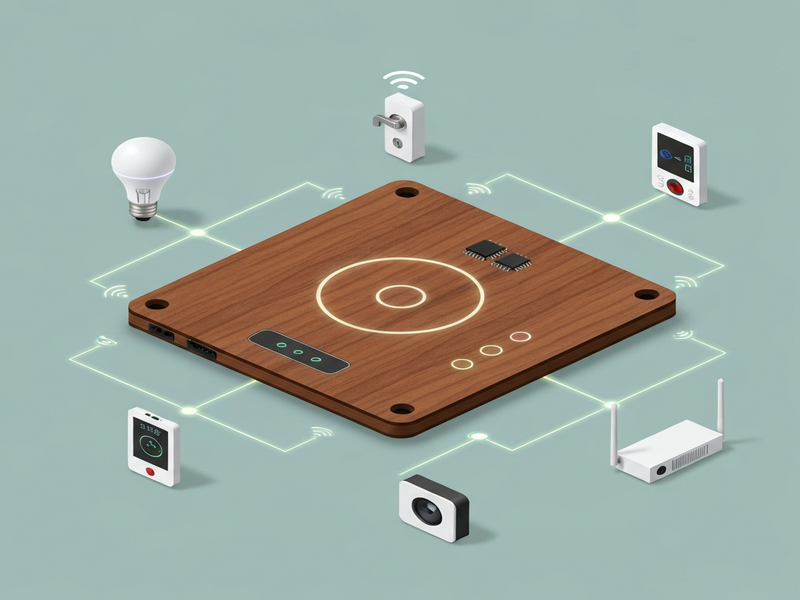
Image: Mui Board in a modern living room setting.
Read the full story in the original Verge article for a deeper dive into its development timeline.
Design Philosophy and Core Features
Mui Labs built the board around three core ideas: calm, tactile, and timeless. The enclosure is available in natural maple or dark cherry, each finished to a furniture‑grade polish that makes the controller look less like tech and more like a piece of décor.
- Dimensions: 23 × 3 × 1 inches, wall‑mountable with a low‑profile bracket.
- Capacitive touch surface that reveals a dot‑matrix of icons only when activated.
- Built‑in speaker and microphone for optional voice notes (no always‑on assistant).
- Wi‑Fi (2.4 GHz) and BLE connectivity; Thread support via third‑party border router.
- Runs on a Raspberry Pi‑based Linux core, enabling community‑driven extensions.
The UI is intentionally sparse: a clock, weather, and a rotating set of icons for your most used devices. Tapping an icon brings up controls for Hue lights, Sonos speakers, smart plugs, thermostats, and more—all without a single pixel lit when idle.
For developers interested in extending the board, the Web app editor on UBOS offers a low‑code environment to create custom tiles and integrate additional APIs.
Matter Support and Compatibility
Matter is the industry‑wide standard that promises seamless interoperability across brands. The Mui Board acts as a Matter controller, allowing you to pair and manage devices directly, bypassing proprietary clouds.
Key Matter Capabilities
| Feature | Supported Devices |
|---|---|
| On/Off Switches | Smart plugs, light switches |
| Dimmable Lighting | Philips Hue, LIFX, compatible LEDs |
| Thermostat Control | Ecobee, Nest (via multi‑admin) |
| Lock Management | August, Yale (roadmap) |
Because the board currently lacks an integrated Thread radio, users who rely on Thread‑only devices will need a compatible border router. UBOS’s Enterprise AI platform by UBOS can orchestrate those devices through a unified dashboard, extending the board’s reach.
Matter integration also means you can avoid vendor lock‑in. Pair a new smart bulb directly from the board’s UI, and it will appear alongside existing Hue or LIFX devices without extra apps.
Pricing, Availability, and Installation
The Mui Board is positioned as a premium product. Pricing tiers are as follows:
- Standard Maple – $799 (limited‑time launch discount).
- Premium Cherry – $999 (includes a custom mounting bracket).
- Bundle with Thread Border Router – $1,149.
All units ship with a power adapter and quick‑start guide. Installation is a simple wall‑mount: attach the bracket, run the power cable, and follow the on‑screen pairing wizard. The board’s firmware can be updated over‑the‑air via the companion Mui app, which also lets you reorder icons and set custom scenes.
For businesses interested in bulk deployment, the UBOS partner program offers volume discounts and dedicated support.
User Experience: What It Feels Like in a Real Home
After a week of daily use, the following observations stand out:
- Instant Responsiveness: The capacitive surface registers taps within 50 ms, making light adjustments feel as natural as a physical switch.
- Low Visual Noise: Icons appear only when needed, preserving the room’s aesthetic.
- Quiet Interaction: No constant voice prompts; the board only beeps for confirmations.
- Multi‑User Friendly: Each family member can create a personal profile via the app, keeping favorite scenes at their fingertips.
The board also includes playful Easter eggs—a roaming cat icon and a built‑in piano mode—that turn routine control into a lighthearted experience.
From a performance standpoint, the Raspberry Pi core handles up to 30 simultaneous Matter devices without lag. Heavy‑traffic setups (e.g., large Hue arrays) may experience slight latency, which can be mitigated by enabling local API access in the Hue app.
If you’re already using AI‑driven automation, consider linking the board to UBOS’s AI marketing agents to trigger scenes based on calendar events or weather forecasts.
How the Mui Board Stacks Up Against Competitors
Below is a quick MECE‑styled comparison with three popular alternatives: Amazon Echo Show, Google Nest Hub, and the UBOS templates for quick start (which can be turned into custom controllers).
| Aspect | Mui Board | Echo Show | Nest Hub |
|---|---|---|---|
| Display | Screen‑free (touch‑activated icons) | 7‑inch LCD | 7‑inch LCD |
| Matter Support | Yes (Wi‑Fi, Thread via router) | Yes | Yes |
| Design Aesthetic | Wooden, minimalist, furniture‑grade | Plastic, tech‑centric | Plastic, tech‑centric |
| Price (USD) | $799‑$1,149 | $129‑$229 | $99‑$149 |
| Voice Assistant | Optional, no always‑on mic | Alexa | Google Assistant |
If your priority is a clutter‑free aesthetic and Matter‑first control, the Mui Board clearly leads. For budget‑conscious users who need a built‑in voice assistant, Echo Show or Nest Hub remain viable options.
Conclusion: Is the Mui Board Right for You?
The Mui Board delivers a unique blend of calm‑tech design, robust Matter compatibility, and tactile interaction that sets it apart from conventional smart‑home hubs. While the price point is premium, the value lies in its ability to become a silent, elegant part of your home’s décor while still offering full control over a growing ecosystem of devices.
For homeowners who crave a minimalist interface, or for designers looking to showcase a tech‑forward yet unobtrusive living space, the Mui Board is a compelling choice.
Ready to explore more calm‑tech solutions? Visit the UBOS smart‑home hub for additional integrations, or read the latest updates on UBOS news. If you’re a developer, the UBOS platform overview provides APIs that can extend the Mui Board’s capabilities even further.
Stay ahead of the smart‑home curve—embrace calm, embrace Matter, and let the Mui Board become the quiet command center of your connected home.
ChatGPT and Telegram integration
OpenAI ChatGPT integration
Chroma DB integration
ElevenLabs AI voice integration
UBOS homepage
About UBOS
UBOS partner program
UBOS for startups
UBOS solutions for SMBs
Web app editor on UBOS
Workflow automation studio
UBOS pricing plans
UBOS portfolio examples
UBOS templates for quick start
AI SEO Analyzer
AI Article Copywriter
AI Video Generator
AI Chatbot template
Customer Support with ChatGPT API