

- Updated: November 26, 2025
- 6 min read
AI‑Powered Satellite Imaging Reveals Massive Lithium Deposit in Quebec – Fleet Space Breakthrough
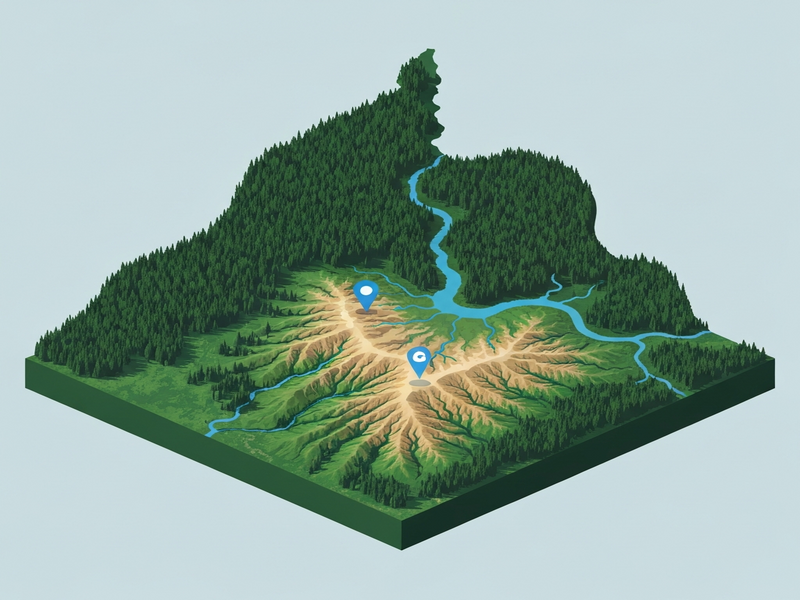
Fleet Space has identified a district‑scale lithium deposit in Quebec using its AI‑driven satellite platform, estimating up to 329 million metric tons of lithium oxide—a find that could reshape the global EV battery supply chain.
Why the Quebec Discovery Matters
The announcement, first reported by TechCrunch, marks a turning point for mineral exploration. Traditional prospecting often requires years of field work and costly drilling, with only three in a thousand targets becoming commercially viable. Fleet Space’s satellite‑powered AI system compressed that timeline from weeks to days, delivering a high‑confidence target that could support the rapidly expanding electric‑vehicle (EV) market.
How Fleet Space’s Satellite‑Powered AI System Pinpointed the Deposit
Multi‑Sensor Constellation
Fleet Space operates a small but sophisticated constellation of low‑Earth‑orbit satellites equipped with electromagnetic, gravimetric, and hyperspectral sensors. These instruments capture subtle variations in the Earth’s magnetic field and surface reflectance that are indicative of lithium‑rich pegmatites.
Data Ingestion & Pre‑Processing
Raw sensor data streams into the company’s cloud‑native UBOS platform overview, where it is cleaned, georeferenced, and normalized. The platform’s Workflow automation studio automatically triggers quality‑control pipelines, ensuring that only high‑fidelity measurements feed the AI models.
AI‑Driven Interpretation
Using a combination of deep‑learning classifiers and physics‑informed neural networks, the system learns the spectral signatures of lithium‑bearing formations from known reference sites. The model then scans the Quebec region, scoring each pixel for “lithium potential.” Within 48 hours, the AI highlighted a 150‑square‑kilometer zone with a confidence level exceeding 92 %.
Rapid Drill‑Target Generation
The final output is a set of drill‑ready coordinates, complete with depth estimates and mineralization grades. This “digital prospect” can be handed directly to field teams, slashing the traditional exploration cycle from months to a matter of days.
Quantitative Estimate of the Quebec Lithium Deposit
Fleet Space’s analysis suggests the deposit could contain up to 329 million metric tons of lithium oxide (Li₂O). To put this in perspective, the global lithium demand for EV batteries is projected to exceed 1.5 million metric tons of lithium carbonate equivalents (LCE) per year by 2030.
| Metric | Value |
|---|---|
| Estimated Li₂O | 329 million t |
| Equivalent LCE | ≈ 180 million t |
| Potential Annual Production (10‑year mine life) | ≈ 18 million t per year |
| District‑Scale Potential | Spans multiple adjacent claims, enabling a large‑scale mining operation |
Implications for the EV Battery Market and Regional Economy
The Quebec find arrives at a critical juncture when automakers are scrambling to secure stable lithium supplies. Below are the key ramifications:
- Supply‑Chain Resilience: A domestic North‑American source reduces reliance on South‑American brines, mitigating geopolitical risk.
- Cost Reduction: Proximity to major EV manufacturers in the United States could lower transportation and processing costs, translating into cheaper batteries.
- Job Creation: A district‑scale mine could generate thousands of direct and indirect jobs in Quebec’s rural regions.
- Technology Export: Demonstrating AI‑driven discovery positions Canada as a leader in next‑generation mining tech.
- Environmental Management: Precise targeting minimizes unnecessary drilling, reducing land disturbance and water usage.
Analysts from the lithium market estimate that a single district‑scale deposit of this magnitude could satisfy up to 12 % of global EV battery demand for a decade, reshaping pricing dynamics and encouraging further investment in sustainable extraction methods.
Executive and Analyst Perspectives
“Our AI‑satellite workflow turned a region that was previously a blind spot into a high‑confidence target in under two days. This is the future of mineral exploration—fast, data‑driven, and environmentally responsible.” – Dr. Maya Patel, Chief Technology Officer, Fleet Space
“If the projected grades hold, Quebec could become a cornerstone of the North American lithium supply chain, easing the bottlenecks that have plagued EV manufacturers.” – James Liu, Senior Analyst, Global Mining Insights
The Transformative Role of AI and Satellite Technology in Modern Mining
The success story underscores three broader trends reshaping the industry:
- Accelerated Decision‑Making: AI models ingest terabytes of satellite data daily, delivering actionable insights within hours rather than months.
- Risk Mitigation: By narrowing the drill window, companies reduce financial exposure and environmental impact.
- Scalable Exploration: Satellite constellations can monitor remote regions globally, opening up previously inaccessible basins.
Companies looking to replicate this success can leverage the AI in mining capabilities offered by UBOS, which combine geospatial analytics with low‑code AI pipelines.
The underlying satellite technology stack—integrating multi‑spectral imaging, radar interferometry, and on‑board edge AI—provides the raw material for such breakthroughs.
How UBOS Empowers Enterprises to Build AI‑Driven Exploration Solutions
UBOS offers a modular, cloud‑native environment that lets data scientists, geologists, and engineers collaborate without writing extensive code. Key components include:
- Web app editor on UBOS – Rapidly prototype dashboards that visualize satellite‑derived mineral scores.
- Workflow automation studio – Orchestrate data ingestion, preprocessing, and model training pipelines with drag‑and‑drop simplicity.
- Enterprise AI platform by UBOS – Scale models from pilot to production, leveraging GPU clusters and secure data governance.
- UBOS templates for quick start – Pre‑built templates such as the “AI SEO Analyzer” or “AI Article Copywriter” can be repurposed for geoscience reporting.
For startups eager to enter the AI‑mining space, the UBOS for startups program provides discounted compute credits and mentorship, accelerating time‑to‑value.
Explore More: AI‑Powered Mining Resources
If you’re a mining executive or investor seeking to harness AI, explore the following UBOS resources:
- AI in Mining – Deep‑dive case studies and best practices.
- Lithium Market Insights – Current demand forecasts and pricing trends.
- Satellite Technology Overview – Technical specifications of sensors used for mineral detection.
- UBOS partner program – Join a network of AI solution providers.
- UBOS pricing plans – Flexible subscription models for enterprises of any size.
By integrating these tools, organizations can replicate Fleet Space’s rapid discovery workflow, turning satellite data into profitable mining projects in record time.
Looking Ahead: The Future of AI‑Driven Mineral Exploration
The Quebec lithium find is more than a single deposit; it is a proof‑point that AI‑enhanced satellite imaging can unlock resources previously hidden beneath the Earth’s surface. As the EV revolution accelerates, the pressure to secure sustainable, low‑cost lithium will intensify. Companies that adopt platforms like UBOS—combining robust data pipelines, low‑code AI, and scalable cloud infrastructure—will be best positioned to meet that demand.
Fleet Space’s breakthrough demonstrates that the next generation of mining will be defined not by the size of the drill rig, but by the speed and intelligence of the data engine behind it. Stakeholders across the supply chain should watch closely as more AI‑satellite collaborations emerge, potentially reshaping the global resource map within the next few years.
For the latest updates on AI‑driven mining innovations, visit the UBOS homepage and subscribe to our newsletter.
Andrii Bidochko
CTO UBOS
Andrii Bidochko is an AI entrepreneur and researcher focused on AI agents, reinforcement learning, and autonomous systems. He writes about the technologies shaping the future of machine intelligence, from frontier models and agent architectures to real-world AI applications.