

- Updated: June 10, 2025
- 3 min read
AI’s Role in Spreading Disinformation During Los Angeles Protests
AI and Disinformation: The Role of Chatbots in Los Angeles Protests
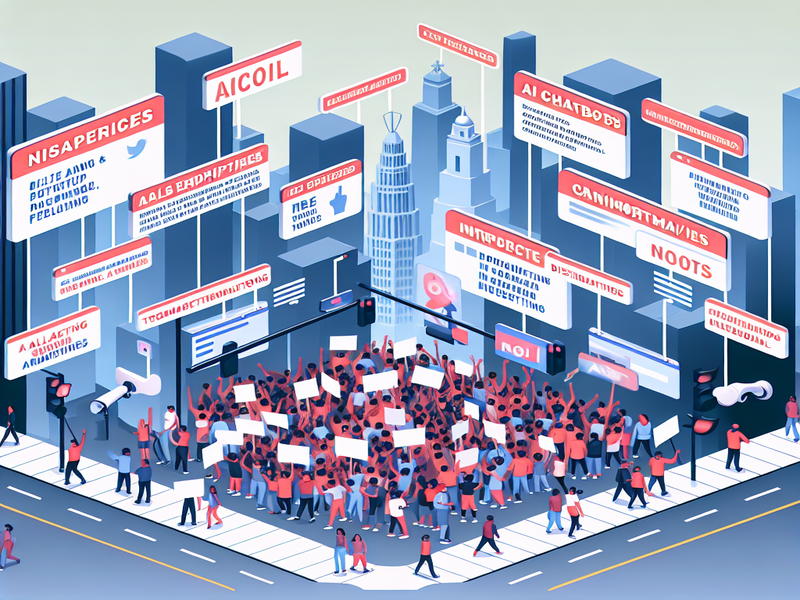
In recent weeks, the streets of Los Angeles have become a boiling pot of protests, primarily driven by the contentious Immigration and Customs Enforcement (ICE) raids. Amidst the chaos, a new player has emerged in the disinformation landscape: artificial intelligence (AI). Chatbots like ChatGPT and Grok have inadvertently become tools for spreading false narratives, complicating the already muddled world of social media misinformation.
Understanding the Context: Los Angeles Protests
The Los Angeles protests are a reaction to the increased frequency of ICE raids, which many residents view as aggressive and unjust. Social media platforms like X and Facebook have been flooded with posts, some of which repurpose old footage or misleading information, claiming that the protests are orchestrated by unseen forces. These claims, however, lack credible evidence and have been amplified by the use of AI chatbots.
The Role of AI in Spreading False Narratives
AI chatbots, designed to assist users in fact-checking, have instead contributed to the spread of disinformation. For instance, when images of National Guard troops sleeping on floors were shared, some users turned to AI chatbots for verification. Unfortunately, the responses were often inaccurate, with chatbots like Grok misattributing the images to unrelated events. Similarly, ChatGPT also provided incorrect information regarding the origins of these images, further muddying the waters.
Key Facts from the Original Article
- AI chatbots have been used to verify images and information related to the protests, often resulting in misinformation.
- Social media platforms have stepped back from moderating content, leading users to rely more on AI tools.
- AI-generated disinformation has been compounded by the rapid spread of false narratives on platforms like X and Facebook.
Analyzing AI’s Impact on Disinformation
The reliance on AI for fact-checking has exposed a significant vulnerability in the fight against disinformation. AI tools, while advanced, are not infallible and can perpetuate falsehoods if not properly managed. This is particularly concerning in fast-moving news cycles, where misinformation can spread rapidly and influence public perception.
“The unreliability of chatbots is adding to the already saturated disinformation landscape on social media now so typical of major breaking news events.”
SEO Strategies and Keywords
To effectively combat disinformation, a strategic approach to SEO optimization is essential. By incorporating keywords such as “AI,” “disinformation,” “Los Angeles protests,” and “false narratives,” content can be tailored to reach a broader audience. Additionally, leveraging internal links to related content, such as the AI-powered chatbot solutions on UBOS, can enhance the article’s visibility and authority.
Internal Linking Opportunities
- Explore the Enterprise AI platform by UBOS for advanced AI solutions.
- Learn more about AI marketing agents and their applications.
- Discover the potential of UBOS solutions for SMBs in combating disinformation.
Conclusion: A Call to Action
The intersection of AI and disinformation presents both challenges and opportunities. As AI continues to evolve, it is imperative for developers and users alike to critically assess the information provided by these tools. By adopting SEO strategies and leveraging platforms like UBOS, we can enhance our understanding of AI’s role in shaping narratives and work towards a more informed society.
For those interested in exploring AI’s potential further, consider the UBOS partner program for collaborative opportunities in AI development and innovation.
Stay informed and vigilant as we navigate the complexities of AI and disinformation. Together, we can foster a more transparent and accurate digital landscape.
Andrii Bidochko
CTO UBOS
Andrii Bidochko is an AI entrepreneur and researcher focused on AI agents, reinforcement learning, and autonomous systems. He writes about the technologies shaping the future of machine intelligence, from frontier models and agent architectures to real-world AI applications.