

- Updated: May 21, 2025
- 3 min read
Uber Freight’s AI Integration: Transforming Logistics and Supply Chain Management
Uber Freight’s AI Integration: Transforming Logistics and Supply Chain Management
In the rapidly evolving world of logistics and supply chain management, the integration of artificial intelligence (AI) is proving to be a game-changer. Uber Freight, a leading player in the industry, has embarked on a journey to revolutionize logistics through AI tools. This strategic move is not only enhancing efficiency but also setting a new benchmark in supply chain management. Let’s delve into how Uber Freight’s AI integration is reshaping the landscape, with Telegram integration on UBOS serving as a parallel in technological advancement.
Overview of AI Tools in Logistics
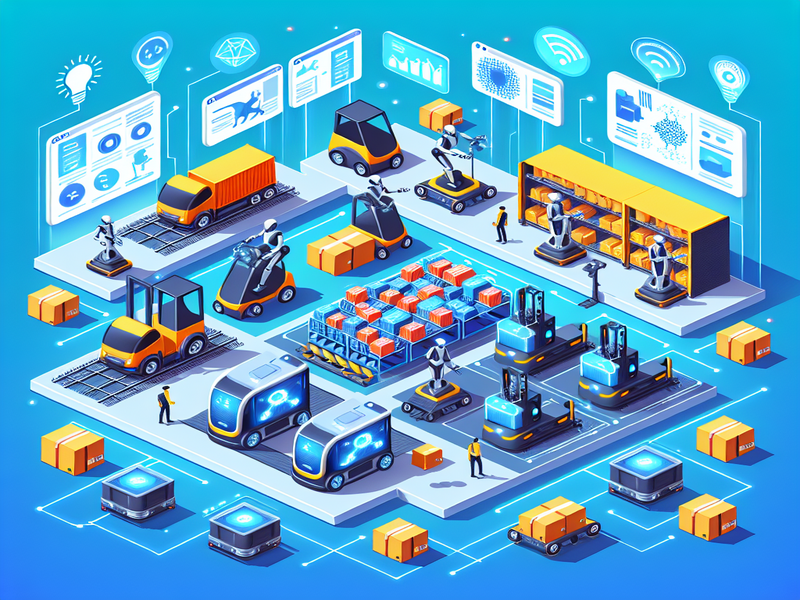
AI tools have become indispensable in the logistics sector, offering unprecedented capabilities in data management and operational efficiency. These tools can analyze vast amounts of data in real-time, enabling companies to make informed decisions swiftly. AI-driven systems are adept at predicting demand, optimizing routes, and managing inventory, thereby reducing costs and enhancing customer satisfaction. The integration of AI in logistics is akin to the OpenAI ChatGPT integration, where advanced algorithms drive smarter operations.
Case Study: Colgate-Palmolive’s Adoption of AI
One of the early adopters of Uber Freight’s AI tools is Colgate-Palmolive, a global leader in consumer goods. By leveraging AI, Colgate-Palmolive has optimized its supply chain operations, resulting in significant cost savings and improved service levels. The AI tools have enabled the company to forecast demand more accurately, streamline logistics processes, and enhance overall efficiency. This case study underscores the transformative potential of AI in logistics, much like the impact of ElevenLabs AI voice integration in communication technologies.
Competitive Landscape in AI Logistics
The logistics industry is witnessing a surge in AI adoption, with companies vying to gain a competitive edge through technological innovation. Uber Freight’s foray into AI is part of a broader trend where logistics giants are investing heavily in AI research and development. The competitive landscape is characterized by collaborations with tech firms, investments in AI startups, and the development of proprietary AI solutions. As companies race to harness AI’s potential, the Enterprise AI platform by UBOS offers a glimpse into how businesses can leverage AI to drive growth and innovation.
Conclusion and Future Outlook
As Uber Freight continues to integrate AI into its logistics operations, the future of supply chain management looks promising. AI tools are poised to become even more sophisticated, offering deeper insights and greater automation capabilities. The logistics industry is on the cusp of a technological revolution, with AI at the forefront. As companies like Uber Freight lead the charge, the industry can expect enhanced efficiency, reduced costs, and improved service delivery. With the potential to transform logistics, AI is undoubtedly the future of supply chain management.
For more insights into the role of AI in business transformation, explore the AI marketing agents and discover how AI is revolutionizing various sectors. Additionally, the UBOS solutions for SMBs highlight how small and medium businesses can leverage AI to enhance their operations.
For further reading on AI advancements and their impact on industries, check out the original news article on Uber Freight’s AI integration.
Andrii Bidochko
CTO UBOS
Andrii Bidochko is an AI entrepreneur and researcher focused on AI agents, reinforcement learning, and autonomous systems. He writes about the technologies shaping the future of machine intelligence, from frontier models and agent architectures to real-world AI applications.