

- Updated: May 15, 2025
- 4 min read
The Growing Role of the Middle East in the Global AI Landscape
AI Investments in the Middle East: A New Era of Strategic Alliances
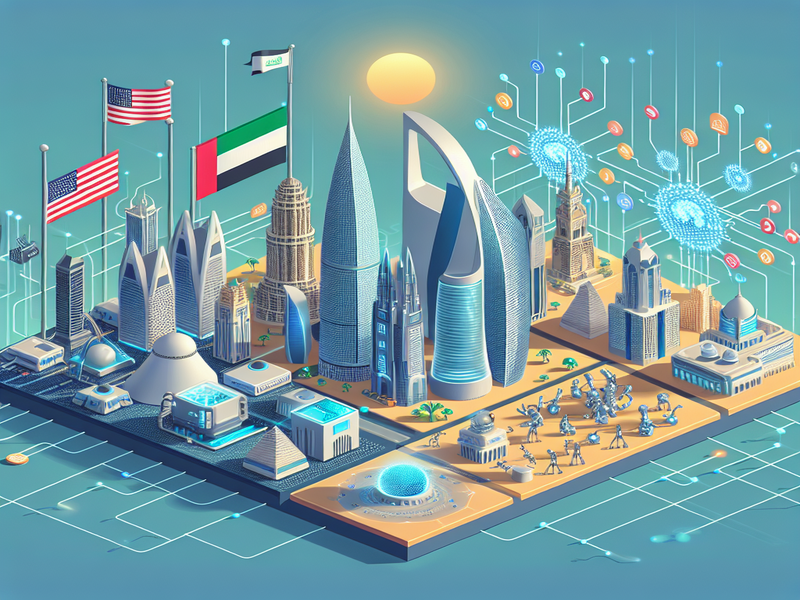
The Middle East is rapidly emerging as a significant player in the global AI landscape. With substantial investments and strategic partnerships, countries like the UAE and Saudi Arabia are positioning themselves at the forefront of technological innovation. This development is not just reshaping the region’s economic landscape but also its geopolitical dynamics.
Trump’s Middle East Tour: Strengthening AI Ties
Former U.S. President Donald Trump’s recent tour of the Middle East has been pivotal in fostering AI partnerships between American companies and Middle Eastern nations. His visit highlighted the growing interest of U.S. companies in tapping into the Middle Eastern market, particularly in AI and technology sectors.
During the tour, several agreements were signed, emphasizing the commitment of both regions to collaborate on AI-driven projects. This collaboration is expected to accelerate technological advancements and create new opportunities for innovation. For those interested in understanding how AI is revolutionizing various sectors, the “Revolutionizing marketing with generative AI” provides valuable insights.
AI Partnerships: Bridging the U.S. and Middle East
The AI partnerships between the U.S. and Middle Eastern countries are not just about technology transfer. They represent a broader strategy to strengthen economic ties and foster mutual growth. The UAE and Saudi Arabia, in particular, have been at the forefront of AI investments, recognizing the potential of AI to transform industries and drive economic growth.
These partnerships are also crucial for the U.S. as they provide access to new markets and resources. The collaboration is expected to lead to the development of cutting-edge AI solutions that can be deployed globally. Interested in how AI is impacting global business strategies? Check out the “AI and the autonomous organization” for more information.
Geopolitical Tensions and the Role of China
While the U.S. and Middle Eastern countries are strengthening their AI partnerships, the geopolitical landscape is becoming increasingly complex. China, a major player in the global AI race, is also eyeing the Middle Eastern market. This has led to a strategic balancing act, as Middle Eastern countries navigate their relationships with both the U.S. and China.
The competition between the U.S. and China in the AI domain is not just about technology but also about influence and power. Middle Eastern countries are leveraging this competition to their advantage, seeking to maximize their benefits while maintaining strategic autonomy. For a deeper understanding of the strategic importance of AI, the “Scaling AI in organizations” offers a comprehensive guide.
The Strategic Importance of AI in International Relations
AI is increasingly becoming a critical component of international relations. It is shaping diplomatic strategies, economic policies, and defense capabilities. For Middle Eastern countries, investing in AI is not just about economic growth but also about enhancing their geopolitical standing.
The strategic importance of AI is evident in the way countries are forming alliances and partnerships. These collaborations are not just about technology but also about building trust and understanding between nations. As AI continues to evolve, its role in international relations is expected to grow, influencing everything from trade to security. For insights into how AI is transforming industries, the “Transforming business with AI and prompt engineering” provides valuable perspectives.
Conclusion and Future Outlook
The Middle East’s investment in AI is a testament to its vision for the future. As the region continues to embrace technological innovation, it is poised to play a significant role in the global AI landscape. The partnerships between the U.S. and Middle Eastern countries are a step towards a more interconnected and technologically advanced world.
Looking ahead, the future of AI in the Middle East is bright. With continued investments and strategic collaborations, the region is set to become a hub for AI innovation. This development will not only drive economic growth but also enhance the region’s geopolitical influence. For those interested in exploring AI applications further, the “AI-powered chatbot solutions” offers a glimpse into the future of AI technology.
In conclusion, the Middle East’s AI investments and partnerships with the U.S. are reshaping the region’s economic and geopolitical landscape. As AI continues to evolve, its impact on international relations and global strategies will only grow, making it a critical area of focus for tech enthusiasts and professionals alike.
Andrii Bidochko
CTO UBOS
Andrii Bidochko is an AI entrepreneur and researcher focused on AI agents, reinforcement learning, and autonomous systems. He writes about the technologies shaping the future of machine intelligence, from frontier models and agent architectures to real-world AI applications.