

- Updated: February 4, 2026
- 6 min read
XPeng Launches General AI Center to Merge Autonomous Driving and Smart Cockpit Technologies
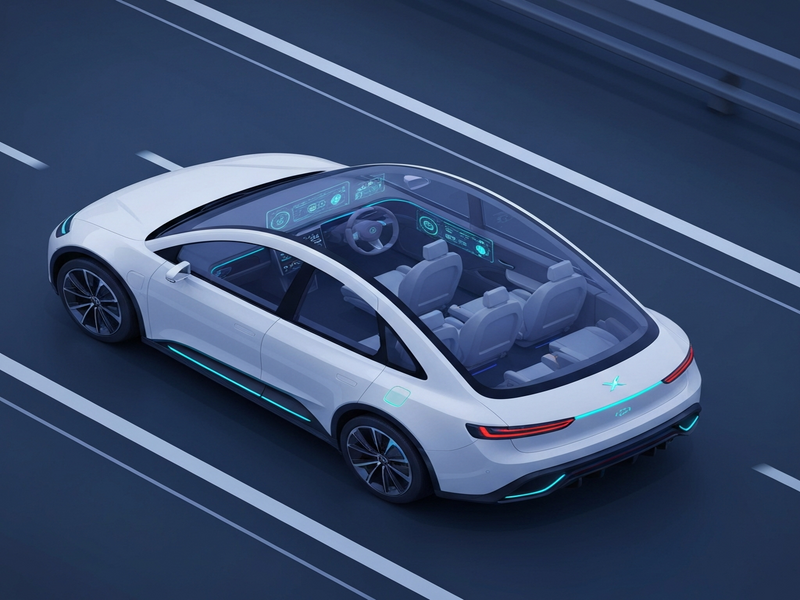
XPeng has combined its autonomous driving and smart cockpit divisions into a new General AI Center, a cross‑domain AI organization that will drive unified AI development across vehicles and robotics, reporting directly to Chairman and CEO He Xiaopeng.
Why the Merger Matters
In a strategic move announced on February 4, 2026, XPeng consolidated its two flagship AI labs— the Autonomous Driving Center and the Smart Cockpit Center—into a single General AI Center. The decision reflects a broader industry trend toward holistic AI ecosystems that break down silos between perception, decision‑making, and human‑machine interaction. By unifying these capabilities, XPeng aims to accelerate the rollout of next‑generation self‑driving features, richer in‑car experiences, and even robot‑assisted services.
The merger is not merely an internal restructuring; it signals XPeng’s ambition to become a platform‑level AI provider, similar to how UBOS platform overview offers a unified AI stack for SaaS products. This alignment positions XPeng to leverage shared data pipelines, foundation models, and cloud‑native infrastructure across all vehicle‑related AI workloads.
Leadership and Team Structure
The newly formed General AI Center will be led by Liu Xianming, the former head of XPeng’s Autonomous Driving division. Liu brings more than a decade of experience in computer vision, sensor fusion, and large‑scale model training. Under his guidance, the Center will report directly to He Xiaopeng, ensuring strategic alignment with the company’s broader vision.
The team composition follows a MECE (Mutually Exclusive, Collectively Exhaustive) framework:
- Foundation Model Group: Develops large language and multimodal models that serve as the brain for both driving and cockpit functions.
- Infrastructure & Platform Team: Builds the cloud‑native pipelines, data lakes, and real‑time inference services.
- Product Delivery & Quality Management: Ensures that AI features meet safety standards and deliver consistent user experiences.
- Robotics & Edge AI Unit: Extends vehicle AI to robot platforms, echoing XPeng’s recent humanoid robot initiatives.
This structure mirrors best‑practice AI organization models seen in leading tech firms, where cross‑functional squads own end‑to‑end value streams rather than isolated components.
Core Objectives of the General AI Center
The General AI Center is tasked with four primary objectives, each designed to create a sustainable competitive edge for XPeng:
- Unified Foundation Models: Build multimodal models that understand visual, auditory, and textual inputs, enabling seamless interaction between autonomous driving stacks and smart cockpit interfaces.
- Scalable AI Infrastructure: Deploy containerized inference services that can run on vehicle‑edge hardware as well as cloud servers, reducing latency and improving reliability.
- Cross‑Domain Knowledge Transfer: Leverage insights from robotics to enhance vehicle perception (e.g., using robot grasping data to improve object detection in traffic).
- Safety‑First Productization: Integrate rigorous validation pipelines, simulation environments, and continuous monitoring to meet global safety standards.
By focusing on these pillars, XPeng hopes to shorten the development cycle for new AI features from years to months, a timeline comparable to rapid SaaS releases on platforms like Workflow automation studio.
Impact on the Automotive Landscape
The creation of a General AI Center is poised to reshape several dimensions of the automotive ecosystem:
1. Faster Feature Rollouts
With a single AI backbone, XPeng can push updates to both driving algorithms and cockpit experiences simultaneously. This means over‑the‑air (OTA) upgrades that add new lane‑keeping capabilities while also introducing richer voice assistants powered by ElevenLabs AI voice integration.
2. Enhanced User Personalization
Unified models can combine driver behavior data from the cockpit with real‑time road context, delivering hyper‑personalized infotainment, climate control, and navigation suggestions. Imagine a vehicle that knows you prefer a quiet cabin when heavy traffic is detected and automatically adjusts the audio mix.
3. New Revenue Streams
By exposing AI services through APIs, XPeng could license its foundation models to third‑party developers, similar to how OpenAI ChatGPT integration enables external applications to tap into conversational AI. This opens doors for ecosystem partners to build custom in‑car apps, from advanced driver coaching to AI‑driven logistics solutions.
4. Competitive Edge in Robotics
The cross‑domain approach accelerates XPeng’s robot initiatives, allowing vehicle perception breakthroughs to inform robot navigation and vice‑versa. This synergy could lead to the first truly “mobile” robot that drives itself to a customer’s doorstep and then assists with household tasks.
Industry analysts predict that such integrated AI platforms will become the new standard for premium EV manufacturers, pushing legacy automakers to either adopt similar structures or risk falling behind in the AI race.
Executive Insights
“The General AI Center is our answer to the growing complexity of vehicle intelligence. By breaking down internal walls, we can deliver safer, smarter, and more intuitive experiences for our customers,” said He Xiaopeng, Chairman and CEO of XPeng.
Liu Xianming added, “Our unified foundation models will not only power autonomous driving but also enable a new generation of in‑car assistants that understand context, emotion, and intent—much like the conversational agents built on ChatGPT and Telegram integration.”
What This Means for You
Whether you are an investor tracking AI‑driven EVs, a developer looking for partnership opportunities, or a tech‑savvy driver eager for the next wave of in‑car intelligence, XPeng’s General AI Center signals a future where vehicle software evolves as rapidly as cloud services.
Stay ahead of the curve by exploring AI platforms that empower rapid prototyping and deployment. For instance, the AI automotive solutions offered by UBOS provide a sandbox for testing autonomous algorithms before they hit the road.
Interested in building your own AI‑enhanced applications? Check out the UBOS templates for quick start, including the AI SEO Analyzer and the AI Chatbot template. These tools illustrate how modular AI components can be assembled into powerful products—mirroring XPeng’s own strategy.
Take action now: Subscribe to our newsletter for the latest AI‑automotive insights, and consider joining the UBOS partner program to co‑create next‑generation mobility solutions.
For the original announcement, see the Technode article.
Meta Description Suggestions
- XPeng merges its autonomous driving and smart cockpit units into a General AI Center, aiming to accelerate AI integration across vehicles and robotics.
- Learn how XPeng’s new General AI Center, led by Liu Xianming, will reshape automotive AI, improve OTA updates, and create new revenue streams.
- Discover the impact of XPeng’s AI consolidation on consumers, investors, and the broader automotive industry.