

- Updated: April 4, 2026
- 6 min read
Why Human‑Made Content Labeling Is Critical: Industry Initiatives and Future Trends
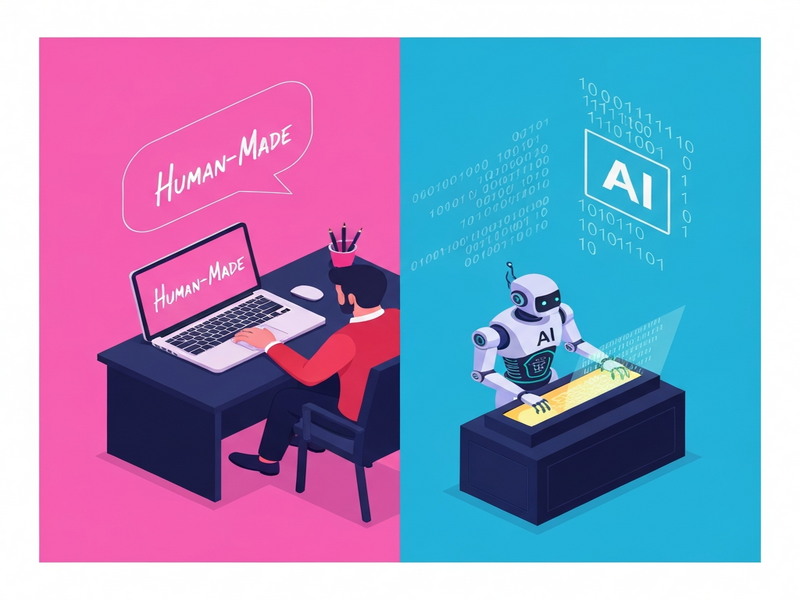
Human‑made content should be clearly labeled to distinguish it from AI‑generated media, and the industry is rapidly developing standards, tools, and certifications to make digital content labeling both trustworthy and searchable.
Why a Human‑Made Label Matters More Than Ever
As generative AI models become capable of producing text, images, audio, and video that are virtually indistinguishable from works created by people, audiences are demanding media verification mechanisms. Without a reliable human‑made label, consumers risk being misled, creators lose credit, and platforms struggle with the original Verge article’s concerns about authenticity.
For tech‑savvy professionals and creators, the question isn’t just “Is this AI‑generated?” but “How can I prove my work is genuinely human?” This article breaks down the latest findings, industry initiatives, challenges, and the future of digital content labeling.
What The Verge Reported: A Snapshot
The Verge highlighted a growing chorus of creators demanding an “AI‑free” badge, akin to a Fair Trade logo, to signal authenticity. Key takeaways include:
- Instagram’s Adam Mosseri suggested fingerprinting real media rather than trying to flag fake media.
- The Content Credentials standard (C2PA) has industry backing but limited real‑world adoption.
- More than a dozen competing “human‑made” badges exist, each with different verification methods.
- Creators worry that labeling AI use could damage revenue, especially in high‑stakes markets like romance novels and digital influencers.
These findings set the stage for a deeper dive into the ecosystem of labeling solutions.
Industry Initiatives: From Badges to Blockchain
Several organizations are racing to create trustworthy labels. Below is a MECE‑structured overview of the most prominent approaches.
1. Certification Badges
Badges such as UBOS templates for quick start and third‑party marks like “Proudly Human” or “Not by AI” aim to give creators a visual cue. Most rely on manual audits, which, while labor‑intensive, remain the most reliable verification method today.
2. Blockchain‑Based Tokens
Projects like GPT‑Powered Telegram Bot illustrate how immutable ledgers can store proof of human authorship. By issuing a token after a verified audit, creators gain an unforgeable certificate that can be queried by any platform.
3. Integrated Platform Standards
Major players (Adobe, Microsoft, Google) are embedding the C2PA standard into their workflows. While adoption is still nascent, the UBOS platform overview shows how a unified API can propagate provenance data across tools, making it easier for downstream services to read and display authenticity signals.
4. AI‑Powered Verification Services
Services such as the AI SEO Analyzer and AI Article Copywriter use machine learning to detect AI fingerprints. Though detection accuracy varies, these tools provide a first‑line filter for platforms that need rapid triage.
Each of these initiatives tackles a different piece of the labeling puzzle—visual cues, immutable proof, ecosystem integration, and automated detection.
Challenges & Creator Perspectives: The Human‑AI Blur
Even with emerging solutions, several hurdles remain.
Defining “Human‑Made”
When a designer uses AI‑assisted upscaling or a writer drafts an outline with ChatGPT, does the final product count as human‑made? As About UBOS notes, the line is increasingly fuzzy, and any labeling framework must accommodate hybrid workflows.
Verification Overhead
Manual audits demand time and money. Small creators fear that the cost of obtaining a badge will outweigh the benefits, especially when platforms like TikTok or Instagram do not enforce any standard.
Economic Incentives for Concealment
Creators such as AI‑generated romance novelists have reported revenue drops when they disclose AI use. The fear of stigma drives many to hide AI involvement, undermining the credibility of any voluntary labeling system.
Fraud and Misuse
Bad actors can copy a badge image and claim authenticity without verification. As UBOS partner program emphasizes, legal recourse and easy verification tools are essential to combat badge abuse.
These challenges highlight why a multi‑layered approach—combining visual badges, cryptographic proof, and platform‑level standards—is likely the most resilient path forward.
Future Outlook: Toward a Universal Human‑Made Standard
Looking ahead, several trends suggest how the ecosystem may evolve.
Regulatory Momentum
Governments in the EU and US are drafting legislation that could mandate provenance metadata for high‑impact media (e.g., political ads, deepfakes). A universal standard would simplify compliance for global platforms.
AI‑Enhanced Auditing
Future tools will likely blend AI detection with blockchain timestamps, creating a “proof‑of‑humanity” that updates in real time as creators edit their work. The Enterprise AI platform by UBOS is already prototyping such hybrid verification pipelines.
Community‑Driven Badges
Open‑source initiatives could allow creator collectives to issue their own badges, similar to open‑source software licenses. This democratizes the labeling process and reduces reliance on corporate gatekeepers.
Integration with Content Creation Tools
Embedding provenance metadata directly into tools like the Web app editor on UBOS or the Workflow automation studio ensures that every export carries a human‑made certificate by default.
When these trends converge, the digital ecosystem will have a robust, interoperable system for digital content labeling that satisfies both creators and consumers.
What Creators Can Do Today
- Adopt a visual badge from a reputable provider (e.g., AI Video Generator badge) and display it prominently on your site.
- Store a cryptographic hash of your final file on a public ledger—services like the GPT‑Powered Telegram Bot can automate this step.
- Include provenance metadata in the file’s EXIF or ID3 tags using tools from the AI Image Generator suite.
- Leverage the AI content labeling guidelines on the UBOS site to align with emerging best practices.
- Stay informed about regulatory updates via the AI transparency hub.
Conclusion: Labeling Human‑Made Content Is No Longer Optional
In an era where AI‑generated content can masquerade as authentic media, a clear human‑made label is essential for trust, media verification, and AI transparency. Industry initiatives—from badge programs to blockchain‑based proofs—are laying the groundwork, but creators must adopt these tools now to stay ahead of the curve.
By integrating labeling into your workflow, you protect your brand, comply with emerging digital content labeling standards, and contribute to a healthier AI ecosystem. The future of authentic media depends on collective action—let’s label responsibly.
Explore more AI‑powered solutions on the UBOS homepage and discover how the AI marketing agents can automate your labeling workflow.
Start a free trial with our UBOS pricing plans or view real‑world success stories in the UBOS portfolio examples.
Andrii Bidochko
CTO UBOS
Andrii Bidochko is an AI entrepreneur and researcher focused on AI agents, reinforcement learning, and autonomous systems. He writes about the technologies shaping the future of machine intelligence, from frontier models and agent architectures to real-world AI applications.