

- Updated: February 25, 2026
- 6 min read
Wayve Secures $1.2 B in Self‑Driving Funding from Nvidia, Uber and Major Automakers
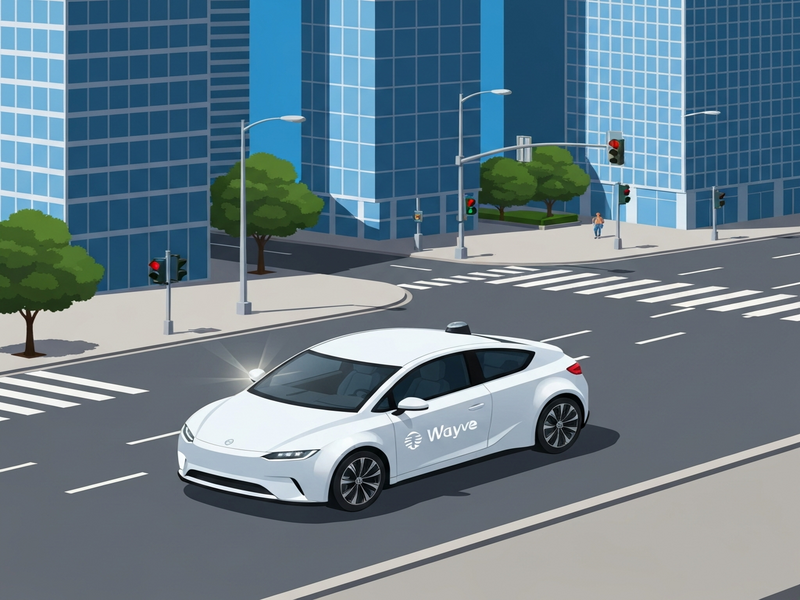
Wayve has secured $1.2 B in self‑driving funding from Nvidia, Uber and major automakers, positioning the UK startup as a leading contender in the autonomous‑vehicle race.
Why the $1.2 B Funding Round Matters
The infusion of $1.2 billion—potentially rising to $1.5 billion with an additional $300 million milestone‑based tranche from Uber—signals unprecedented confidence from both tech giants and legacy car makers. For investors, AI enthusiasts, and anyone tracking the future of mobility, this round is a clear indicator that self‑driving technology is moving from experimental labs to commercial reality.
Funding Overview: Who Put Money on the Table?
- Nvidia – The GPU powerhouse deepens its strategic partnership with Wayve, leveraging the Drive AGX Thor compute kit for the startup’s Gen 3 platform.
- Uber – Beyond a $300 million performance‑based commitment, Uber will deploy Wayve’s software in robotaxi pilots across more than ten global markets.
- Automakers – Mercedes‑Benz, Nissan, and Stellantis each contributed capital, confirming that OEMs see Wayve’s approach as a shortcut to Level‑4 autonomy.
- Institutional backers – Eclipse, Balderton, SoftBank Vision Fund 2, Ontario Teachers’ Pension Plan, Baillie Gifford, British Business Bank, Icehouse Ventures, and Schroders Capital rounded out the round.
Collectively, these investors value Wayve at $8.6 billion, a valuation that rivals the most established autonomous‑driving players.
Wayve’s End‑to‑End Deep‑Learning Stack
Wayve differentiates itself by abandoning high‑definition maps and sensor‑specific stacks. Instead, the company relies on a single, end‑to‑end neural network that learns directly from raw sensor data—cameras, LiDAR, radar—regardless of the hardware configuration.
Key Technical Pillars
- Self‑Learning Data Pipeline – Continuous data collection from fleet vehicles fuels a reinforcement‑learning loop that improves driving policies without human‑engineered rules.
- Hardware Agnosticism – The stack runs on any OEM‑provided compute, including Nvidia’s Drive AGX Thor, reducing integration costs.
- Map‑Free Navigation – By interpreting raw sensor streams, Wayve’s system can operate in cities where HD maps are unavailable or outdated.
- Two‑Product Strategy – “Eyes‑on” assisted‑driving for driver‑in‑the‑loop scenarios and “Eyes‑off” fully autonomous mode for robotaxi or consumer use cases.
This approach aligns with the “contrarian” philosophy described by CEO Alex Kendall: “We were the first to build end‑to‑end deep learning for autonomous driving, and we continue to challenge the status‑quo with a business model that sells embodied AI rather than operating fleets.”
Strategic Partnerships and Industry Implications
Wayve’s funding is not just cash; it’s a network of partnerships that accelerate market adoption.
- AI vehicles – Wayve’s technology can be retrofitted onto existing vehicle platforms, enabling OEMs to launch autonomous models faster.
- Tech funding – The round demonstrates how venture capital is aligning with strategic corporate investors to de‑risk large‑scale autonomous deployments.
- UBOS platform overview – Similar to Wayve’s modular stack, UBOS offers a low‑code environment for building AI‑driven applications, highlighting a broader trend toward democratizing complex AI tech.
- Enterprise AI platform by UBOS – Enterprises can now integrate Wayve‑style perception models into logistics, warehousing, and last‑mile delivery solutions.
- UBOS partner program – Partnerships like Wayve’s illustrate the value of ecosystem‑centric programs that bring together hardware, software, and data providers.
For the autonomous‑driving ecosystem, Wayve’s funding means:
- Accelerated rollout of robotaxi services in dense urban markets.
- Reduced reliance on costly HD‑map providers, opening opportunities for cities with limited mapping infrastructure.
- Greater OEM flexibility to choose compute hardware, fostering competition among chip manufacturers.
- Increased pressure on rivals like Waymo, Cruise, and Tesla to adopt more data‑centric, hardware‑agnostic strategies.
Original Reporting
For a detailed breakdown of the round, see the TechCrunch article that first announced the deal.
Business Model: Selling Embodied AI, Not Vehicles
Wayve’s revenue strategy focuses on licensing its autonomous stack to OEMs and mobility platforms rather than building and operating its own fleet. This “software‑first” model offers several advantages:
- Scalable Addressable Market – Every automaker that wants Level‑4 capability becomes a potential customer.
- Lower Capital Expenditure – Wayve avoids the massive costs of vehicle manufacturing and fleet management.
- Faster Time‑to‑Market – OEMs can integrate Wayve’s stack into existing vehicle lines, shortening development cycles.
In contrast, companies like Tesla bundle hardware and software, while Waymo operates its own robotaxi service. Wayve’s “contrarian” stance aligns with the preferences of investors who seek high‑margin, software‑centric returns.
Future Outlook: What’s Next for Wayve?
With the new capital, Wayve plans to:
- Scale its Gen 3 platform across the three automaker partners, targeting a 2027 launch in Nissan models.
- Deploy Uber‑backed robotaxi pilots in London, Paris, and two additional European cities by 2028.
- Expand its data‑collection fleet to over 10,000 vehicles, feeding the reinforcement‑learning loop.
- Invest in next‑generation perception models that can operate under adverse weather conditions.
Analysts predict that Wayve could achieve commercial Level‑4 deployments in major metros by 2029, a timeline that outpaces many of its competitors. The combination of Nvidia’s compute expertise, Uber’s mobility network, and the OEMs’ vehicle platforms creates a “triple‑helix” that is difficult for rivals to replicate.
Related UBOS Resources for AI‑Driven Mobility
Readers interested in building complementary AI solutions can explore the following UBOS offerings:
- UBOS templates for quick start – Pre‑built templates for AI‑powered dashboards that can monitor autonomous fleet performance.
- AI vehicles – A showcase of how UBOS integrates with vehicle telematics and sensor streams.
- AI marketing agents – Automate outreach for new mobility services using generative AI.
- Workflow automation studio – Orchestrate data pipelines that feed Wayve‑style learning loops.
- UBOS pricing plans – Transparent pricing for startups and SMBs looking to experiment with autonomous‑driving data.
Bottom Line
Wayve’s $1.2 billion funding round—bolstered by Nvidia, Uber, and three global automakers—marks a pivotal moment for the self‑driving industry. By championing a map‑free, hardware‑agnostic deep‑learning stack and a software‑licensing business model, Wayve is poised to accelerate the commercial rollout of Level‑4 autonomy across continents. Investors, AI enthusiasts, and technology leaders should watch closely as Wayve translates this capital into real‑world robotaxi services and OEM integrations, reshaping how we think about mobility in the next decade.
Andrii Bidochko
CTO UBOS
Andrii Bidochko is an AI entrepreneur and researcher focused on AI agents, reinforcement learning, and autonomous systems. He writes about the technologies shaping the future of machine intelligence, from frontier models and agent architectures to real-world AI applications.