

- Updated: March 12, 2026
- 5 min read
US Private‑Credit Defaults Reach Record 9.2% in 2025 – Insights from Fitch
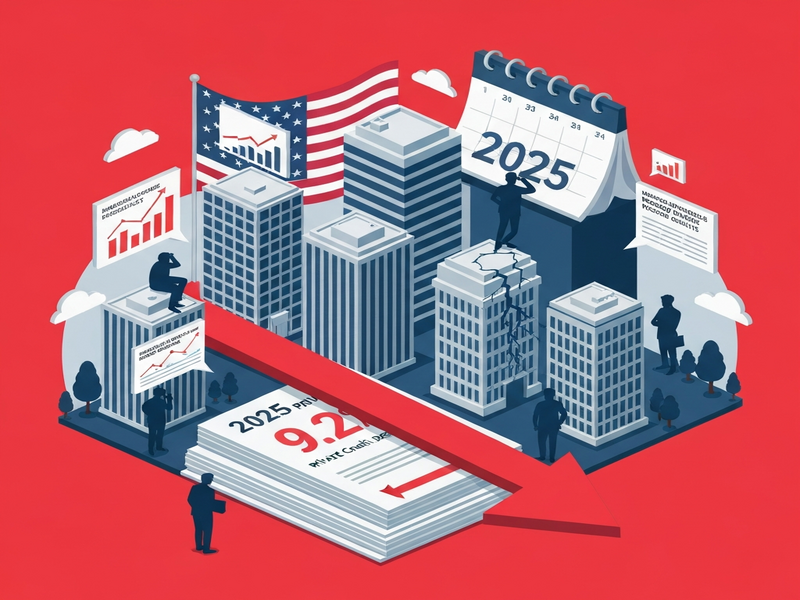
The US private‑credit default rate reached a record 9.2% in 2025, according to Fitch Ratings, marking the highest level since the sector’s modern inception.
Why the 9.2% Default Rate Matters
In March 2026, Fitch Ratings released its annual private‑credit monitor, revealing that 38 defaults were recorded among 302 borrowers in 2025. This 9.2% default rate eclipses the previous record of 8.1% set in 2024 and signals a turning point for a market that has traditionally been viewed as a stable source of yield for institutional investors.
For financial professionals, the spike raises urgent questions about credit risk, portfolio resilience, and the broader macro‑economic forces that are reshaping the private‑credit landscape.
Fitch Data Deep‑Dive and Market Context
Key Numbers at a Glance
- 302 companies monitored, total private‑credit exposure ≈ $150 bn.
- 38 defaults across 28 distinct borrowers.
- Average borrower earnings ≤ $100 m; debt ≤ $500 m.
- Defaults concentrated in firms with earnings ≤ $25 m.
- Floating‑rate loans dominate the portfolio, tied to the federal funds rate.
Sector‑Level Insights
Although the software sector experienced a broad market sell‑off, Fitch reported no software defaults in 2025. Instead, the defaults were spread across manufacturing, consumer services, and niche industrial segments, reflecting the diversified nature of middle‑market private‑credit exposure.
Most borrowers were “small‑cap” issuers—companies with earnings under $25 m—making them especially vulnerable to cash‑flow squeezes when interest rates remain elevated.
Interest‑Rate Environment as a Catalyst
Since 2023, the Federal Reserve has kept the federal funds rate above 4.5%, a level not seen in over a decade. Fitch notes that “capital structures in the PMR portfolio tend to be predominantly floating rate with minimal interest‑rate hedges in place,” leaving borrowers’ cash flows highly exposed to rate hikes.
Because most private‑credit loans are floating‑rate, any further tightening translates directly into higher debt service costs, eroding profitability for already thin‑margin businesses.
Comparative Perspective: 2024 vs. 2025
In 2024, the default rate stood at 8.1%, driven largely by a handful of distressed retail and logistics firms. The 2025 increase to 9.2% reflects both a broader base of defaults and deeper penetration into the smallest earnings tier. The trend suggests that the “low‑default” myth of private credit is fading as macro pressures intensify.
What This Means for Investors and Lenders
For asset managers, pension funds, and family offices that allocate capital to private‑credit strategies, the record default rate forces a reassessment of risk‑adjusted returns.
Portfolio Diversification Strategies
- Sector Rotation: Shift exposure away from highly leveraged, low‑earning segments toward more resilient industries such as healthcare and specialty finance.
- Geographic Allocation: Consider adding exposure to regions where interest‑rate cycles are less aggressive.
- Credit‑Enhancement Tools: Use first‑loss cushions, covenants, and interest‑rate swaps to mitigate floating‑rate risk.
Operational Due Diligence
Investors should deepen their operational due diligence, focusing on borrowers’ cash‑flow forecasts, hedging policies, and covenant compliance. The rise in defaults among firms with earnings ≤ $25 m underscores the need for granular financial modeling.
Opportunity in Distressed Assets
While defaults increase risk, they also create opportunities for opportunistic investors who can acquire distressed debt at deep discounts, potentially generating outsized returns once the economy stabilizes.
Expert Insight
“The surge in defaults is a direct symptom of a prolonged high‑rate environment combined with limited hedging. Investors who ignore the floating‑rate exposure will find their portfolios under‑performing,” says About UBOS senior analyst Dr. Elena Marquez.
How UBOS Can Help You Navigate the Private‑Credit Landscape
UBOS offers a suite of AI‑driven tools that empower financial professionals to monitor credit risk, automate workflow, and generate actionable insights in real time.
UBOS platform overview
Leverage a unified dashboard that aggregates private‑credit data, interest‑rate forecasts, and borrower health metrics.
Enterprise AI platform by UBOS
Deploy machine‑learning models that predict default probability based on cash‑flow trends and macro‑economic indicators.
Workflow automation studio
Automate credit‑review workflows, trigger alerts when covenant breaches occur, and streamline reporting to stakeholders.
UBOS templates for quick start
Jump‑start your analysis with pre‑built templates such as the AI SEO Analyzer or the AI Article Copywriter to generate market commentary at scale.
AI marketing agents
Use AI agents to craft personalized outreach to limited partners, highlighting your risk‑adjusted performance in a data‑rich narrative.
UBOS pricing plans
Choose a plan that scales with your organization, from startups to large asset managers.
Whether you are a UBOS for startups looking to build a credit‑risk analytics engine, or an established firm seeking UBOS solutions for SMBs, our platform adapts to your workflow.
Conclusion
The record 9.2% default rate in 2025 underscores the heightened vulnerability of middle‑market borrowers in a high‑rate environment. Investors must recalibrate risk models, diversify exposures, and consider AI‑enhanced analytics to stay ahead of the curve.
For a deeper dive into the original data, read the original Marketscreener article.
Ready to future‑proof your credit‑risk strategy? Explore the UBOS homepage and start a free trial today.
Andrii Bidochko
CTO UBOS
Andrii Bidochko is an AI entrepreneur and researcher focused on AI agents, reinforcement learning, and autonomous systems. He writes about the technologies shaping the future of machine intelligence, from frontier models and agent architectures to real-world AI applications.