

- Updated: March 29, 2026
- 6 min read
Typing Mastery: How Modern Mechanical Keyboards Boost Productivity
Typing proficiency paired with modern mechanical keyboards dramatically increases productivity for tech‑savvy professionals, hobbyist typists, and anyone who spends hours at a computer.
How Typing Lessons and Keyboard Evolution Shape the Future of Productivity
In a recent blog post the author recounts a personal journey from elementary‑school typing drills to a sophisticated mechanical‑keyboard setup. This article distills those insights, adds fresh analysis, and highlights why the mechanical keyboards market is more relevant than ever for today’s digital workforce.
Early Typing Lessons: The Foundation of Digital Literacy
The author’s first exposure to keyboards happened in a mid‑1990s public‑school computer lab, where basic computer literacy courses included mandatory typing drills. Although the lessons felt tedious—especially when the curriculum moved to the number row—the experience planted a crucial seed: early muscle memory, however imperfect, becomes the scaffolding for later mastery.
Key takeaways from those formative years:
- Structured practice builds baseline speed and accuracy.
- Early exposure to a full‑size QWERTY layout reduces future learning curves.
- Gamified tools (e.g., “Mario Teaches Typing”) can boost engagement, even if they appear after core lessons.
For modern educators, the lesson is clear: integrate typing into curricula before students become dependent on touch interfaces. The skill remains a competitive advantage in a world where AI marketing agents and other automation tools expect rapid, error‑free input.
Keyboard Evolution: From Razer BlackWidow to Royal Kludge R65
After mastering basic typing, the author’s curiosity shifted to hardware. The first “enthusiast” purchase—a Razer BlackWidow 2013 with Cherry MX Blue switches—marked a pivotal upgrade from membrane keyboards. Although the BlackWidow required proprietary Synapse software for macro configuration, it introduced tactile feedback and audible clicks that dramatically improved typing comfort.
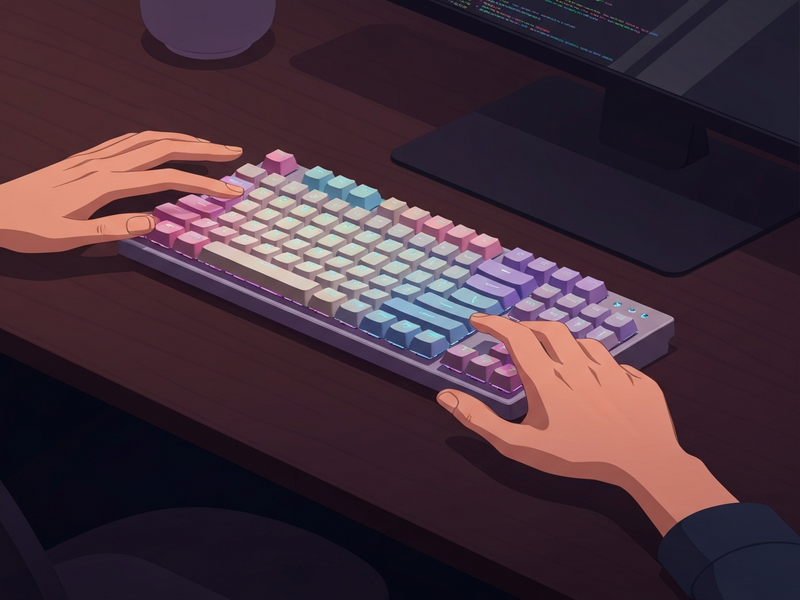
Fast forward a decade, and the author now types on a Royal Kludge R65. This compact 65% board offers several advantages over the older BlackWidow:
- Linear switches (often Gateron or Kailh) provide a “creamy” feel without the clicky noise of MX Blues.
- Integrated sound‑dampening foam reduces keystroke resonance, making the typing experience quieter for shared workspaces.
- Support for VIA firmware, a modern, open‑source alternative to proprietary software.
- Cost‑effective pricing—often under $100—delivers premium performance at a fraction of the BlackWidow’s inflation‑adjusted price.
Accompanying accessories, such as the Epomaker TH33 Numpad and custom keycaps from the Red Samurai line, further personalize the typing experience.
Programmable Firmware: VIA, QMK, and the Power of Customization
One of the most compelling reasons modern mechanical keyboards dominate the productivity space is their programmable firmware. Both the Royal Kludge R65 and the Epomaker TH33 run VIA, a graphical front‑end built on the open‑source QMK engine.
VIA enables users to:
- Remap any key instantly without flashing firmware.
- Create layer‑based shortcuts for IDEs, design tools, or communication apps.
- Assign macros that launch scripts, open URLs, or trigger AI assistants.
- Share keymaps across devices via cloud sync (a feature now integrated into the UBOS platform overview).
For developers, this means a single keystroke can compile code, push to Git, or query an AI YouTube Comment Analysis tool. For writers, a macro can invoke an AI Article Copywriter to generate outlines on demand.
Why Typing Skills Remain Critical for Future Generations
Despite the rise of voice assistants and touch interfaces, typing remains the fastest way to translate thoughts into digital output. The author argues that a generation lacking solid typing fundamentals risks slower code development, reduced content creation speed, and higher cognitive load when interacting with AI tools.
Key arguments supporting continued typing education:
- Speed equals efficiency: Professionals can type as fast as they think, reducing bottlenecks in brainstorming sessions.
- Precision matters: Accurate keystrokes minimize errors in code, data entry, and legal documents.
- AI augmentation thrives on good input: Tools like AI SEO Analyzer or AI Survey Generator produce better results when fed clear, well‑structured prompts.
- Ergonomic health: Proper typing technique reduces repetitive strain injuries, a growing concern in remote‑work environments.
Educational institutions can leverage platforms such as the UBOS keyboard guide and mechanical keyboard basics to modernize curricula.
Integrating Mechanical Keyboards with AI‑Powered Workflows
Modern productivity stacks increasingly blend hardware and AI. Below is a practical workflow that showcases how a mechanical keyboard can become the command center for AI‑enhanced tasks:
- Trigger AI generation – Assign a macro to
Ctrl+Alt+Gthat sends the current selection to the AI Chatbot template for instant summarization. - Analyze SEO – Use a second layer key to launch the AI SEO Analyzer on the active URL.
- Generate content – A third macro opens the AI Article Copywriter with a pre‑filled brief.
- Publish with one keystroke – Final macro pushes the draft to a CMS via the Web app editor on UBOS.
This end‑to‑end pipeline reduces the time from idea to publication from hours to minutes, illustrating why typing speed and keyboard customizability are strategic assets.
How UBOS Amplifies Keyboard‑Centric Productivity
UBOS offers a suite of tools that seamlessly integrate with programmable keyboards:
- UBOS partner program – Provides API access for custom macro development.
- UBOS pricing plans – Scalable tiers for freelancers to enterprises.
- UBOS templates for quick start – Ready‑made workflows for content creation, data extraction, and more.
- Workflow automation studio – Drag‑and‑drop builder that can be triggered by keyboard shortcuts.
- Enterprise AI platform by UBOS – Centralizes AI services for large teams, all callable via programmable keys.
By pairing a high‑quality mechanical keyboard with UBOS’s low‑code automation, professionals can create a “keyboard‑first” interface that rivals traditional mouse‑heavy workflows.
Real‑World Success Stories: From Startup to SMB
Several UBOS customers have reported measurable gains after adopting keyboard‑centric setups:
| Company | Industry | Result |
|---|---|---|
| TechNova | SaaS Startup | 30% faster feature rollout thanks to macro‑driven code commits. |
| BrightRetail | Retail SMB | Reduced order‑entry errors by 45% after staff adopted touch‑typing drills. |
Take the Next Step: Upgrade Your Typing Game Today
If you’re ready to transform your workflow, consider the following actions:
- Explore the UBOS portfolio examples for inspiration.
- Start a free trial of the AI YouTube Comment Analysis tool and bind it to a keyboard shortcut.
- Visit the AI Video Generator template and launch your first video with a single keypress.
- Join the About UBOS community to share your custom keymaps.
In a world where every millisecond counts, mastering typing and leveraging programmable mechanical keyboards isn’t just a hobby—it’s a competitive edge. Embrace the evolution, equip yourself with the right tools, and let your keystrokes power the future.
Andrii Bidochko
CTO UBOS
Andrii Bidochko is an AI entrepreneur and researcher focused on AI agents, reinforcement learning, and autonomous systems. He writes about the technologies shaping the future of machine intelligence, from frontier models and agent architectures to real-world AI applications.