

- Updated: March 3, 2026
- 5 min read
Trump’s War on Iran Could Accelerate U.S. Energy Crunch – UBOS Analysis
Trump’s war on Iran is expected to lift U.S. oil and gas prices, tighten electricity markets, and force a rapid reassessment of domestic energy strategy.
How Trump’s Iran Conflict Could Reshape the U.S. Energy Landscape
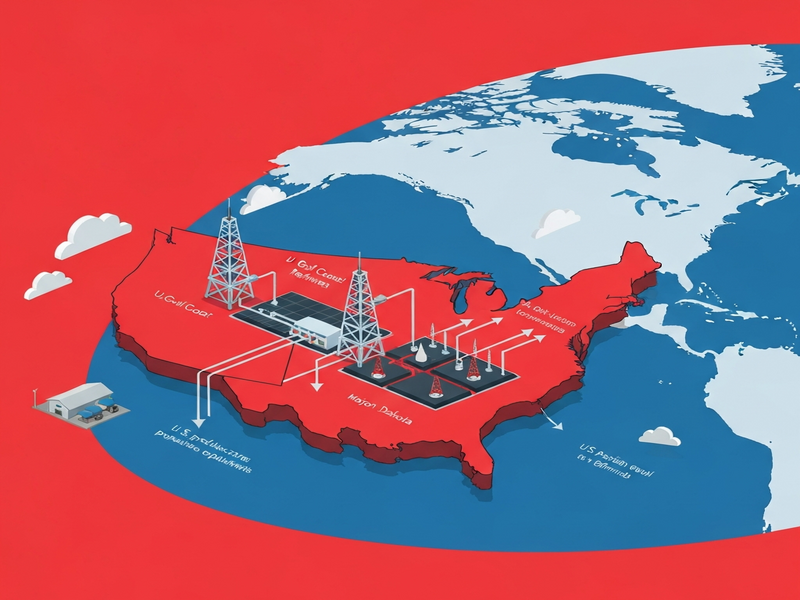
The recent U.S. strikes against Iran have sent shockwaves through global commodity markets, pushing Brent crude above $84 a barrel and nudging U.S. gasoline toward $3.20 per gallon. For energy professionals, policy analysts, and investors, the key question is how sustained hostilities will affect domestic oil output, fuel costs, and electricity rates across the United States.
Trump’s “Drill, Baby, Drill” Doctrine Meets Middle‑East Turbulence
Since re‑entering the White House, President Donald Trump has championed “American energy dominance,” rolling back renewable subsidies and expanding federal support for fossil‑fuel projects. His administration’s rhetoric frames any disruption in Persian Gulf supplies as an opportunity to accelerate U.S. production and reduce reliance on foreign oil.
However, the reality is more nuanced. While higher oil prices can incentivize new drilling, they also raise consumer costs at a time when the nation is already grappling with an energy affordability crisis. The balance between boosting domestic output and protecting American wallets is the central tension analysts are watching.
Potential Ripple Effects on U.S. Oil Production
The U.S. is the world’s largest oil producer, but its output growth has slowed due to a global oversupply and tightening capital markets. The war could alter this trajectory in three ways:
- Price‑driven investment: An 8% rise in crude prices makes marginal fields economically viable, prompting companies to revisit idle wells.
- Strategic reserve considerations: The Trump administration has so far avoided tapping the Strategic Petroleum Reserve, but prolonged conflict could force a release, further influencing price dynamics.
- Regulatory environment: Ongoing deregulatory moves—highlighted on the About UBOS page—signal a policy climate that may accelerate permitting for new projects.
BloombergNEF’s downstream oil and chemicals specialist Mohith Velamala notes that the “ability of oil to continue flowing through the Strait of Hormuz is the biggest unknown.” If shipping through the strait stalls, U.S. refiners could face tighter feedstock supplies, pushing domestic crude demand higher.
Fuel Prices: Immediate Spike, Long‑Term Uncertainty
Within days of the strikes, U.S. gasoline averaged $3.11 per gallon, a 10‑cent increase that may seem modest but compounds over a typical American driver’s annual mileage. The following table summarizes the early market reaction:
| Metric | Pre‑Conflict | Post‑Conflict |
|---|---|---|
| Brent Crude | $77/barrel | $84/barrel |
| U.S. Gasoline | $3.10/gal | $3.20/gal |
| LNG (Asia) | +$30/MMBtu | +$45/MMBtu |
For logistics firms and freight operators, higher diesel costs translate into increased shipping rates, which can cascade into higher consumer prices for goods ranging from groceries to electronics.
Electricity Rates: The Hidden Cost of a War‑Driven LNG Squeeze
The United States is a net exporter of liquefied natural gas (LNG). A disruption in Gulf shipments could force U.S. exporters to redirect cargoes to Europe and Asia, tightening domestic supply. As a result, natural‑gas‑fired power plants may face higher fuel costs, pushing wholesale electricity prices upward.
Reed Blakemore of the Atlantic Council warns that “electricity costs could spike, especially as data‑center demand continues its decade‑long rise.” This scenario is especially concerning for regions already grappling with aging grid infrastructure.
What Analysts Are Saying
“Higher oil prices fit the ‘drill, baby, drill’ mantra, but they also mean higher gasoline and electricity bills for Americans. The real test will be whether the market stays tight long enough for U.S. production to offset the shortfall.” – Reed Blakemore, Atlantic Council
Lorne Stockman of Oil Change International adds a longer‑term perspective: “The crisis underscores the volatility of fossil‑fuel dependence. Diversifying into renewables and nuclear would improve energy security, but current policy trends are pulling in the opposite direction.”
Strategic Moves for Energy Companies
Energy firms must weigh capital allocation between short‑term price arbitrage and long‑term sustainability. Key actions include:
- Accelerate drilling in low‑cost basins such as the Permian and Bakken.
- Secure hedging contracts to lock in favorable gas prices for power generation assets.
- Invest in digital twins and AI‑driven optimization—tools like the AI marketing agents platform can streamline asset‑level decision making.
- Explore partnerships via the UBOS partner program to integrate workflow automation.
UBOS Solutions for the Energy Crunch
Energy analysts and operators can leverage the UBOS platform overview to build custom dashboards that ingest real‑time market data, forecast price trajectories, and simulate production scenarios.
For startups looking to prototype AI‑enhanced trading bots, the UBOS for startups suite offers low‑code templates, including the AI SEO Analyzer and AI Article Copywriter, which can be repurposed for market‑report generation.
SMBs in the energy services sector can benefit from the UBOS solutions for SMBs, especially the Workflow automation studio, to streamline compliance reporting and invoice processing.
Enterprises seeking a holistic AI strategy can explore the Enterprise AI platform by UBOS, which integrates data lakes, LLMs, and real‑time analytics—critical for navigating volatile commodity markets.
Pricing, Templates, and Quick‑Start Guides
UBOS offers transparent pricing plans that scale from individual analysts to Fortune‑500 energy conglomerates. New users can jump‑start projects with the UBOS templates for quick start, such as the AI YouTube Comment Analysis tool, which can be repurposed to monitor public sentiment on energy policy.
Original Reporting Source
For a full account of the events that triggered the market reaction, see the original story on The Verge.
Conclusion: Preparing for a Prolonged Energy Shock
If the conflict endures beyond a few weeks, the United States will likely see a sustained rise in oil and gas prices, higher electricity rates, and a renewed push for domestic drilling. Energy professionals must balance short‑term profit opportunities with long‑term risk mitigation, including diversification into renewables and leveraging AI‑driven analytics.
Stay ahead of the curve—explore how UBOS’s AI‑powered tools can turn market volatility into strategic advantage.
Andrii Bidochko
CTO UBOS
Andrii Bidochko is an AI entrepreneur and researcher focused on AI agents, reinforcement learning, and autonomous systems. He writes about the technologies shaping the future of machine intelligence, from frontier models and agent architectures to real-world AI applications.