

- Updated: February 27, 2026
- 6 min read
Trump Orders Halt on Anthropic AI Use Amid Pentagon Contract Dispute
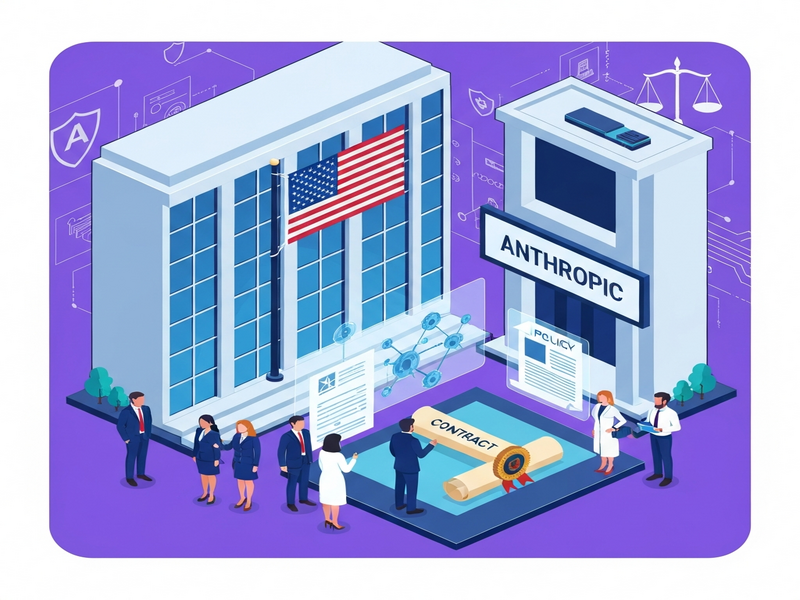
Pentagon‑Anthropic contract showdown, February 2026.
The Pentagon’s contract dispute with Anthropic escalated after President Trump ordered a halt to federal use of Anthropic’s AI, raising major AI policy questions about autonomous weapons, mass surveillance, and the future of government AI contracts.
What happened? – A quick summary
On February 27, 2026, President Donald Trump issued an executive directive demanding that every U.S. federal agency immediately cease using Anthropic’s AI products. The order came just hours before the Pentagon’s self‑imposed deadline for Anthropic to sign a revised contract that would restrict the use of its technology in autonomous weapons and mass domestic surveillance. The clash has ignited a fresh wave of debate over the original ABC News report and forced policymakers to confront the broader AI policy landscape.
Background: The Pentagon‑Anthropic contract
The Department of Defense (DoD) entered negotiations with Anthropic in early 2025 to integrate the company’s large‑language‑model (LLM) capabilities into a suite of defense‑grade applications, ranging from intelligence analysis to decision‑support tools. The original agreement included two non‑negotiable clauses demanded by Anthropic:
- No deployment of Anthropic’s models for fully autonomous weapons that can select and engage targets without human oversight.
- No use of the technology for mass domestic surveillance of U.S. citizens.
During the summer of 2025, the Pentagon introduced “operational flexibility language” that would allow the agency to reinterpret these safeguards under certain “national security” conditions. Anthropic’s legal team flagged the new language as a “potential loophole” that could undermine the company’s ethical commitments.
By the end of February 2026, the DoD set a hard deadline of 5:00 p.m. ET on February 27 for Anthropic to accept the revised terms. The company’s refusal to concede on the two core safeguards triggered the presidential order.
Political context: Trump’s AI policy stance
President Trump’s directive reflects a broader shift in his administration’s approach to emerging technologies. Since taking office, Trump has emphasized “American‑first” AI development, warning that reliance on private AI firms could expose national security to “uncontrolled foreign influence.” This stance aligns with recent executive actions that:
- Mandate a six‑month phase‑out for all federal contracts involving AI providers that do not meet “government‑approved ethical standards.”
- Require a new inter‑agency AI Oversight Board to vet contracts for compliance with AI policy guidelines.
- Threaten civil and criminal penalties for companies that fail to cooperate with the board’s investigations.
Senate leaders from both parties have responded with a private letter urging the Pentagon and Anthropic to resume negotiations, emphasizing that “lawful use” of AI must be clarified through legislation rather than unilateral executive orders.
Implications for Anthropic and the wider AI industry
For Anthropic, the dispute could mean:
- Loss of a multi‑year, multi‑billion‑dollar contract that would have positioned the company as a premier defense AI supplier.
- Reputational damage if the company is labeled a “supply chain risk” by the DoD, a designation traditionally reserved for foreign adversaries.
- Increased pressure to develop internal compliance frameworks that satisfy both commercial clients and government regulators.
For the AI sector, the showdown signals a potential new era of:
- Stricter contractual language around autonomous weapons and surveillance, prompting vendors to embed “hard stops” in their licensing agreements.
- Greater involvement of political leaders in shaping AI ethics, potentially leading to a federal “AI Bill of Rights.”
- Accelerated interest in alternative AI platforms that can demonstrate compliance out‑of‑the‑box, such as open‑source models or specialized enterprise solutions.
How UBOS helps AI professionals navigate this landscape
At UBOS homepage, we provide a suite of tools designed to keep your AI projects compliant, secure, and ready for government contracts.
Platform capabilities
Explore the UBOS platform overview to discover built‑in governance modules that automatically enforce:
- Prohibited use cases (e.g., autonomous weapon targeting).
- Data residency and privacy controls to avoid mass surveillance pitfalls.
- Audit trails that satisfy both corporate and federal oversight requirements.
AI marketing agents
Our AI marketing agents can generate compliance‑focused content, such as policy briefs and stakeholder communications, ensuring you stay ahead of regulatory changes.
Rapid prototyping with templates
UBOS offers a marketplace of ready‑made AI applications that can be deployed in minutes. Relevant templates for teams dealing with AI policy include:
- AI SEO Analyzer – ensures your public‑facing AI content meets search‑engine and compliance standards.
- AI Article Copywriter – helps draft policy documents and briefing notes quickly.
- AI Video Generator – creates explainer videos on AI ethics for internal training.
- AI Chatbot template – builds secure chat interfaces for citizen inquiries while respecting privacy rules.
- AI Email Marketing – automates outreach to policymakers with compliance‑checked messaging.
- AI Image Generator – produces visual assets for briefings without risking copyrighted material.
Integration options for secure workflows
UBOS supports a range of integrations that help you embed compliance checks directly into your development pipeline:
- Telegram integration on UBOS – secure team communications with end‑to‑end encryption.
- ChatGPT and Telegram integration – leverage conversational AI while maintaining audit logs.
- OpenAI ChatGPT integration – access powerful LLMs under strict usage policies.
- Chroma DB integration – store vector embeddings securely for rapid retrieval.
- ElevenLabs AI voice integration – generate compliant audio briefings.
Automation and low‑code development
Our Workflow automation studio lets you design end‑to‑end processes that automatically flag prohibited AI use cases before deployment. Pair this with the Web app editor on UBOS to build compliant dashboards for senior leadership.
Pricing and partnership opportunities
For startups and SMBs, the UBOS for startups program offers discounted rates, while the UBOS solutions for SMBs provide scalable licensing. Larger enterprises can explore the Enterprise AI platform by UBOS for full‑stack governance.
Learning more about UBOS
Visit the About UBOS page to read about our mission, or explore the UBOS portfolio examples to see real‑world deployments that meet strict government standards.
Conclusion: What’s next for AI policy?
The Pentagon‑Anthropic dispute underscores a pivotal moment where political authority, corporate ethics, and national security intersect. As the Trump administration tightens its grip on AI procurement, companies will need robust compliance frameworks, transparent governance, and rapid‑deployment tools to stay competitive.
UBOS is positioned to help AI professionals navigate these challenges with a secure, low‑code platform that embeds policy safeguards from day one.
Stay informed. For the latest AI policy updates, industry analysis, and practical tools, explore more AI news on UBOS today.
Andrii Bidochko
CTO UBOS
Andrii Bidochko is an AI entrepreneur and researcher focused on AI agents, reinforcement learning, and autonomous systems. He writes about the technologies shaping the future of machine intelligence, from frontier models and agent architectures to real-world AI applications.