

- Updated: June 7, 2025
- 3 min read
The High Court Warns of AI-Generated Citation Risks: Lawyers Advised to Verify
AI in Legal Research: Navigating the Future with Caution
The integration of artificial intelligence (AI) into various sectors has been nothing short of revolutionary.
Among these, the legal industry stands to benefit immensely from AI’s capabilities, especially in the realm of legal research.
However, as the High Court of England and Wales recently highlighted, the adoption of AI in legal contexts must be approached with caution and responsibility.
High Court’s Warning to Lawyers
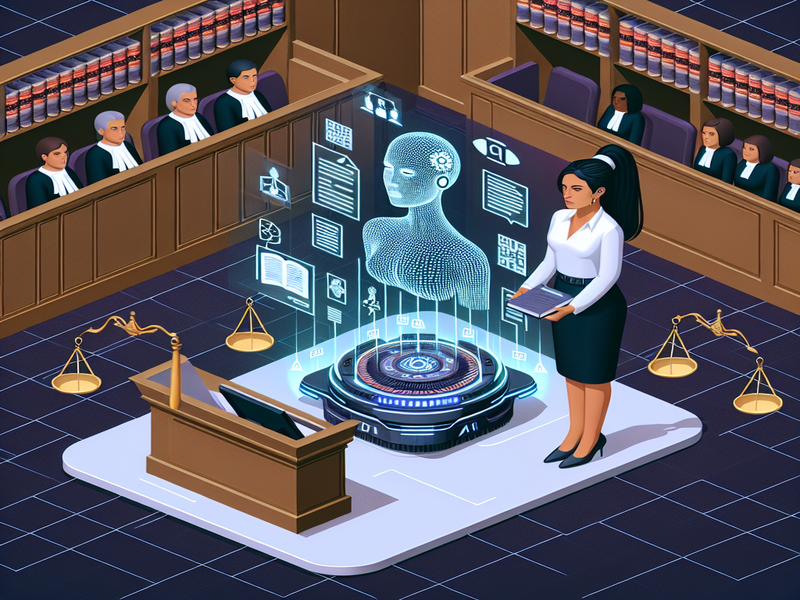
In a significant move, the High Court of England and Wales issued a stern warning to legal professionals regarding the use of AI in legal research.
This warning stems from instances where lawyers have submitted incorrect AI-generated citations, leading to potential legal missteps.
The Court emphasized the critical need for verifying AI-generated information to uphold the integrity of legal practices.
Importance of Verifying AI-Generated Citations
The allure of AI in legal research lies in its ability to process vast amounts of data swiftly and efficiently.
However, the onus remains on legal professionals to ensure the accuracy of the information they present.
AI-generated citations, if not verified, can lead to erroneous legal arguments and undermine the credibility of legal proceedings.
“AI can be a powerful tool in legal research, but it is not infallible. Verification remains a non-negotiable step in ensuring the accuracy of legal documents.” – Judge Victoria Sharp
Potential Penalties for Misuse
The misuse of AI in legal research does not come without consequences.
Legal professionals who fail to verify AI-generated information may face penalties, ranging from professional reprimands to more severe legal repercussions.
The High Court’s warning serves as a reminder of the potential pitfalls of over-reliance on technology without due diligence.
Role of Judge Victoria Sharp
Judge Victoria Sharp has been at the forefront of advocating for responsible AI integration in the legal field.
Her insights underscore the importance of balancing technological advancements with traditional legal practices.
By emphasizing the need for verification, Judge Sharp champions a cautious yet progressive approach to AI in legal research.
Integration of AI Responsibly in Legal Practices
Responsible integration of AI into legal practices involves understanding the limitations of technology and complementing it with human expertise.
Legal professionals are encouraged to utilize AI as an aid rather than a replacement for thorough legal research.
Platforms like the UBOS homepage offer valuable insights into the responsible use of AI across various industries, including legal.
For those looking to delve deeper into AI’s impact on legal research, exploring resources such as ChatGPT and Telegram integration can provide a broader understanding of how AI tools can be effectively utilized.
Related Content on UBOS
- AI-powered chatbot solutions
- Enterprise AI platform by UBOS
- Training ChatGPT with your own data
- Building a Telegram bot with no coding
Conclusion
As AI continues to shape the future of legal research, it is imperative for legal professionals to remain vigilant and informed.
The High Court’s warning serves as a crucial reminder of the responsibilities that come with technological advancements.
By verifying AI-generated information and embracing a balanced approach, the legal industry can harness the full potential of AI while maintaining the integrity of legal practices.
For more insights on AI and its applications, visit the UBOS solutions for SMBs page.
For further reading on the responsible use of AI in business, consider exploring the Revolutionizing marketing with generative AI article, which offers valuable insights into the transformative power of AI across various sectors.
Andrii Bidochko
CTO UBOS
Andrii Bidochko is an AI entrepreneur and researcher focused on AI agents, reinforcement learning, and autonomous systems. He writes about the technologies shaping the future of machine intelligence, from frontier models and agent architectures to real-world AI applications.