

- Updated: February 20, 2026
- 6 min read
Tesla Ordered to Pay $243 Million Verdict Over Autopilot Crash
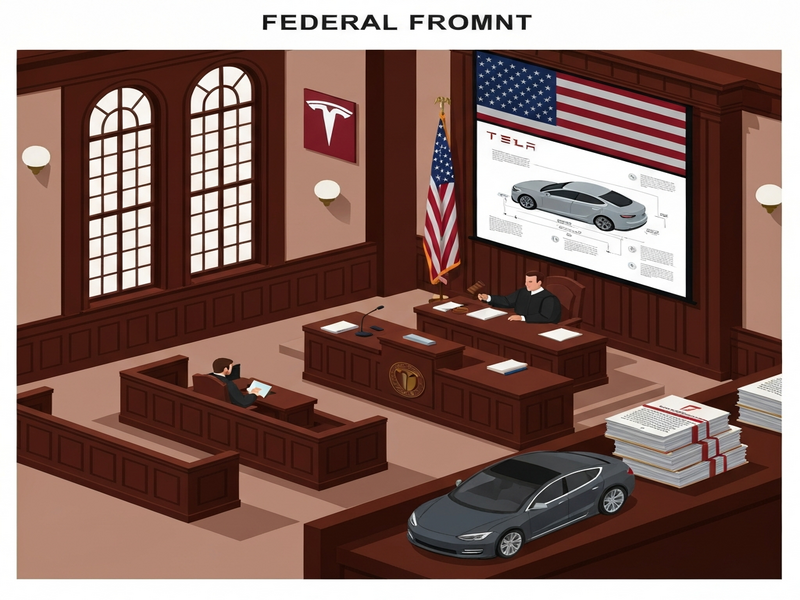
A federal judge in Miami has upheld a $243 million verdict against Tesla for the 2019 Autopilot crash in Florida, confirming the automaker’s liability and setting a precedent for future autonomous‑vehicle lawsuits.
Why the $243 million judgment matters
The decision, announced on February 20 2026, not only cements a historic financial penalty for Tesla but also signals a turning point in how courts may treat driver‑assistance technologies under U.S. tort law. Investors, automotive enthusiasts, and regulators are watching closely because the outcome could reshape liability standards for all autonomous‑vehicle developers.
Background of the 2019 Florida Autopilot crash
On March 23 2019, George McGee was traveling north on US‑1 in Key Largo, Florida, in his Tesla Model S with Autopilot engaged. While the vehicle was in motion, McGee reached for his phone, causing the car to drift through a stop sign and a flashing red traffic signal at roughly 62 mph. The Model S collided with a parked Chevrolet Tahoe, killing 22‑year‑old Naibel Benavides Leon and severely injuring her boyfriend, Dillon Angulo.
The incident quickly became a focal point for critics of Tesla’s driver‑assistance suite, highlighting how over‑reliance on Autopilot can erode driver attention. The case resurfaced in 2025 when a Miami federal jury found Tesla 33 % at fault and awarded $43 million in compensatory damages plus $200 million in punitive damages to the victims’ families.
Legal battle and the judge’s ruling
Following the August 2025 verdict, Tesla filed a 71‑page motion seeking a new trial, arguing that the jury’s decision “flies in the face of basic Florida tort law” and that statements made by CEO Elon Musk during the trial misled jurors. U.S. District Judge Beth Bloom rejected every argument, stating that the evidence “more than supported” the original finding and that Tesla had offered no new legal basis to overturn the judgment.
Key points from Judge Bloom’s opinion:
- Tesla’s claim that punitive damages should be capped at three times compensatory damages was already addressed in a pre‑trial agreement, but even the reduced amount would still exceed nine figures.
- The jury’s reliance on Tesla’s marketing language around Autopilot was deemed appropriate, given the public statements that encouraged drivers to trust the system.
- All procedural safeguards were observed during the trial, leaving no procedural ground for a new trial.
With the motion denied, Tesla’s next step is an appeal to the Eleventh Circuit Court of Appeals, a process that could extend for months or even years.
Tesla’s response and appeal strategy
In a brief filing, Tesla’s legal team emphasized that the punitive‑damage cap clause should dramatically lower the final payout. The automaker also highlighted ongoing efforts to improve Autopilot’s safety features, including over‑the‑air updates and enhanced driver‑monitoring cameras.
Despite these technical upgrades, the company has not publicly altered its branding strategy. However, recent regulatory pressure—most notably a California court ruling that deemed the “Full Self‑Driving” name misleading—has forced Tesla to rebrand its driver‑assistance suite in the U.S. and Canada.
Implications for current and future Autopilot lawsuits
The upheld verdict opens the floodgates for similar claims across the United States. Legal analysts predict a surge in:
- Product‑liability suits alleging that Autopilot’s design encourages driver disengagement.
- Class‑action filings from owners who experienced near‑miss incidents.
- Regulatory investigations into whether Tesla’s marketing violates consumer‑protection statutes.
For investors, the financial exposure could climb into the billions if multiple high‑profile cases settle or result in verdicts comparable to the Florida judgment. Companies developing autonomous technology should monitor these developments closely, as they may influence insurance premiums, compliance costs, and product‑roadmap decisions.
Expert commentary on autonomous‑vehicle liability
“The Tesla case illustrates a broader shift: courts are moving from treating driver‑assist systems as optional accessories to viewing them as integral safety components. When a manufacturer markets a feature as ‘autonomous,’ it inherits a higher duty of care.” – Dr. Maya Patel, Professor of Automotive Law, University of Michigan
Dr. Patel adds that future litigation will likely focus on the adequacy of real‑time driver‑monitoring and the clarity of in‑vehicle warnings. “If a system can be shown to mislead a reasonable driver about its capabilities, liability will follow,” she notes.
What you can do next
If you’re a tech‑savvy investor or an automotive professional seeking to stay ahead of regulatory trends, explore the resources below:
- Visit the UBOS homepage for a comprehensive view of AI‑driven business solutions.
- Learn how the UBOS platform overview can help you automate compliance monitoring.
- Discover the power of AI marketing agents to keep stakeholders informed about evolving legal landscapes.
- Startups can leverage the UBOS for startups program to build AI‑enhanced risk‑assessment tools.
- SMBs looking for scalable AI can explore UBOS solutions for SMBs.
- Enterprises may benefit from the Enterprise AI platform by UBOS, which includes robust audit trails for regulatory compliance.
- Rapidly prototype compliance dashboards with the Web app editor on UBOS.
- Automate multi‑step investigations using the Workflow automation studio.
- Review the UBOS pricing plans to find a tier that matches your organization’s size.
- See real‑world implementations in the UBOS portfolio examples.
- Kick‑start projects with ready‑made solutions from the UBOS templates for quick start.
- Integrate communication channels like the Telegram integration on UBOS for instant alerts.
- Combine conversational AI with messaging via the ChatGPT and Telegram integration to field legal‑tech queries.
- Leverage the OpenAI ChatGPT integration for natural‑language analysis of court documents.
- Store and query large case‑law datasets using the Chroma DB integration.
- Enhance briefing materials with the ElevenLabs AI voice integration for audio summaries.
- Boost your SEO strategy with the AI SEO Analyzer to track how this story ranks.
- Generate concise legal briefs using the AI Article Copywriter.
- Create visual content with the AI Video Generator for stakeholder presentations.
- Analyze public sentiment on platforms like YouTube with the AI YouTube Comment Analysis tool.
- Design surveys to gauge investor confidence using the AI Survey Generator.
Read the original reporting
For a detailed account of the courtroom proceedings, see the Electrek article that broke the story.
Bottom line
The upheld $243 million judgment against Tesla underscores the growing legal risks tied to autonomous‑vehicle technologies. As courts increasingly hold manufacturers accountable for how they market and implement driver‑assist features, companies across the automotive ecosystem must prioritize transparent communication, rigorous safety testing, and proactive compliance strategies. Leveraging AI‑driven platforms like UBOS can help organizations navigate this complex regulatory terrain, turning potential liabilities into opportunities for innovation.