

- Updated: February 20, 2026
- 6 min read
Tesla Loses $243 Million Autopilot Verdict: Court Ruling Impacts AI‑Driven Driving
Tesla’s request to overturn the $243 million Autopilot verdict was denied by U.S. District Judge Beth Bloom, leaving the jury’s judgment intact.
Tesla Loses Bid to Overturn $243 Million Autopilot Verdict – What It Means for AI‑Powered Autonomous Vehicles
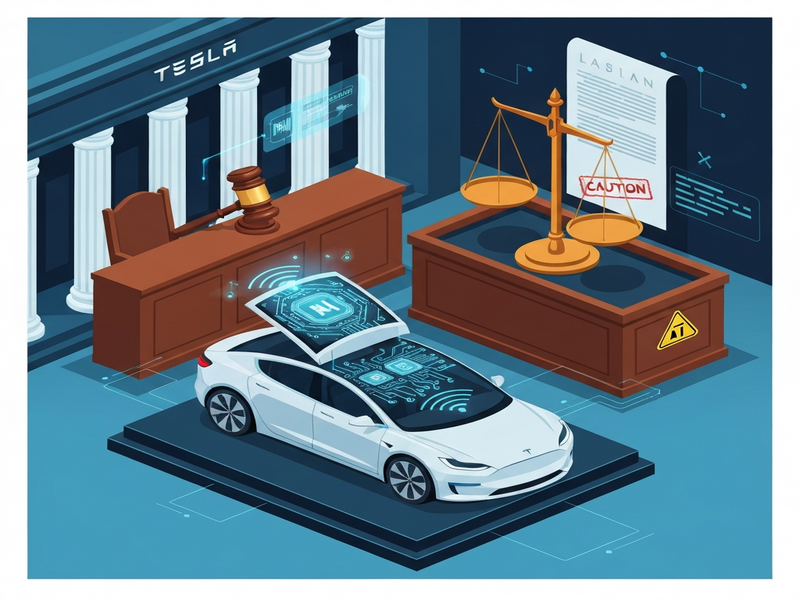
On February 20, 2026 a federal judge in Florida rejected Tesla’s motion to set aside a $243 million jury verdict that held the automaker partially liable for a 2019 fatal crash involving its Autopilot driver‑assistance system. The decision reinforces the legal responsibilities of AI‑enabled vehicle manufacturers and signals a new era of scrutiny for autonomous‑driving technology.
Background: The 2019 Florida Crash and the $243 Million Judgment
In August 2025 a Florida jury concluded that Tesla bore one‑third of the blame for the collision that killed Naibel Benavides and seriously injured Dillon Angulo. While the driver was assigned two‑thirds responsibility, the jury awarded punitive damages exclusively against Tesla, totaling $243 million. The case centered on whether Tesla’s Autopilot system provided sufficient warnings and safeguards to prevent a driver from unintentionally entering a dangerous situation.
The verdict sparked a wave of discussion across the automotive and AI communities, prompting regulators, investors, and technology enthusiasts to reassess the risk profile of semi‑autonomous features.
Tesla’s Legal Arguments and the Court’s Rationale
Tesla’s appeal hinged on three primary contentions:
- That the driver’s negligence was the sole cause of the crash.
- The Autopilot system complied with all federal safety standards.
- The jury’s punitive damages were excessive and unsupported by precedent.
Judge Beth Bloom, however, found that these arguments “are virtually the same as those Tesla put forth previously during the course of trial and in their briefings on summary judgment — arguments that were already considered and rejected.” She emphasized that Tesla offered no new legal authority or factual evidence that could justify overturning the verdict.
In her written opinion, the judge noted that the jury’s finding of “one‑third liability” for Tesla was grounded in the system’s design choices, including the limited visual alerts and the reliance on driver supervision. The court concluded that the punitive damages were proportionate to the alleged negligence in marketing and deploying a system that could mislead drivers about its capabilities.
Implications for AI, Autonomous Vehicles, and the Wider Tech Ecosystem
The ruling carries weight far beyond a single lawsuit. It establishes a legal precedent that AI‑driven assistance systems can be held financially accountable for design‑level decisions, not just for software bugs.
Regulatory Outlook
Regulators are likely to tighten disclosure requirements for driver‑assistance features. Expect more granular labeling of system limitations, mandatory driver‑attention monitoring, and stricter post‑market surveillance.
Investor Sentiment
Investors are re‑evaluating risk models for companies that embed AI in safety‑critical products. The verdict may pressure firms to allocate additional capital toward compliance, testing, and insurance reserves.
Technology Development
AI researchers and engineers are now tasked with building more transparent, explainable models that can be audited in court. This shift aligns with the growing demand for responsible AI practices across industries.
Expert Commentary
Dr. Maya Patel, a senior fellow at the Center for Automotive AI Ethics, remarked:
“The Tesla verdict underscores that autonomous‑driving technology is not a legal black box. Companies must treat AI as a co‑driver with obligations, not just a feature. This will accelerate the adoption of safety‑first design patterns, such as continuous driver monitoring and real‑time risk assessment.”
Patel also highlighted the role of emerging AI platforms that can help manufacturers embed compliance checks directly into their development pipelines.
For a full account of the court’s decision, see the original TechCrunch article.
How AI Platforms Like UBOS Are Shaping the Future of Autonomous Systems
Companies seeking to navigate this new legal landscape are turning to comprehensive AI development environments. The UBOS platform overview showcases a suite of tools that enable rapid prototyping, rigorous testing, and automated compliance reporting.
For startups that need to accelerate time‑to‑market while maintaining safety standards, UBOS for startups offers pre‑configured pipelines that integrate sensor data validation, model explainability, and real‑time monitoring.
Mid‑size firms can benefit from UBOS solutions for SMBs, which include modular AI components that plug directly into existing vehicle control stacks.
Enterprises with large fleets are increasingly adopting the Enterprise AI platform by UBOS. This platform provides centralized governance, audit trails, and policy enforcement—features that align closely with the regulatory expectations highlighted by the Tesla case.
Accelerating Development with Low‑Code Tools
The Web app editor on UBOS lets engineers build dashboards for driver‑attention monitoring without writing extensive code. Coupled with the Workflow automation studio, teams can automate test‑run orchestration, data ingestion, and compliance checks.
Integrating Cutting‑Edge AI Services
UBOS also supports a range of AI integrations that are directly relevant to autonomous‑driving safety:
- OpenAI ChatGPT integration – for natural‑language incident reporting.
- Chroma DB integration – enables semantic search across massive telemetry logs.
- ElevenLabs AI voice integration – provides real‑time audible alerts that can be customized per jurisdiction.
- ChatGPT and Telegram integration – creates a rapid response channel for field engineers.
Template Marketplace for Rapid Prototyping
Developers can jump‑start safety‑focused applications using UBOS’s template marketplace. Notable examples include:
- AI SEO Analyzer – ensures that documentation for AI features meets discoverability standards.
- AI Article Copywriter – helps generate clear user manuals for driver‑assistance systems.
- AI Video Generator – produces training videos that illustrate safe usage of Autopilot.
- AI Chatbot template – powers in‑car support bots that can answer safety‑related queries.
- AI LinkedIn Post Optimization – helps manufacturers communicate compliance updates to stakeholders.
- AI Image Generator – creates visual assets for safety warnings.
- AI Email Marketing – automates outreach to regulators and partners.
Pricing and Partnership Opportunities
For organizations evaluating cost, the UBOS pricing plans are tiered to accommodate everything from early‑stage prototypes to large‑scale deployments. Additionally, the UBOS partner program offers co‑marketing and technical enablement for OEMs and Tier‑1 suppliers.
Conclusion: A Turning Point for AI‑Driven Mobility
The denial of Tesla’s bid to overturn the $243 million Autopilot verdict marks a watershed moment for the autonomous‑driving sector. It sends a clear message: AI‑enabled vehicle systems must be designed with rigorous safety, transparency, and accountability from the outset. Companies that adopt robust AI development platforms—such as the UBOS homepage—will be better positioned to meet emerging legal standards, protect consumers, and maintain investor confidence.
As the industry moves forward, the integration of advanced AI services, low‑code development tools, and comprehensive compliance frameworks will define the next generation of safe, trustworthy autonomous vehicles.
Stay informed on the evolving intersection of AI, law, and mobility by exploring more resources on the About UBOS page and reviewing real‑world case studies in the UBOS portfolio examples.