

- Updated: December 12, 2025
- 6 min read
TCL QM9K Review: 2025 Flagship Mini‑LED TV Sets New Standards
The TCL QM9K mini‑LED TV is a 2025 flagship that delivers record‑breaking brightness and solid overall performance, but its $500‑$1,000 price premium over the QM8K makes it a niche choice for enthusiasts who need extreme brightness, advanced art‑mode features, or a future‑proof platform for AI‑driven home‑theater experiences.
TCL QM9K Mini‑LED TV Review: Is “Ultimate Performance” Worth the Premium?
Launch Overview
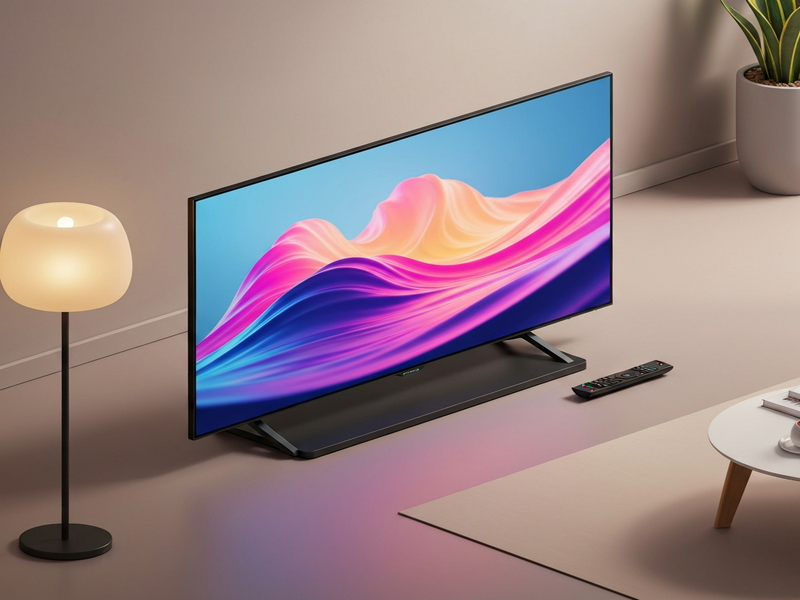
In early December 2025, TCL unveiled the QM9K as the top tier of its Ultimate Series. Marketed as “The Ultimate Performance” model, the QM9K joins the QM8K (“Ultimate Choice”) and aims to challenge premium OLEDs from Sony and LG. The TV arrives in four sizes—65”, 75”, 85”, and a massive 98”—with price tags ranging from $2,999 to $5,999. Key differentiators include a claimed peak brightness of up to 6,500 nits, a built‑in presence sensor for ambient‑mode artwork, and the world’s first integration of Google Gemini on a TV platform.
Detailed Specifications & Performance Analysis
Core Hardware
- Display: 4K mini‑LED, WHVA panel, 144 Hz native refresh rate
- Backlight: Up to 6,500 nits peak, 6,000 local dimming zones
- Processor: AIPQ Pro with AI‑enhanced upscaling
- Audio: Integrated Bang & Olufsen speakers (2 × 10 W)
- Connectivity: 2 × HDMI 2.1, 2 × HDMI 2.0 (one with eARC), Wi‑Fi 6, Ethernet
- OS: Google TV with built‑in Gemini AI assistant
Picture Quality
In Filmmaker Mode with the “Boost” brightness setting, the QM9K measured a peak of 5,844 nits, roughly 2,200 nits higher than the QM8K and well above the 4,000‑nit ceiling of most HDR content today. This translates to spectacular specular highlights—think fireworks, neon signs, and HDR gaming bursts—while still maintaining deep blacks for an LED panel. The new 2025 backlight architecture reduces blooming, though a faint vignette appears at the extreme edges due to the zero‑border bezel.
Color Accuracy & Calibration
Out‑of‑the‑box color accuracy is impressive: ΔE2000 under 2 in Filmmaker Mode, with a warm‑leaning color temperature that many viewers find more natural than the cool defaults of competing models. The TV supports HDR10, Dolby Vision, HLG, and HDR10+ and automatically selects the optimal tone‑mapping curve.
Motion Handling
The 144 Hz panel paired with FreeSync Premium Pro delivers smooth motion for most content. However, fast‑moving sports and high‑fps gaming occasionally exhibit minor judder and occasional screen‑tearing, especially on the 65‑inch variant. Enabling the low‑level motion smoothing option mitigates the issue without introducing the “soap‑opera” effect.
Smart Features & AI Integration
TCL’s partnership with Google Gemini brings conversational AI directly to the TV remote. Users can ask the TV to search for content, control smart‑home devices, or generate on‑screen art via the presence sensor’s ambient‑mode. The AI is also leveraged for real‑time picture optimization, adjusting brightness and contrast based on room lighting.
Pricing Strategy and Market Positioning
TCL positions the QM9K as a premium alternative to high‑end OLEDs while keeping the price below $6,000 for the 98‑inch model. Below is a quick price matrix:
| Size | MSRP (USD) | Typical Discount |
|---|---|---|
| 65‑inch | $2,999 | 5‑10 % |
| 75‑inch | $3,499 | 5‑10 % |
| 85‑inch | $3,999 | 5‑10 % |
| 98‑inch | $5,999 | 3‑7 % |
Compared with the QM8K, which starts at $2,500 for the 65‑inch model, the QM9K carries a $500‑$1,000 premium. The price gap narrows the advantage of the QM9K’s extra brightness, especially since most HDR mastering stays under 4,000 nits. For buyers who primarily watch in dim rooms, the QM8K offers a better value proposition.
TCL’s aggressive pricing is designed to undercut OLED flagships like the Sony Bravia XR‑A90J and LG G5, while still delivering a “premium” badge that appeals to home‑theater enthusiasts and early adopters of AI‑enhanced smart TV experiences.
Comparison: QM9K vs. QM8K & Other Flagship Models
The following matrix highlights the most relevant differences:
| Feature | TCL QM9K | TCL QM8K | Sony Bravia XR‑A90J (OLED) | LG G5 (OLED) |
|---|---|---|---|---|
| Peak Brightness | ≈ 5,800 nits (measured) | ≈ 3,600 nits | ≈ 1,200 nits | ≈ 1,000 nits |
| Local Dimming Zones | 6,000 | 3,800 | N/A (OLED) | N/A (OLED) |
| AI Assistant | Google Gemini (native) | Google TV (future Gemini update) | Google Assistant (via Android TV) | Google Assistant |
| Refresh Rate | 144 Hz | 144 Hz | 120 Hz | 120 Hz |
| Price (65‑inch) | $2,999 | $2,500 | $3,200 | $3,500 |
The QM9K’s brightness advantage is undeniable, but OLEDs still win on absolute black levels and pixel‑level contrast. If you watch in a bright living room or need a TV that can double as a digital art frame, the QM9K’s ambient‑mode and high nits give it a unique edge.
Pros and Cons
Pros
- Industry‑leading peak brightness (≈ 5,800 nits measured)
- 144 Hz refresh rate with FreeSync Premium Pro
- Google Gemini AI for voice, content search, and ambient art
- Robust HDR support (HDR10, Dolby Vision, HLG, HDR10+)
- Elegant pedestal design with near‑borderless screen
- Future‑proof HDMI 2.1 ports for next‑gen consoles
Cons
- Price premium of $500‑$1,000 over the QM8K
- Minor vignetting on full‑screen bright images
- Occasional motion judder and screen‑tearing in fast games
- Brightness advantage less useful for HDR content capped at ~4,000 nits
- Limited advantage if you already own a high‑end OLED
Conclusion & Buying Recommendation
For tech‑savvy consumers who demand the brightest possible picture, want AI‑driven ambient‑mode art, and plan to use the TV as a centerpiece in a well‑lit home theater, the TCL QM9K is a compelling, future‑ready choice. However, if your viewing environment is typically dim, or if you’re looking for the absolute best contrast, an OLED such as the Sony Bravia XR‑A90J or LG G5 still offers superior black levels at a comparable price.
Bottom line: Choose the QM9K if you value extreme brightness, AI integration, and a premium design; otherwise, the QM8K delivers almost the same experience for a lower cost and is the smarter buy for most households.
Read the Full Original Review
For a deeper dive into the testing methodology and frame‑by‑frame analysis, see The Verge review of the TCL QM9K.
Related UBOS Resources
If you’re building an AI‑powered review platform or want to automate your home‑theater workflow, UBOS offers a suite of tools that can accelerate development:
- UBOS platform overview – a low‑code environment for AI‑enhanced apps.
- Web app editor on UBOS – drag‑and‑drop UI builder for TV‑related dashboards.
- Workflow automation studio – automate content ingestion, metadata extraction, and publishing pipelines.
- AI marketing agents – generate SEO‑friendly copy for product pages like this review.
- UBOS pricing plans – flexible tiers for startups and enterprises.
- UBOS partner program – collaborate on AI‑driven media solutions.
- UBOS templates for quick start – jump‑start a TV review portal with pre‑built components.
- UBOS portfolio examples – see how other brands showcase tech reviews.
- UBOS TV reviews – a curated collection of AI‑generated TV analyses.
- Tech buying guides – expert advice on selecting the right display for your space.
Ready to experience the brightest TV on the market?