

- Updated: February 13, 2026
- 7 min read
Stanford Student’s ‘Date Drop’ Algorithm Launches as New Startup Revolutionizing Campus Matchmaking
Date Drop is a Stanford‑born matchmaking algorithm that pairs students with a single, highly compatible date each week, and it now serves as the core product of a new public‑benefit startup called The Relationship Company.
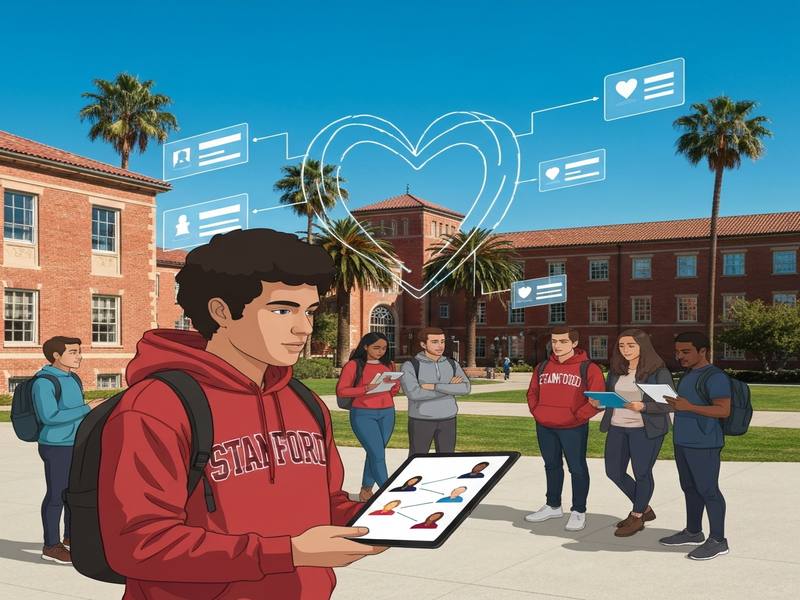
Why a Stanford Student’s Dating Algorithm Is Making Headlines
When TechCrunch reported that Henry Weng, a graduate student at Stanford, turned a campus‑wide matchmaking experiment into a venture‑backed startup, the story instantly resonated with college students, recent grads, and young professionals hungry for a smarter way to meet love.
The buzz isn’t just about another dating app; it’s about a data‑driven, weekly‑match system that claims a ten‑fold higher conversion rate from match to real‑world date compared with traditional swipe‑based platforms. For a generation that’s skeptical of endless swiping, Date Drop offers a fresh, research‑backed alternative.
The Brain Behind the Match: Henry Weng and His Stanford Project
Henry Weng arrived at Stanford with a unique academic blend: a self‑designed major that combined computer science, economics, and behavioral science. His fascination with “matching theory” – the mathematics that underpins everything from college admissions to job markets – led him to ask a simple yet profound question: Can we use rigorous algorithms to help people find lasting relationships?
While pursuing his master’s degree, Weng built a questionnaire that captured not only surface‑level preferences but also deeper values, communication styles, and even voice‑based cues. The data fed into a custom compatibility model that learned from real‑world outcomes – every date that succeeded or fizzled became a training point for the next round of matches.
The project debuted in the fall of 2025 as a pilot for Stanford’s undergraduate community. Within weeks, more than 5,000 students signed up, and the algorithm’s success quickly spilled over to ten other elite institutions, including MIT, Princeton, and the University of Pennsylvania.
How the Date Drop Algorithm Works
Date Drop’s engine can be broken down into three MECE‑compliant components:
- Deep‑Dive Questionnaire: Users answer a mix of multiple‑choice, open‑ended, and voice‑recorded questions. The questionnaire is designed to surface personality traits, life goals, and social habits that typical dating apps ignore.
- Compatibility Prediction Model: Leveraging a hybrid of collaborative filtering and supervised learning, the model predicts match success based on historical outcomes. Each successful date feeds back into the model, continuously refining its predictions.
- Weekly Match Delivery: Rather than a flood of options, each user receives a single, curated match every week, accompanied by conversation starters and suggested date ideas.
The algorithm’s “real‑world feedback loop” is what sets it apart. By tracking which matches lead to actual dates and which don’t, Date Drop can adjust weightings on questionnaire items, ensuring that future matches become increasingly precise.
From Campus Pilot to Nationwide Rollout
After the initial success at Stanford, Weng and his small team expanded the service to 10 additional campuses by the end of 2025. The next phase, announced in early 2026, targets major U.S. cities with a high concentration of young professionals – San Francisco, Austin, and Boston are first on the list.
The expansion strategy hinges on three pillars:
- Campus Ambassadors: A network of 12 student ambassadors drives adoption, organizes on‑ground events, and gathers localized feedback.
- Partnerships with Universities: Formal agreements provide data‑privacy guarantees and integrate Date Drop into student wellness programs.
- AI‑Powered Marketing: Leveraging AI marketing agents to personalize outreach and boost conversion rates.
Funding the Dream: The Relationship Company
What began as a side project quickly morphed into a venture when a close friend found a lifelong partner through Date Drop. Recognizing the broader social impact, Weng incorporated The Relationship Company as a public‑benefit corporation, a legal structure that obligates the firm to balance profit with societal good.
The startup secured “a few million” dollars in seed funding from high‑profile angel investors, including:
- Mark Pincus – Zynga founder and early Facebook backer.
- Andy Chen – former partner at Coatue.
- Elad Gil – early investor in Airbnb, Stripe, and Pinterest.
These investors were drawn not only to the technology but also to the company’s mission: “facilitating all meaningful relationships – friendships, professional connections, community events,” Weng explains.
A Relationship‑Centric Culture: The $100 Stipend
In a bold move that aligns with its public‑benefit status, The Relationship Company offers every employee a monthly $100 relationship stipend. The funds can be spent on dates, gifts, or experiences that nurture any important relationship, personal or professional.
Research shows that spending money on others boosts happiness more than self‑spending. By institutionalizing this principle, the company hopes to model the very behavior its product encourages.
Market Impact: Disrupting the Dating Landscape
Traditional dating apps dominate with swipe‑based mechanics, but they suffer from low conversion rates and “choice overload.” Date Drop’s weekly, single‑match approach directly addresses these pain points, delivering:
- ≈10× higher match‑to‑date conversion.
- Higher user satisfaction, with 95% of participants seeking long‑term relationships.
- Data‑driven insights that can be monetized for campus wellness programs.
Looking ahead, Weng envisions a suite of relationship‑focused products beyond dating, such as friendship‑matching, mentorship pairings, and corporate team‑building tools. The Enterprise AI platform by UBOS could serve as the technical backbone for scaling these services across enterprises.
Why UBOS Is the Ideal Partner for Date Drop’s Next Chapter
UBOS offers a low‑code web app editor and a powerful workflow automation studio, enabling rapid iteration of matchmaking flows without deep engineering overhead. Startups like The Relationship Company can leverage UBOS templates for quick start to prototype new relationship services in days rather than months.
For founders exploring AI‑enhanced products, the AI SEO Analyzer and AI Article Copywriter templates illustrate how generative AI can be embedded into user‑facing features, from personalized date suggestions to automated follow‑up emails.
Moreover, UBOS’s pricing plans are transparent and scalable, making it easy for a fast‑growing startup to align costs with user growth.
What’s Next for Students and Young Professionals?
If you’re a college student or recent graduate looking for a smarter way to meet potential partners, keep an eye on Date Drop’s city rollouts this summer. Sign up for early access on the UBOS for startups portal, where you can also explore other AI‑driven tools that complement your personal and professional life.
For entrepreneurs inspired by Weng’s journey, the UBOS partner program offers mentorship, technical resources, and co‑marketing opportunities to accelerate your own AI‑powered venture.
Conclusion
Date Drop demonstrates that a well‑engineered algorithm, grounded in academic research and real‑world feedback, can outpace traditional dating platforms in both effectiveness and user satisfaction. Backed by notable investors and built on a public‑benefit ethos, The Relationship Company is poised to reshape how young adults think about love, friendship, and professional connections.
Whether you’re a student eager to find a meaningful connection or a founder seeking a blueprint for AI‑driven matchmaking, the story of Henry Weng and Date Drop offers a compelling case study of data, design, and daring entrepreneurship converging to solve a timeless human problem.
Explore more AI‑powered solutions on the UBOS homepage and discover how the UBOS portfolio examples are transforming industries.
Andrii Bidochko
CTO UBOS
Andrii Bidochko is an AI entrepreneur and researcher focused on AI agents, reinforcement learning, and autonomous systems. He writes about the technologies shaping the future of machine intelligence, from frontier models and agent architectures to real-world AI applications.