

- Updated: February 19, 2026
- 5 min read
SoftBank Commits $33 Billion to Build Largest U.S. Natural‑Gas Power Plant
SoftBank is investing $33 billion to build a 9.2 GW natural‑gas power plant on the Ohio‑Kentucky border, creating the largest U.S. gas‑fired facility and reshaping the nation’s energy infrastructure.
Overview of the $33 B Investment
SoftBank’s subsidiary SB Energy announced a $33 billion capital commitment to construct a massive natural‑gas power plant straddling the Ohio‑Kentucky border. The project, dubbed the “Stargate” plant, is projected to deliver 9.2 gigawatts (GW) of capacity—enough electricity for roughly 7.5 million American households. If completed, it will become the single largest gas‑fired power installation in the United States.
Plant Capacity and Strategic Location
The plant’s 9.2 GW capacity will be split across multiple combined‑cycle gas turbine units, each capable of rapid ramp‑up to meet peak demand. Its location on the Ohio‑Kentucky border was chosen for three strategic reasons:
- Grid Connectivity: Proximity to major inter‑state transmission corridors (e.g., PJM and MISO) enables seamless power delivery to the Midwest and Eastern seaboard.
- Fuel Access: The region sits near extensive natural‑gas pipelines, reducing transportation costs and ensuring a reliable feedstock supply.
- Economic Incentives: Both Ohio and Kentucky offer tax abatements and workforce development programs that lower upfront construction expenses.
Construction Timeline and Phased Development
Given the scale, the project is planned as a multi‑phase rollout spanning 10‑12 years. The timeline is broken down as follows:
| Phase | Key Milestones | Estimated Completion |
|---|---|---|
| Phase 1 (Year 1‑3) | Site acquisition, permitting, and initial civil works. | 2029 |
| Phase 2 (Year 4‑6) | Installation of first 3 GW of turbine capacity, grid interconnection. | 2032 |
| Phase 3 (Year 7‑9) | Additional 3 GW added, implementation of carbon‑capture pilot. | 2035 |
| Phase 4 (Year 10‑12) | Final 3.2 GW installed, full commercial operation. | 2037 |
Each phase is designed to bring incremental capacity online, allowing the grid to benefit from new supply while the remaining construction proceeds.
Industry and Environmental Impact Analysis
The announcement has sparked a vigorous debate among energy investors, policymakers, and climate advocates. Below is a MECE‑structured breakdown of the most salient implications.
Energy Infrastructure Benefits
- Grid Reliability: The plant’s fast‑start capability can offset intermittent renewable output, reducing curtailment rates.
- Economic Growth: Construction is projected to create 12,000 direct jobs and stimulate ancillary industries such as steel, logistics, and engineering services.
- Data‑Center Power: SB Energy’s partnership with OpenAI suggests a portion of the output may be earmarked for high‑density data centers, supporting AI workloads that demand stable baseload power.
Environmental Considerations
Natural‑gas plants emit roughly 0.4 kg CO₂ per kWh, translating to an estimated 15 million metric tons of CO₂ annually at full capacity. When accounting for methane leakage across the supply chain, the climate impact could be higher. However, SB Energy has pledged to integrate Chroma DB integration for real‑time emissions monitoring and to pilot carbon‑capture technologies in Phase 3.
Renewable Transition Context
Critics argue that a $33 billion bet on fossil‑fuel infrastructure runs counter to the global push for net‑zero emissions by 2050. Proponents counter that natural gas serves as a “bridge fuel,” enabling a smoother transition while renewable capacity scales. The plant’s design includes provisions for future retrofitting with hydrogen‑compatible turbines, a move that could align the asset with long‑term decarbonization goals.
Expert Insight
“Investments of this magnitude reshape the energy landscape. The key will be how quickly SB Energy can embed carbon‑capture and hydrogen conversion pathways,” says Dr. Maya Patel, senior analyst at the Energy Futures Institute.
Why This Matters for Tech‑Savvy Investors
For investors tracking AI‑driven energy solutions, the Stargate plant offers a unique convergence point of high‑performance computing and traditional power generation. The plant’s data‑center focus dovetails with emerging AI workloads, making it a strategic asset for firms that need reliable, low‑latency electricity.
Companies looking to harness AI for operational efficiency can explore the Enterprise AI platform by UBOS, which provides pre‑built models for predictive maintenance of turbine fleets, demand forecasting, and emissions analytics.
Related UBOS Solutions for Energy Projects
UBOS offers a suite of tools that can accelerate the digital transformation of large‑scale energy projects:
- UBOS platform overview – a low‑code environment for building custom dashboards and control systems.
- Web app editor on UBOS – quickly prototype monitoring interfaces for turbine performance.
- Workflow automation studio – automate alerts for abnormal emissions or equipment failures.
- AI YouTube Comment Analysis tool – gauge public sentiment on large energy projects in real time.
- AI SEO Analyzer – optimize communication strategies for stakeholder outreach.
- AI Article Copywriter – generate regulatory compliance reports efficiently.
- Talk with Claude AI app – leverage advanced language models for scenario planning.
- UBOS partner program – collaborate with technology partners to integrate IoT sensors and AI analytics.
External Reference
For the original reporting, see the TechCrunch article that first broke the story.
Visual Overview
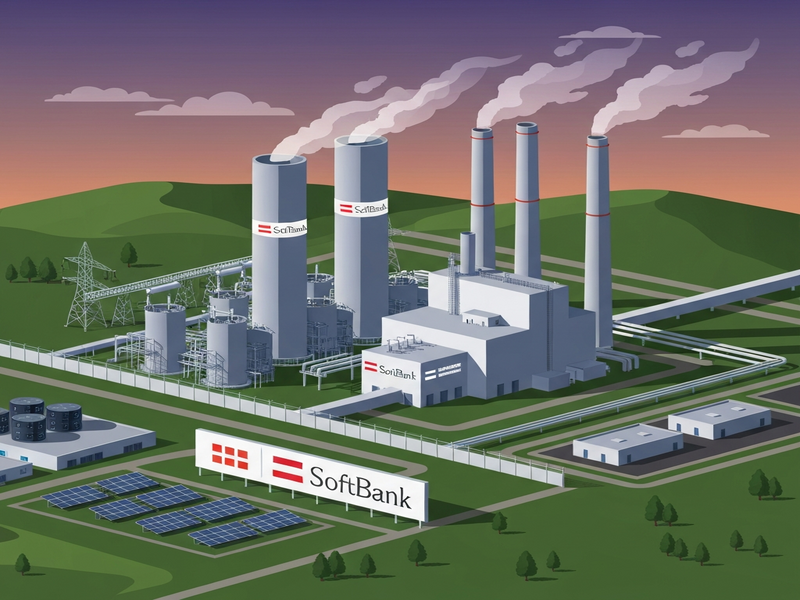
Figure: Conceptual illustration of the planned 9.2 GW natural‑gas power plant on the Ohio‑Kentucky border.
Future Outlook and Investor Takeaways
While the plant promises substantial grid benefits, its long‑term viability hinges on three factors:
- Policy Landscape: Federal and state carbon‑pricing mechanisms could affect operating costs.
- Technology Adoption: Successful integration of carbon‑capture or hydrogen retrofits will determine the plant’s alignment with net‑zero pathways.
- Market Demand: The growth of AI‑intensive data centers may secure a premium off‑take agreement, stabilizing revenue streams.
Investors should monitor SB Energy’s progress on emissions‑tracking integrations—such as the OpenAI ChatGPT integration—which could provide unprecedented transparency into plant performance and carbon footprints.
Conclusion
SoftBank’s $33 billion commitment to the Ohio‑Kentucky natural‑gas power plant marks a pivotal moment for U.S. energy infrastructure. By delivering 9.2 GW of reliable baseload power, the project could bolster grid stability and support the expanding AI data‑center ecosystem. Yet, its environmental footprint and alignment with the renewable transition remain subjects of intense scrutiny. Stakeholders—from policymakers to tech‑savvy investors—must weigh the immediate reliability gains against long‑term decarbonization goals.
For more insights on how AI is reshaping energy and other industries, explore the About UBOS page and discover the latest AI‑driven solutions.