

- Updated: January 24, 2026
- 6 min read
Smartphones Hit a Wall: Why Hardware Gains Are Stalling and AI Is the Future
Smartphones have reached a performance wall, as demonstrated in Android Police’s recent “smartphone wall” video, signaling that future gains will rely more on software‑driven AI innovations than on raw hardware upgrades.
Why Smartphones Have Hit a Wall – A Deep Dive into Android Police’s Video and What It Means for the Market
When the latest Android Police video went viral, it sparked a flurry of memes, heated forum debates, and a wave of speculation about the next big leap in mobile tech. The clip, titled “Why Smartphones Have Hit a Wall,” visually illustrates the plateau in raw processing power, battery capacity, and screen innovation that has been building over the past few years. For tech‑savvy consumers tracking smartphone trends, this is more than a catchy phrase—it’s a call to re‑evaluate where the industry is heading.
Video Summary: The Wall Explained
The Android Police video stitches together data points from benchmark tests, component teardowns, and market reports. It highlights three core observations:
- CPU & GPU stagnation: Recent flagship chips (e.g., Snapdragon 8 Gen 2, Apple A17) show only marginal improvements in FLOPS compared to their predecessors.
- Battery life plateau: Despite incremental efficiency gains, the average full‑day usage remains roughly the same, constrained by form‑factor limits.
- Display saturation: 120 Hz panels are now standard, and higher refresh rates or under‑display cameras have not delivered compelling user value.
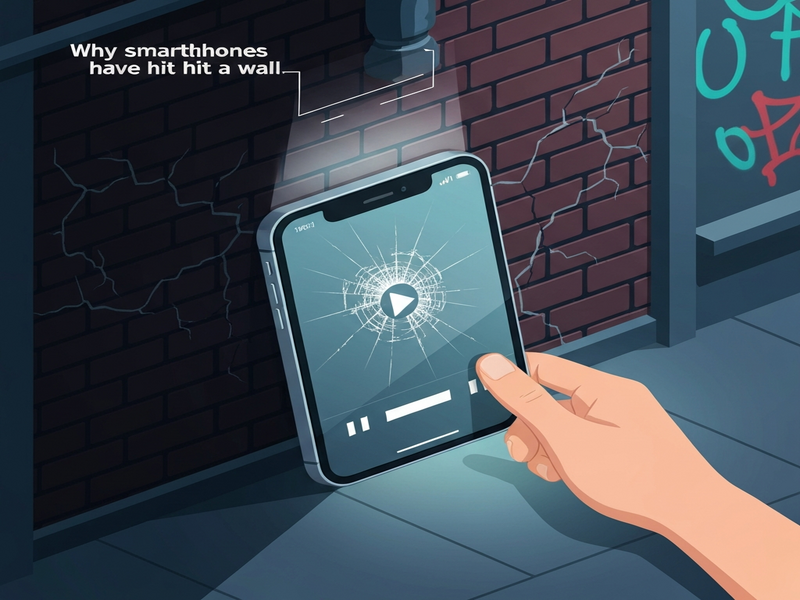
Visually, the video uses a literal brick wall graphic that the devices “bump” into, reinforcing the metaphor of a hard limit. The narrative concludes that future differentiation will come from AI‑enhanced software, smarter integration of cloud services, and novel user experiences rather than raw specs.
Analysis: Why the Wall Exists and How AI Is the New Lever
To understand the wall, we must examine three intertwined forces:
- Physical constraints: Moore’s Law has slowed, and the silicon roadmap is hitting thermodynamic limits. Packing more transistors into a 5‑nm node yields diminishing returns, especially for mobile power budgets.
- Consumer expectations: Users now prioritize seamless AI features—real‑time translation, computational photography, and predictive assistance—over raw GHz numbers.
- Ecosystem economics: Manufacturers are shifting revenue toward services (cloud AI, subscription‑based features) to sustain margins.
Enter AI. Modern smartphones embed neural processing units (NPUs) that accelerate on‑device inference. When paired with cloud‑based large language models, they can offload heavy tasks while preserving latency. This hybrid approach is already evident in features like:
- Live transcription and translation via OpenAI ChatGPT integration.
- Voice assistants powered by ElevenLabs AI voice integration.
- Context‑aware image enhancement using Chroma DB integration.
These capabilities shift the competitive battleground from “who has the fastest chip?” to “who can deliver the smartest, most personalized experience?” Companies that excel at integrating AI services into their hardware will define the next generation of smartphones.
For businesses looking to prototype AI‑driven mobile experiences, the UBOS platform overview offers a low‑code environment that connects device sensors to powerful AI back‑ends without writing extensive code.
Implications: How the Wall Reshapes the Smartphone Landscape
Below are the key market shifts we anticipate over the next 12‑24 months:
1. Rise of AI‑Centric Hardware Partnerships
Chipmakers will partner more closely with AI model providers. Expect to see dedicated AI accelerators co‑designed with firms like OpenAI, Anthropic, and Google DeepMind. This mirrors the growing ecosystem of ChatGPT and Telegram integration solutions that blend messaging with generative AI.
2. Subscription‑Based Feature Models
Manufacturers will monetize AI features via subscriptions—think “AI‑enhanced camera” or “personalized health coach” as monthly services. This mirrors the broader SaaS trend where AI marketing agents help brands automate campaigns and generate revenue.
3. Greater Emphasis on Software Updates
Because AI models improve over time, the value proposition will shift to long‑term software support. Devices that receive regular AI model updates will retain higher resale value and user satisfaction.
4. Expansion of Edge‑AI Use Cases
Privacy‑first applications—like on‑device speech recognition, offline translation, and secure biometric analysis—will become mainstream. Platforms such as the Workflow automation studio enable developers to orchestrate edge‑AI pipelines with minimal friction.
5. New Form Factors Powered by AI
Foldable and rollable displays will rely on AI to manage UI scaling, content adaptation, and power optimization, making the hardware feel seamless despite mechanical complexity.
Startups aiming to ride this wave can leverage UBOS for startups to quickly spin up AI‑enhanced mobile prototypes, reducing time‑to‑market from months to weeks.
Other UBOS resources that complement this AI‑first smartphone narrative include:
- UBOS solutions for SMBs – enabling small businesses to embed AI into their mobile apps.
- Web app editor on UBOS – a drag‑and‑drop builder for AI‑powered web front‑ends.
- UBOS pricing plans – transparent tiers that scale with AI usage.
- UBOS portfolio examples – real‑world case studies of AI integration.
- UBOS templates for quick start – pre‑built AI modules for rapid deployment.
AI Tools That Accelerate Mobile Innovation
Developers can tap into a growing marketplace of AI services to enrich smartphone experiences. Below are a few standout templates from the UBOS Template Marketplace that align with the “post‑wall” strategy:
- AI SEO Analyzer – optimize app store listings with AI‑driven keyword insights.
- AI Article Copywriter – generate in‑app help content on the fly.
- AI Video Generator – create personalized video tutorials directly on the device.
- AI Chatbot template – embed conversational agents for customer support.
- AI YouTube Comment Analysis tool – power social listening features within mobile apps.
- AI Image Generator – enable on‑device creative filters without heavy compute.
- AI Email Marketing – automate personalized outreach from mobile dashboards.
For the full original coverage, watch Android Police’s video here. Their investigative approach provides the data foundation for the analysis above.
Conclusion: Embrace the AI‑First Future
The “smartphone wall” is not a dead‑end; it’s a pivot point. As hardware improvements plateau, the differentiator will be how intelligently devices can understand, predict, and act on user intent. Companies that embed AI at the core—whether through native NPUs, cloud‑based large language models, or low‑code platforms like UBOS homepage—will lead the next wave of mobile innovation.
Ready to future‑proof your mobile strategy?
- Explore the Enterprise AI platform by UBOS for scalable, secure AI services.
- Join the UBOS partner program to collaborate on AI‑driven smartphone solutions.
- Start building today with the UBOS templates for quick start and accelerate time‑to‑market.
Stay tuned to our tech insights page for ongoing analysis of smartphone trends, AI breakthroughs, and how they intersect with the evolving mobile ecosystem.