

- Updated: February 18, 2026
- 6 min read
SeatGeek and Spotify Partner to Sell Concert Tickets Inside Spotify
SeatGeek and Spotify have launched a partnership that embeds concert‑ticket purchasing directly within Spotify’s music‑streaming interface, letting fans buy tickets without leaving the app.
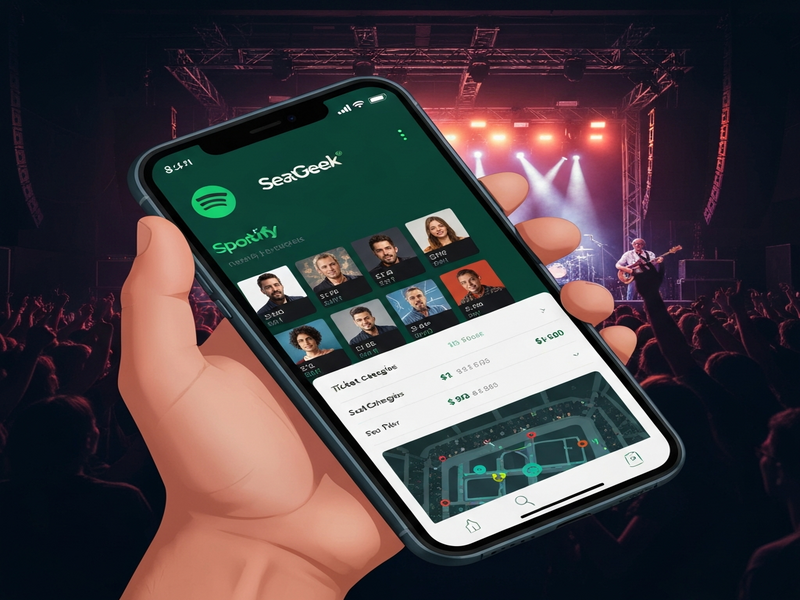
Starting today, Spotify users can see live ticket links powered by SeatGeek on artist pages, album releases, and venue profiles. The integration turns passive listening into an instant ticket‑buying experience, bridging the gap between music discovery and event attendance. This move is expected to reshape how concert‑going enthusiasts interact with streaming platforms and could set a new standard for the ticketing industry.
How the SeatGeek‑Spotify Integration Works
The integration is built into Spotify’s existing UI, appearing in three primary contexts:
- Artist pages: When a fan visits an artist’s profile, upcoming tour dates are displayed alongside a “Buy Tickets” button that routes directly to SeatGeek’s checkout.
- Album and single releases: For new releases that include tour announcements, a subtle ticket icon appears next to the release date, prompting immediate purchase.
- Venue pages: Users browsing a venue’s catalog of upcoming shows can click a SeatGeek‑powered “Tickets” tab to view all events in one place.
Behind the scenes, Spotify’s API feeds real‑time event data to SeatGeek, which then matches it with its inventory of primary‑ticket listings. The result is a frictionless flow: a fan hears a song, sees a concert date, clicks “Buy,” and completes the transaction without ever leaving Spotify.
Technical Highlights
| Component | Function |
|---|---|
| Spotify API | Delivers artist, tour, and venue metadata in real time. |
| SeatGeek Marketplace | Provides primary ticket inventory and pricing. |
| Embedded UI Widgets | Render “Buy Tickets” buttons directly inside Spotify’s mobile and desktop clients. |
| Secure Checkout | Handles payment processing, seat selection, and e‑ticket delivery. |
Roll‑Out Timeline and Geographic Scope
The partnership launches in a phased approach:
- Phase 1 (Q2 2026): Available in 15 major U.S. venues where SeatGeek is the primary ticket seller, including State Farm Stadium (Glendale, AZ), Nissan Stadium (Nashville, TN), and AT&T Stadium (Arlington, TX).
- Phase 2 (Late 2026): Expansion to additional venues across North America, targeting markets where SeatGeek holds secondary‑ticket rights.
- Phase 3 (2027 onward): International rollout to Europe and select Asian markets, contingent on local licensing agreements.
Spotify reports over 750 million monthly active users, with more than 290 million paid subscribers. By embedding ticket links, SeatGeek gains immediate exposure to a massive, music‑focused audience, while Spotify deepens its ecosystem beyond streaming.
Executive Perspectives
“Our goal is to make the concert‑discovery journey as seamless as listening to a song,” said John K. Smith, Chief Product Officer at SeatGeek. “Partnering with Spotify lets fans act on their excitement in real time, driving higher conversion rates and richer data for artists and venues.”
“Music is about moments, and now those moments can end with a ticket in the user’s hand,” added Emily Rivera, VP of Partnerships at Spotify. “We’re turning our platform into a one‑stop shop for music discovery, engagement, and live experiences.”
Benefits for Listeners, Artists, and the Ticketing Industry
For Listeners
- Instant access to tickets without switching apps.
- Personalized recommendations based on listening habits.
- Secure, streamlined checkout powered by SeatGeek’s infrastructure.
For Artists
- Higher visibility of tour dates directly on their Spotify profile.
- Data insights linking streaming spikes to ticket sales.
- Potential for targeted promotions using Spotify’s audience segmentation.
For the Ticketing Industry
- New distribution channel that reaches fans at the moment of intent.
- Competitive differentiation from legacy players like Ticketmaster.
- Opportunities for AI‑driven pricing and inventory optimization.
How This Stacks Up Against Competitors
Ticketmaster and AXS have long dominated primary ticket sales, but their integrations are typically limited to external links or separate apps. SeatGeek’s deep‑link approach inside Spotify offers several advantages:
| Feature | SeatGeek + Spotify | Ticketmaster/AXS |
|---|---|---|
| In‑app ticket purchase | Yes – native UI widget | Usually redirects to external site |
| Personalized recommendations | Leverages Spotify listening data | Limited personalization |
| Real‑time inventory sync | Live API feed | Batch updates |
Why AI‑Powered Platforms Like UBOS Matter
The SeatGeek‑Spotify partnership showcases how AI and data can turn a passive experience into an actionable one. Companies looking to replicate this success can leverage platforms that simplify AI integration, such as UBOS platform overview. UBOS provides a low‑code environment where developers can embed AI agents, automate workflows, and connect to third‑party services without writing extensive code.
For startups eager to experiment with similar integrations, the UBOS for startups program offers sandbox environments, pre‑built connectors, and pricing that scales with usage. SMBs can also benefit from UBOS solutions for SMBs, which include ready‑made templates for ticketing, event promotion, and AI‑driven recommendation engines.
Enterprises seeking a robust, secure AI stack can explore the Enterprise AI platform by UBOS. This platform supports advanced use cases such as dynamic pricing, sentiment analysis of fan comments, and predictive demand forecasting—capabilities that could further enhance the SeatGeek‑Spotify model.
Practical Tools from UBOS’s Template Marketplace
UBOS’s marketplace offers dozens of ready‑to‑deploy AI applications that can be combined with music‑streaming data:
- AI SEO Analyzer – Optimize concert‑related landing pages for organic discovery.
- AI YouTube Comment Analysis tool – Gauge fan sentiment around new releases and tour announcements.
- AI Article Copywriter – Generate blog posts that promote upcoming shows.
- AI Video Generator – Create short teaser videos for social media.
- AI LinkedIn Post Optimization – Tailor professional announcements for industry partners.
Call to Action: Leverage the Integration for Your Business
If you’re a music label, venue operator, or tech provider, now is the moment to explore how embedded ticketing can boost engagement. Here are three steps to get started:
- Assess your current digital touchpoints – identify where fans discover your events.
- Partner with an AI‑enabled platform like Web app editor on UBOS to prototype an in‑app ticket widget.
- Use Workflow automation studio to sync streaming data with ticket inventory in real time.
For a deeper dive into AI‑driven marketing, check out AI marketing agents that can personalize email campaigns based on listening behavior.
Related Resources from UBOS
Explore additional tools that complement the SeatGeek‑Spotify experience:
- UBOS templates for quick start – Jump‑start your integration with pre‑built UI components.
- UBOS pricing plans – Find a plan that fits your scale, from indie promoters to global enterprises.
- UBOS portfolio examples – See real‑world case studies of AI‑enhanced event platforms.
- About UBOS – Learn more about the team behind the platform.
- UBOS partner program – Join a network of technology partners and expand your reach.
Future Outlook
As AI continues to mature, we can expect deeper personalization—imagine a scenario where a listener’s mood, inferred from streaming patterns, triggers a tailored concert recommendation with dynamic pricing optimized by machine learning. Platforms like UBOS already support Chroma DB integration for vector search, enabling semantic matching between songs and live events.
Moreover, voice‑first experiences are on the horizon. With ElevenLabs AI voice integration, fans could ask their smart speaker, “Play the latest Taylor Swift album and show me nearby shows,” and receive an audible ticket link that completes the purchase via voice commands.
These innovations point toward a future where music streaming, AI, and ticketing are inseparable, delivering a frictionless entertainment ecosystem.
Read the full story on TechCrunch.